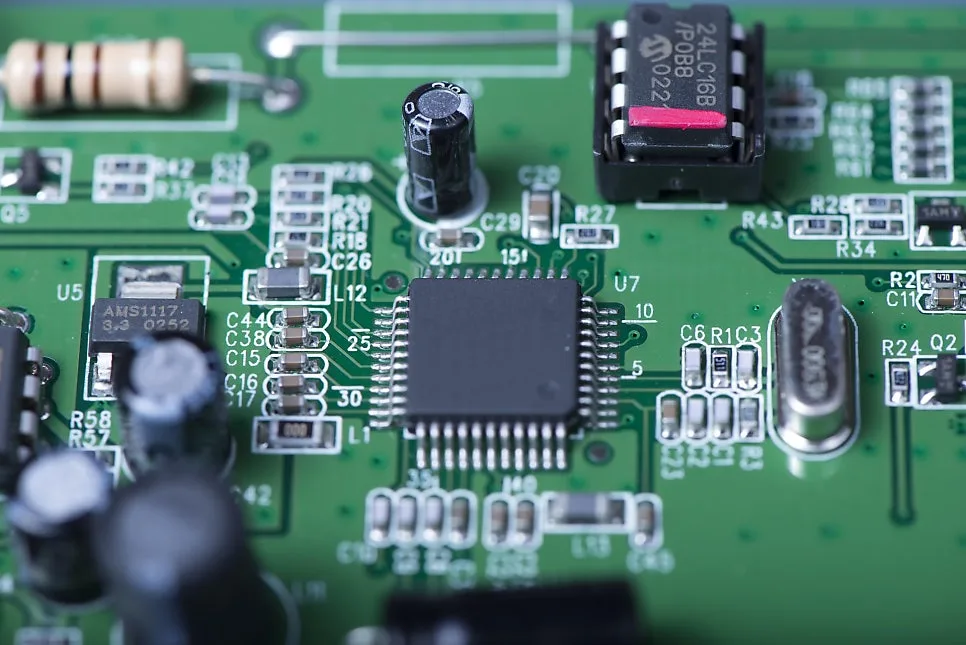
DRAM (Dynamic Random-Access Memory) and NAND Flash are the cornerstones of modern digital devices, serving as temporary workspaces and permanent storage, respectively. In 2026, understanding the distinct characteristics and applications of these two memory technologies is crucial for grasping the fundamentals of AI, big data, and other advanced technologies. While DRAM offers lightning-fast access for active tasks, NAND Flash provides durable storage for your files and operating systems.
What Are DRAM and NAND Flash Memory?
DRAM, or Dynamic Random-Access Memory, is a volatile memory type essential for active tasks on computers and smartphones. It acts as a high-speed temporary workspace, allowing the CPU to quickly read and write data. When the power is turned off, all data stored in DRAM is lost. This is commonly referred to as 'RAM.' In contrast, NAND Flash is a non-volatile memory technology used for permanent data storage, meaning it retains data even when the power is off. This is the technology behind your smartphone's 128GB storage, SSDs, and USB drives. Think of DRAM as the device's short-term memory and NAND Flash as its long-term memory. The advancement of both technologies is fundamental to the existence of future technologies like AI, big data, and autonomous driving.
What Are the Origins of DRAM and NAND Flash?
DRAM was invented in 1966 by Robert H. Dennard at IBM in the United States. The 'Dynamic' aspect refers to its characteristic of requiring periodic refreshing to prevent data loss, as the stored electrical charge naturally leaks over time. 'Random Access' signifies that data can be accessed from any location with nearly the same speed. It was first commercialized by Intel in the early 1970s and quickly became the primary working memory for computers. NAND Flash memory was invented in 1987 by Dr. Fujio Masuoka at Toshiba in Japan. The name 'NAND' reportedly came from his team leader, who commented that the internal structure of the memory cell resembled a NAND logic gate. The 'Flash' moniker refers to the ability to erase data in large blocks almost instantaneously. It began to gain traction in the late 1990s and saw widespread adoption with the advent of SSDs in the late 2000s.
What Are the Key Characteristics of DRAM and NAND Flash?
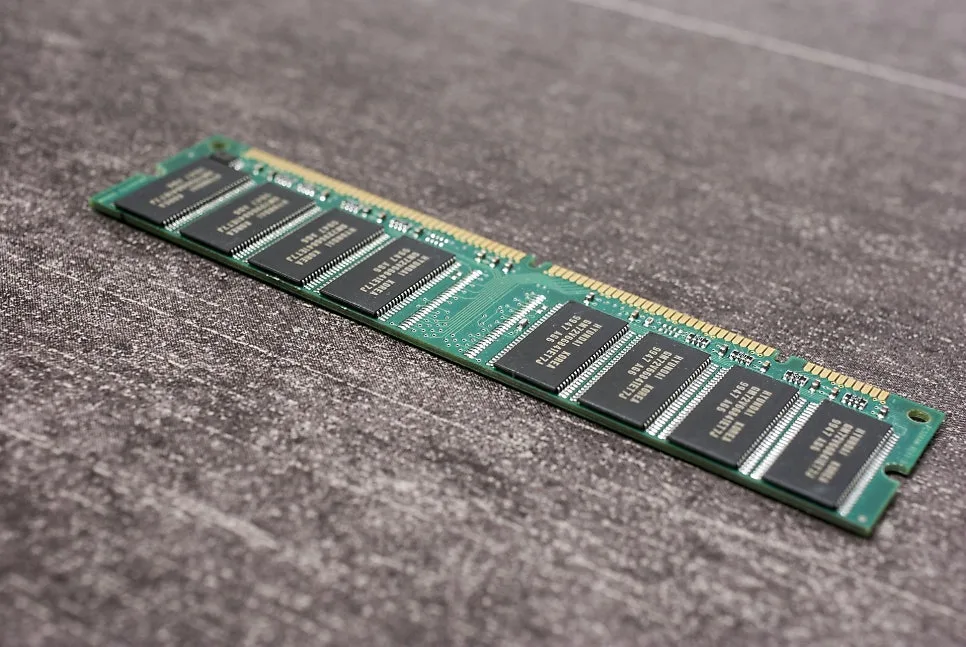
The most significant characteristic of DRAM is its exceptional speed. It communicates directly with the CPU, making it tens to hundreds of times faster than NAND Flash. While its cost per gigabyte is relatively higher than NAND, its speed is unparalleled for active tasks. However, its major drawback is its volatility; data is lost when power is removed. DRAM's structure is relatively simple, with each memory cell consisting of a transistor and a capacitor. The capacitor stores data as an electrical charge, necessitating the periodic refresh cycles. NAND Flash, on the other hand, is non-volatile, retaining data even without power, making it ideal for storing photos, documents, and operating systems. While slower than DRAM, it's significantly faster than traditional Hard Disk Drives (HDDs). Its high integration density allows for storing vast amounts of data in a small physical space. Technologies like MLC, TLC, and QLC enable storing multiple bits per cell, increasing capacity. However, its complex structure, which stores data by trapping electrons in floating gates, leads to wear and tear with repeated read/write cycles, limiting its lifespan.
What Are the Similarities and Differences Between DRAM and NAND Flash?
Both DRAM and NAND Flash are semiconductor memory technologies fabricated on silicon wafers and lack mechanical moving parts, making them commonalities. They are essential components in modern electronics and represent a critical strategic industry where South Korean giants like Samsung Electronics and SK Hynix dominate the global market. The primary differences lie in their function and nature. DRAM serves as temporary working memory and is volatile, while NAND Flash functions as permanent storage memory and is non-volatile. In terms of speed, DRAM is significantly faster, whereas NAND Flash offers advantages in density and cost per gigabyte. DRAM has a simpler architecture, while NAND Flash is more complex. DRAM requires constant refreshing, while NAND Flash has a lifespan limited by write cycles.
What Should You Consider When Using DRAM and NAND Flash?
Since DRAM is volatile, it's crucial to save important work frequently to prevent data loss if power is suddenly interrupted. The capacity of DRAM also significantly impacts overall system performance, so choosing sufficient capacity for your intended use is important. For NAND Flash, it's essential to be aware of its limited lifespan due to repeated write operations. Frequent deletion and rewriting of data can shorten its lifespan. Therefore, it's common practice to use DRAM for operating systems and frequently accessed programs, and NAND Flash for data storage. For SSDs, enabling features like TRIM can help manage NAND Flash lifespan. The optimal memory configuration can vary based on individual usage patterns, so consulting with a tech expert for the best setup is advisable.
For more details, check the original source below.