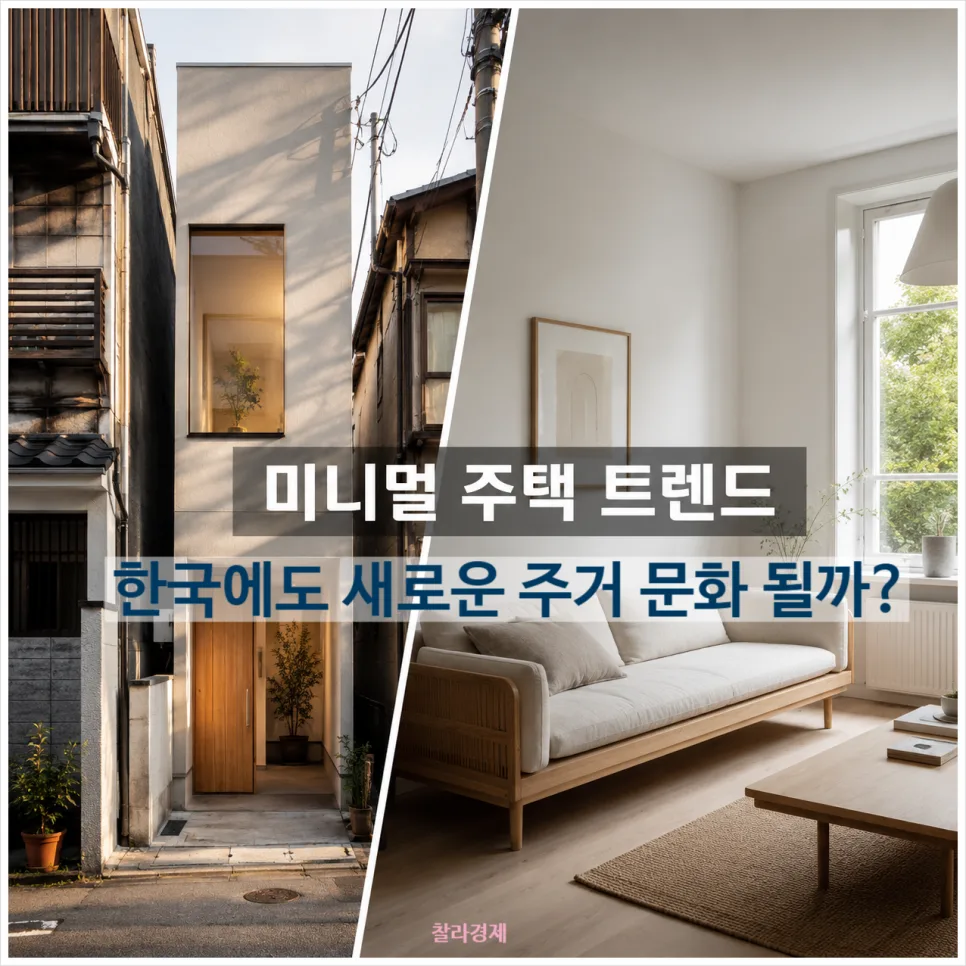

In 2026, the minimalist home trend emphasizes that living smaller can lead to greater happiness, redefining not just living spaces but entire lifestyles. This approach embraces the value of 'less is more,' achieving greater freedom by owning fewer possessions. It focuses on maximizing efficiency in compact areas or even questioning the need for large homes altogether.
Unlock Japanese Minimalism: Secrets to Making Small Spaces Feel Huge?

Japanese compact homes, or 'kyosho jutaku,' ingeniously accommodate families in narrow alleyways just 3 meters wide. This is achieved through two core principles: 'vertical circulation design' and 'hidden storage.' By dedicating each floor to a single function and using only stairs for movement, wasted hallway space is eliminated. Furthermore, utilizing every inch—under stairs, within walls, beneath floors—for storage visually doubles or triples the perceived space. This philosophy also influences furniture design, leading to multi-functional pieces like sofa beds and wall-mounted folding furniture. These Japanese minimalist homes showcase remarkable ingenuity in maximizing utility within limited footprints.
What is 'Lagom'? The Swedish Philosophy Behind Nordic Minimalist Homes
Sweden's 'Lagom' culture, meaning 'just the right amount—not too much, not too little,' forms the philosophical backbone of Nordic minimalist homes. Swedes are mindful consumers, often choosing high-quality items designed to last two decades. IKEA's global success is deeply tied to this cultural value. Lagom-style homes typically feature white walls, natural wood elements, light curtains, and large windows to maximize natural light, making spaces feel bright and cozy, especially during long Nordic winters. Living rooms are furnished minimally, with each piece carefully selected for quality and design, reflecting a lifestyle of 'choosing well, not just choosing less.' This approach extends beyond decor, influencing a broader life philosophy.
Japanese vs. Nordic Minimalism: How Does Korea Adapt These Trends?
While Japanese minimalism focuses on maximizing utility within confined spaces, Nordic minimalism questions the necessity of large homes altogether. Both, however, converge on the idea that owning less leads to greater freedom. In Korea, this trend is gaining significant traction. The rise of single-person and two-person households has fueled a preference for 'homes that fit my lifestyle.' Among Gen Z and Millennials, the 'decluttering interior' and 'no-spend challenge' movements promote reducing possessions as a virtue. Additionally, a growing number of individuals in their 40s and 50s are opting for 'downsizing' after their children leave home, signaling a meaningful shift in Korean residential culture.
3 Practical Tips to Embrace the Minimalist Home Trend Now
Implementing the minimalist home trend is achievable with these practical steps. First, 'hide your storage.' Opt for cabinets with doors, under-bed drawers, or under-stair storage instead of open shelves to keep clutter out of sight, making spaces appear larger. Second, 'reduce furniture, increase quality.' Halve the number of furniture pieces you own and invest in high-quality, durable items that will last. This elevates the overall feel of your space. Third, 'maximize natural light.' Use sheer curtains and strategically place mirrors to enhance brightness and the perception of space. These methods can help you adopt a minimalist lifestyle without significant expense.
Minimalist Home Trend Pitfalls: When Less Becomes Inconvenient
Misinterpreting and applying the minimalist home trend can inadvertently lead to inconvenience. For instance, excessive decluttering might result in discarding essential items, or inadequate storage planning can make a home appear messier. It's crucial to remember that choosing a smaller home isn't the only goal; designing it to suit your specific lifestyle and needs is paramount. If you work from home, a dedicated workspace is essential. If you have hobbies requiring equipment, efficient storage solutions are a must. Therefore, while pursuing minimalism, carefully consider your daily routines and requirements. Your ideal space optimization may differ, so consulting a professional designer can offer tailored solutions.
For more details, check the original source below.