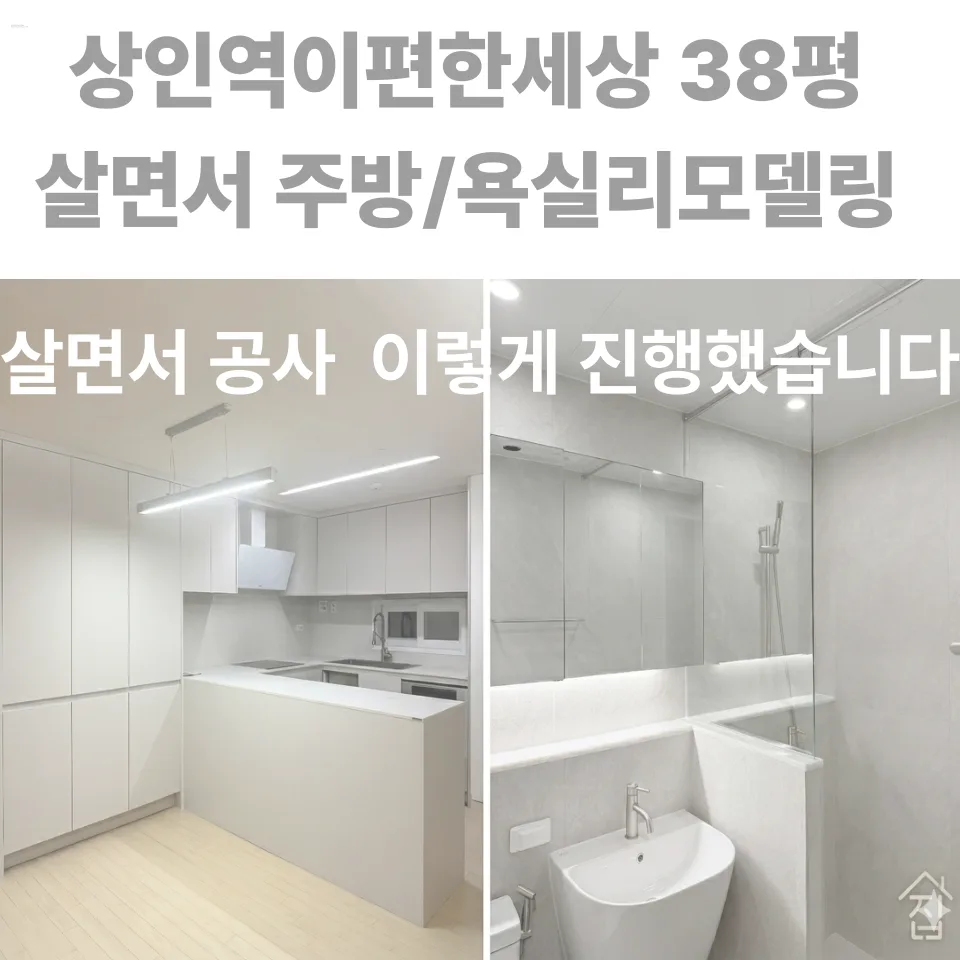
Transforming a 38-pyeong (approx. 1,250 sq ft) apartment in Sangin Station's E-Pyeonhan Sesang complex, this renovation focused on a minimalist Korean aesthetic, enhancing both kitchen and bathroom functionality for residents living on-site. The project prioritized improving daily living comfort and employing meticulous protective measures during a partial remodel in 2026.
Can You Remodel Your Home While Living In It? 2026
Many homeowners hesitate to undertake interior renovations while still living in their homes, often wondering if it's truly possible or if partial remodels can yield satisfactory results. This case study of a 38-pyeong (approx. 1,250 sq ft) apartment in Sangin Station's E-Pyeonhan Sesang complex, focusing on the kitchen and bathroom, aims to answer these questions. The renovation prioritized addressing practical inconveniences in daily life rather than making drastic structural changes. Special attention was paid to protective measures and on-site management to minimize disruption. Despite being a partial renovation, the project achieved a level of completion comparable to a full remodel, leading to high client satisfaction. We'll detail the transformation process of this project.
How Were Existing Bathroom Inconveniences Improved? 2026
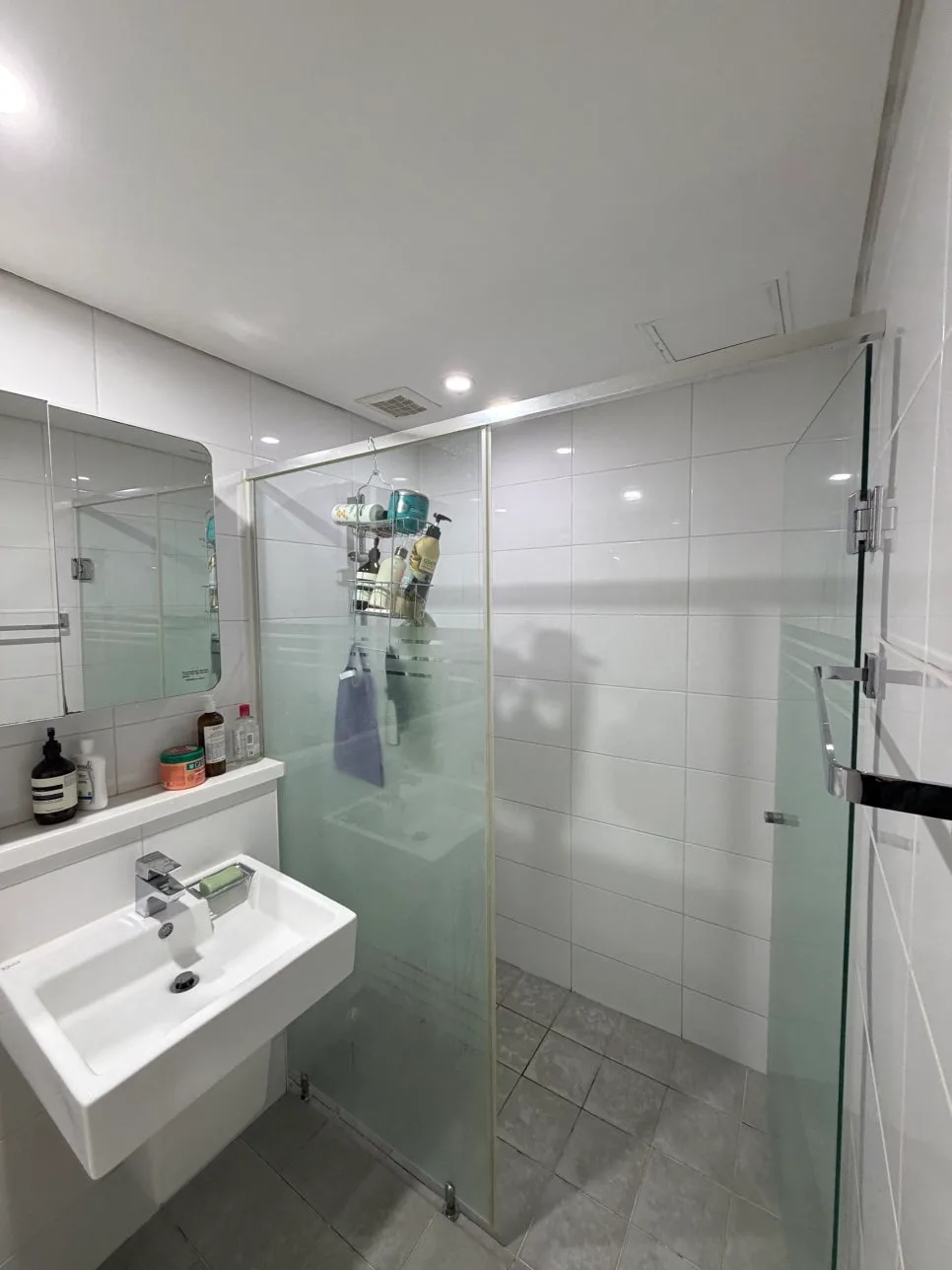
Although the bathroom had undergone a previous renovation, it felt somewhat disconnected from the current kitchen and overall home ambiance. Specifically, the small 300x300mm tiles presented a maintenance challenge due to their numerous grout lines, making cleaning cumbersome and creating a sense of a cramped space. This practical difficulty was a significant concern for the residents. The goal of this renovation was to go beyond a simple aesthetic update and directly address these usability issues. All old tiles were removed and replaced with large-format 600x1200mm tiles, creating a much more spacious and luxurious feel. This change also significantly improved ease of cleaning and maintenance, enhancing the bathroom's overall practicality.
How Did Kitchen Storage and Workflow Improve with Renovation? 2026
The existing kitchen, while generally well-maintained, showed signs of aging. The yellowing of cabinet doors diminished its initial pristine appearance, making the entire space feel dated and somewhat confined. Issues like reduced hood performance, affecting ventilation, and discoloration or cracks on the countertop also indicated a need for replacement. The most significant inconvenience for the client, however, was the inefficient storage layout. Despite the apparent number of cabinets, their configuration didn't align with daily cooking workflows, making it difficult to organize utensils and appliances effectively. This renovation focused on optimizing the storage configuration and workflow without major structural changes, transforming the kitchen into a more practical and tidy space with a brighter, more organized atmosphere.
Why Are Protective Measures and Site Management Crucial for In-Home Renovations?
Since the renovation was conducted while the clients were actively living in the apartment, meticulous protective measures and site management were paramount. Even minor dust and debris can cause significant disruption, so comprehensive protective work began before construction commenced. This included protecting all existing furniture, finishes, and pathways. Given the prevalence of white finishes and existing furniture, double-layer protection was applied to prevent scratches and contamination. Furthermore, to prevent dust and debris from spreading into living areas, sectional containment measures were implemented. Effective interior design relies not only on the final aesthetic but also on the management and details during the construction process. These systematic protective steps were key to achieving high client satisfaction.
Demolition and Foundation Work: The Start of a Stable Renovation
Before any design changes, the process began with thorough demolition and foundational work. In the bathroom, after removing all existing finishes, a completely new waterproofing layer was applied. The previous small 300x300mm tiles were problematic for grout maintenance and cleaning, and they also made the bathroom feel disconnected from the main living areas. Therefore, this renovation of the Sangin Station E-Pyeonhan Sesang bathroom focused on creating a durable structure with new waterproofing, ensuring long-term stability. After demolition, the exposed walls revealed previous installation marks and damage. To ensure the stable installation of new kitchen cabinets, precise leveling and surface preparation work was essential.
For more details on the Sangin Station E-Pyeonhan Sesang 38-pyeong interior, check the original source below.