When remodeling older Korean apartments, prioritizing insulation, waterproofing, electrical work, and checking old fixtures is crucial. For a 35-pyeong (approx. 1,200 sq ft) apartment, even if it looks fine, internal systems might be outdated, leading to condensation, mold, and inefficient heating/cooling. A thorough inspection of the structure and systems is essential alongside design updates.
Korean Apartment Remodeling: Why Invisible Structure Matters
When undertaking renovations in older Korean apartments, focusing on the unseen structural elements and fixture conditions is key to long-term satisfaction, rather than just aesthetics. For apartments around 1,200 sq ft, issues like degraded insulation, aging pipes, and inadequate waterproofing can arise over time. For instance, poor waterproofing in bathrooms or balconies can lead to leaks affecting lower floors, creating persistent problems even after renovation. Outdated electrical wiring might pose overload risks when adding new lights or outlets, necessitating a check of grounding and breaker capacity. Based on experience, neglecting these hidden aspects and only updating finishes often leads to recurring issues like condensation, mold, and increased heating costs, sometimes requiring complete re-work. Therefore, adhering to the correct sequence of waterproofing, insulation, and finishing after demolition, and inspecting pipes and heating systems if necessary, is vital.
Essential Checks for Apartment Remodeling
Related Articles
There are four main essential elements to check during apartment remodeling. First, leaks and waterproofing: bathrooms, balconies, and window areas require proper waterproofing to prevent post-renovation issues and potential leaks to lower floors. Second, electrical work: structural changes necessitate checking wiring, grounding, and breaker capacity, especially in older apartments prone to overload. Third, aging fixtures (pipes, insulation): older apartments often have weakened pipes, heating, and insulation, which can lead to condensation, mold, and inefficient heating if only the surface is updated. Fourth, construction schedule risks: renovations involving structural changes may require additional work due to site conditions. Therefore, planning for contingencies from the initial design phase is crucial. This project, for example, focused on reinforcing these core elements while simultaneously expanding space and redesigning living flow.
Key Improvement Points in This Busan Apartment Remodel
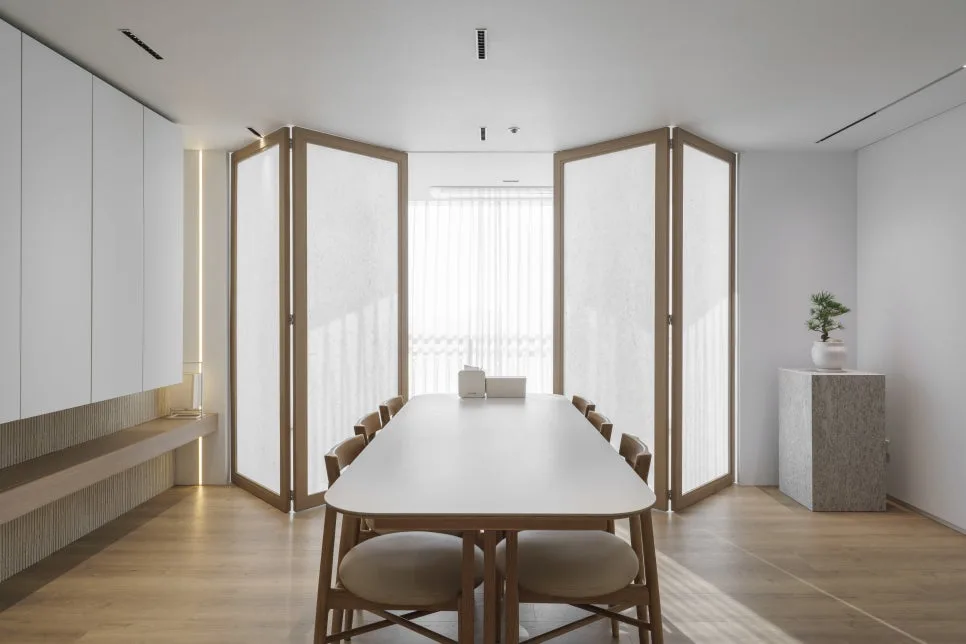
The primary focus of this 1,200 sq ft (approx. 35-pyeong) remodel in the Dongil Sweet apartment in Danggam-dong was ensuring the stability of the existing structure's insulation and systems. The approach prioritized reinforcing waterproofing, insulation, and fixtures, alongside redesigning the space and living flow, rather than just cosmetic changes. The entryway features slim recessed lighting and a lattice wood partition for an open feel, with a semi-transparent glass door for space separation. The living room uses white and wood tones to appear more spacious, and the extended balcony area has been repurposed into a home cafe and storage space for added practicality. The kitchen opted for a clean look by removing upper cabinets and incorporating hidden storage solutions.
Designing a Korean Minimalist Bathroom: Tips for 2026
When remodeling a bathroom, especially in older Korean apartments, perfect waterproofing is paramount. Consider practical design elements like separating the vanity area from the shower or installing a dry vanity space for enhanced usability. For a hotel-like aesthetic, incorporating large tiles, concealed fixtures, and ambient indirect lighting can elevate the space. Many US homeowners are also adopting similar minimalist trends, seeking clean lines and functional layouts. Brands like IKEA, CB2, and West Elm offer products that can achieve a similar minimalist look, often at accessible price points. When planning structural changes, ensure compliance with local building codes and consult with professionals to guarantee safety and functionality, particularly regarding plumbing and ventilation.
Addressing Condensation and Mold in Older Apartments
Insufficient insulation in older apartments can make maintaining comfortable indoor temperatures difficult during winter. The temperature difference between the inside and outside can cause condensation (sweating) on walls and windows, leading to mold growth. This not only affects the aesthetic but also poses health risks. Furthermore, poor insulation significantly reduces heating efficiency, leading to higher energy bills. Addressing insulation issues often involves adding layers of insulation to walls, ceilings, and floors, and ensuring proper ventilation. For US readers, think of it like improving your home's energy efficiency to combat drafty windows or high heating costs in colder climates. Investing in proper insulation is a long-term solution that improves comfort and saves money.
Managing Renovation Schedule Risks for Apartment Makeovers
Apartment renovations, particularly those involving structural modifications, often encounter unforeseen issues that can extend the project timeline. It's crucial to plan meticulously from the initial design phase, anticipating potential complications and building in buffer time. This includes detailed process planning and risk assessment. For instance, if a bathroom's plumbing needs rerouting or an old wall is found to contain unexpected wiring, these will add time and cost. Establishing clear communication channels with your contractor and agreeing on a realistic schedule with contingency plans is vital. For US projects, this is similar to managing a home renovation where unexpected discoveries like asbestos or outdated electrical systems can cause delays. Having a contingency fund and flexible timeline can prevent major stress.
For more details, check the original source below.