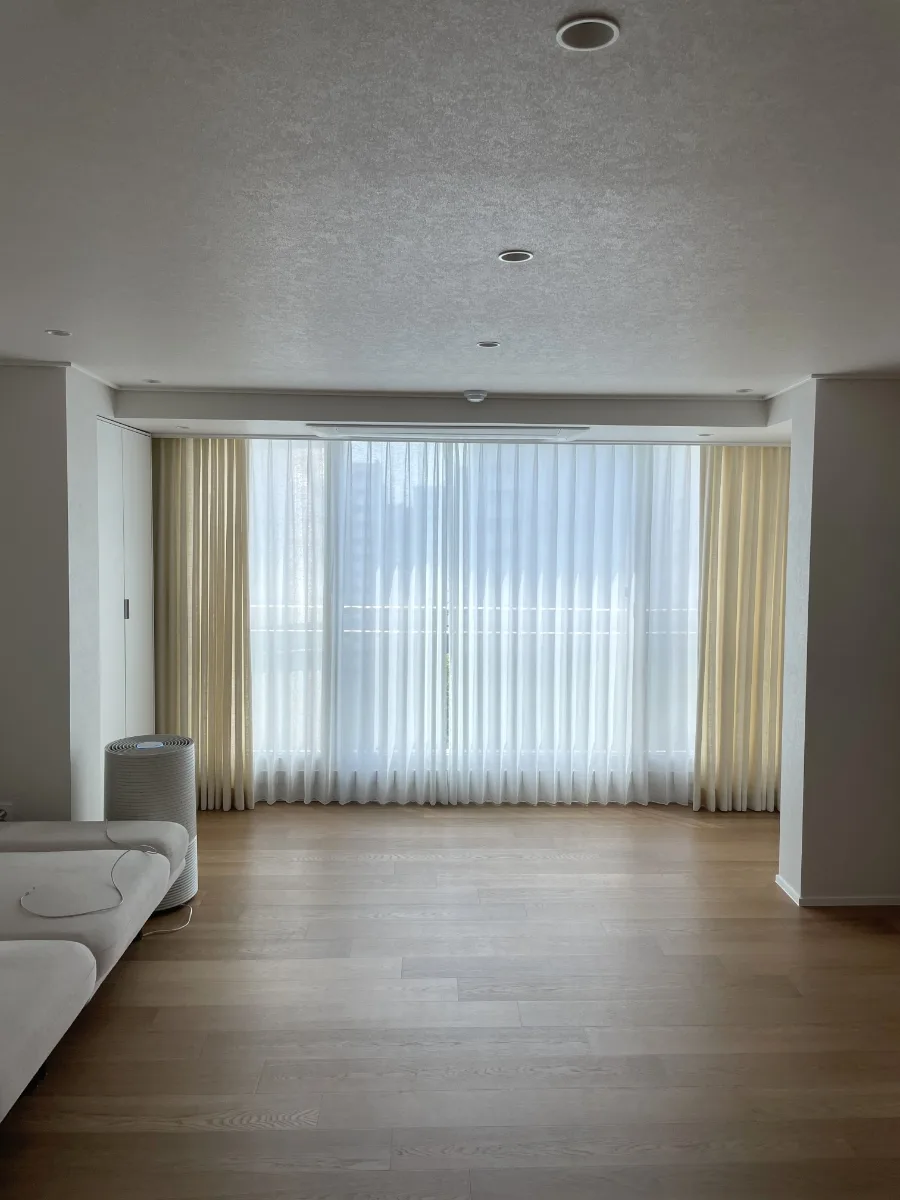
This 50-pyeong (approx. 1,650 sq ft) apartment, originally built in 2000, was expertly remodeled to perfectly suit a family of four, creating a dream home without the need to move. The renovation focused on enhancing the building's core performance, like insulation and windows, while efficiently separating communal and private spaces for ultimate family satisfaction.
How Did the Living Room Become a High-Function Space for a Family of Four?
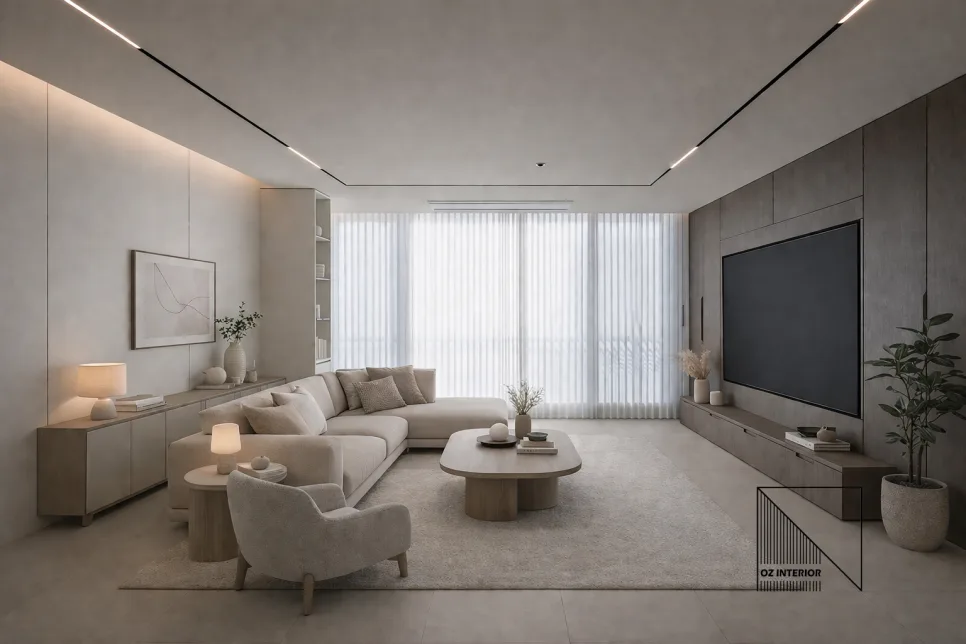
Instead of just maintaining the expansive living area of this 50-pyeong apartment, the design prioritized creating personalized zones for each family member. The focus shifted to integrating communal appliances and essential storage solutions. The TV wall was reimagined to house a styler, vacuum cleaner, and other daily necessities, effectively creating a dedicated storage zone that keeps the living space consistently tidy and clutter-free. Structural columns, unavoidable in the original layout, were seamlessly integrated into the furniture's design lines. One column near an armchair was finished with glass shelving, transforming a potential eyesore into a functional display and storage area that doesn't disrupt the room's flow. The color palette centers around a cocoa brown, unifying the TV wall, the entrance to the master bedroom, and the kitchen line, balanced by clean white surfaces for a sense of equilibrium. Magnetic track lighting and indirect lighting were used to define different zones, and a built-in home cafe cabinet was planned to be discreetly hidden behind the master bedroom's sliding door.
Kitchen Renovation: Maximizing Usability and Storage for Culinary Enthusiasts
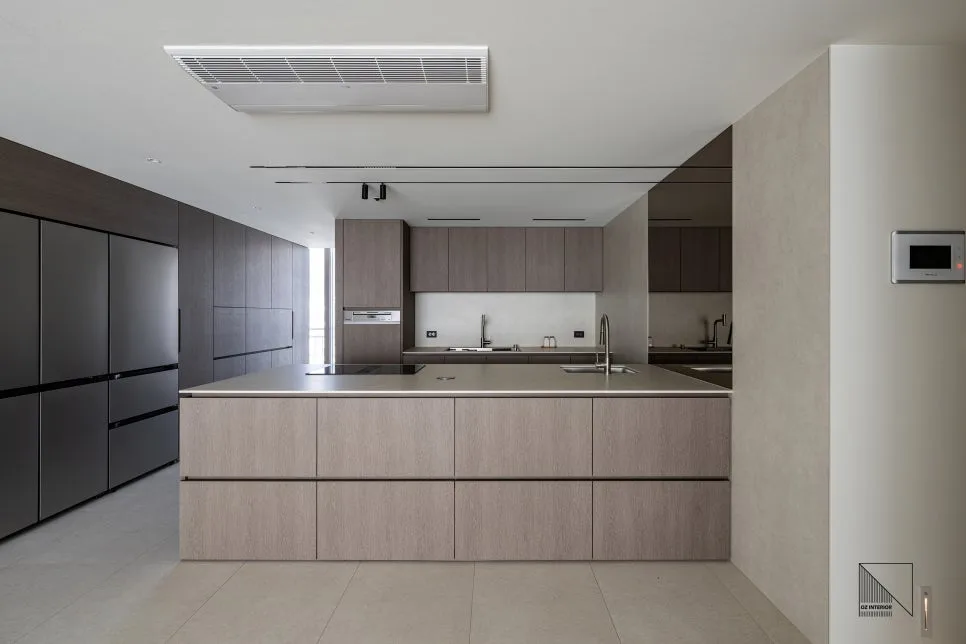
The kitchen was completely redesigned to meet the needs of a family that loves to cook, transforming it from a mere cooking space into a hub that excels in storage, usability, and workflow. Despite the 50-pyeong apartment's generous living space, the kitchen's depth was somewhat limited. The renovation focused on maximizing every inch to accommodate appliances, storage, and cooking areas without making the space feel cramped. The island was redesigned to streamline the cooking and prep workflow, and a twin sink was installed to allow two people to cook simultaneously. The backsplash features bronze glass, complementing the wood tones and adding a sense of depth, making the kitchen appear more spacious.
Aesthetically integrated appliances, such as a counter-depth refrigerator and a pull-up cabinet system, were installed to ensure unobstructed movement. A dishwasher was positioned at waist height for easier access, with deep storage drawers below. The dishwasher's panel was finished to match the cabinetry, creating a cohesive look. This thoughtful design ensures maximum functionality and a clean, modern aesthetic.
Harmonizing Connection and Privacy: From the Entrance to the Master Bedroom
The entryway was designed with a stepped transition from the entrance to the main hall and then to the interior, preventing the entire space from being visible at once. A half-cabinet was placed in front of the main door, offering a convenient spot for quick organizing and placing personal items before heading out. Mirrors and indirect lighting were incorporated to create an inviting scene.
The wooden slatted door (gansal door) allows light and views to pass through while naturally defining the space. This slatted door design was replicated for the master bedroom entrance, creating a unified look and allowing for flexible use depending on the flow of movement. A small bench was added to the entrance hall for ease of putting on shoes or setting down belongings, with built-in storage underneath for added practicality. Subtle curved finishes on wall corners enhance the overall sense of quality. The entrance to the master bedroom, facing the living room, serves as the transition point between the communal and private areas, with the slatted door creating a natural boundary. As you move further in, the sense of privacy deepens. The hallway leading to the master bedroom features a display zone for hobbies, enhanced with indirect lighting to showcase items like art pieces, with drawers below for storing frequently used personal belongings.
Master Suite Solutions: Balancing a Functional Dressing Area and Powder Room
The dressing room was designed with ample storage tailored to the family's specific needs, with separate areas for clothes and bags to maintain a neat and organized appearance while maximizing practicality. The original building's often awkward outdoor unit space was repurposed by integrating it into the powder room and finishing it with cabinet doors for a seamless look.
The vanity and half-cabinet below provide essential storage for daily necessities. The main bedroom itself was designed with a calm, muted color palette to promote relaxation, with an unobstructed view extending beyond the window. This space offers a perfect retreat, balancing the independence of private areas with the efficient functionality of the communal spaces. The living room, the kitchen designed for optimal workflow and storage, and the entryway and master bedroom that harmonize connection and privacy, all come together to create a perfect new home without the need to move.
English crawl path
Next English reads from this pilot cluster
Continue through the category hub, latest English stories, and related posts so this translated article is not an isolated URL.
Tags
💬Frequently Asked Questions
What should I check first in Korean Apartment Makeover: 4-Person Family Home 2026?
Does this Home & Interior article link back to the Korean source?
Where can I find similar English stories?
English discovery path
Explore more English K-culture stories
Keep browsing the indexed English pilot cluster so Google and readers can move between this story, the category hub, and fresh discovery pages.
Original Source
Read the Korean original