When remodeling a Korean apartment, even within the same square footage, the interior design strategy significantly changes based on the layout. Understanding the differences between corridor-style and staircase-style layouts unlocks optimal space utilization for your home. In 2026, these design principles are key for achieving that sought-after Korean aesthetic.
What's Your Korean Apartment Layout: Corridor vs. Staircase?
The fundamental difference in interior design for Korean apartments stems from their layout: corridor-style versus staircase-style. While both might be the same size, their structural differences dictate everything from natural light to room placement. Corridor-style apartments, common in older public housing complexes, feature units arranged along a long central hallway, meaning natural light typically enters from only one side. Conversely, staircase-style apartments, more prevalent in newer buildings, have units organized around a central staircase or elevator hall, allowing for natural light from multiple sides and better ventilation. This structural distinction directly impacts the placement of your entryway, the flow of movement, and the overall ambiance. For instance, when tackling a corridor-style renovation, optimizing the often-dark hallway is crucial to defining the home's overall feel, a common challenge I've addressed in projects in areas like Yeosu.
Corridor-Style Apartments: Brightening Dark Spaces
The primary challenge in corridor-style apartments is combating the inherent darkness of the entryway and hallway. Effective lighting design is paramount to transforming these areas into bright, welcoming spaces. Installing recessed lighting along the hallway ceiling at regular intervals or incorporating indirect lighting along the walls can create a gallery-like effect, making the space feel larger and more sophisticated. Opting for light-toned wall finishes and flooring will also significantly enhance the perceived brightness by maximizing light reflection. When choosing an entryway door, consider transparent or translucent materials instead of opaque ones to allow natural light from the living area to filter into the hallway. For storage, installing slim, built-in wardrobes along the hallway walls is an efficient solution. These shallow cabinets, around 12 inches deep, offer ample storage without obstructing passage and create a visually clean look when finished in the same color as the walls. This approach has proven highly effective in maximizing both space and light in older Yeosu apartment renovations.
Staircase-Style Apartments: Maximizing Openness and Light
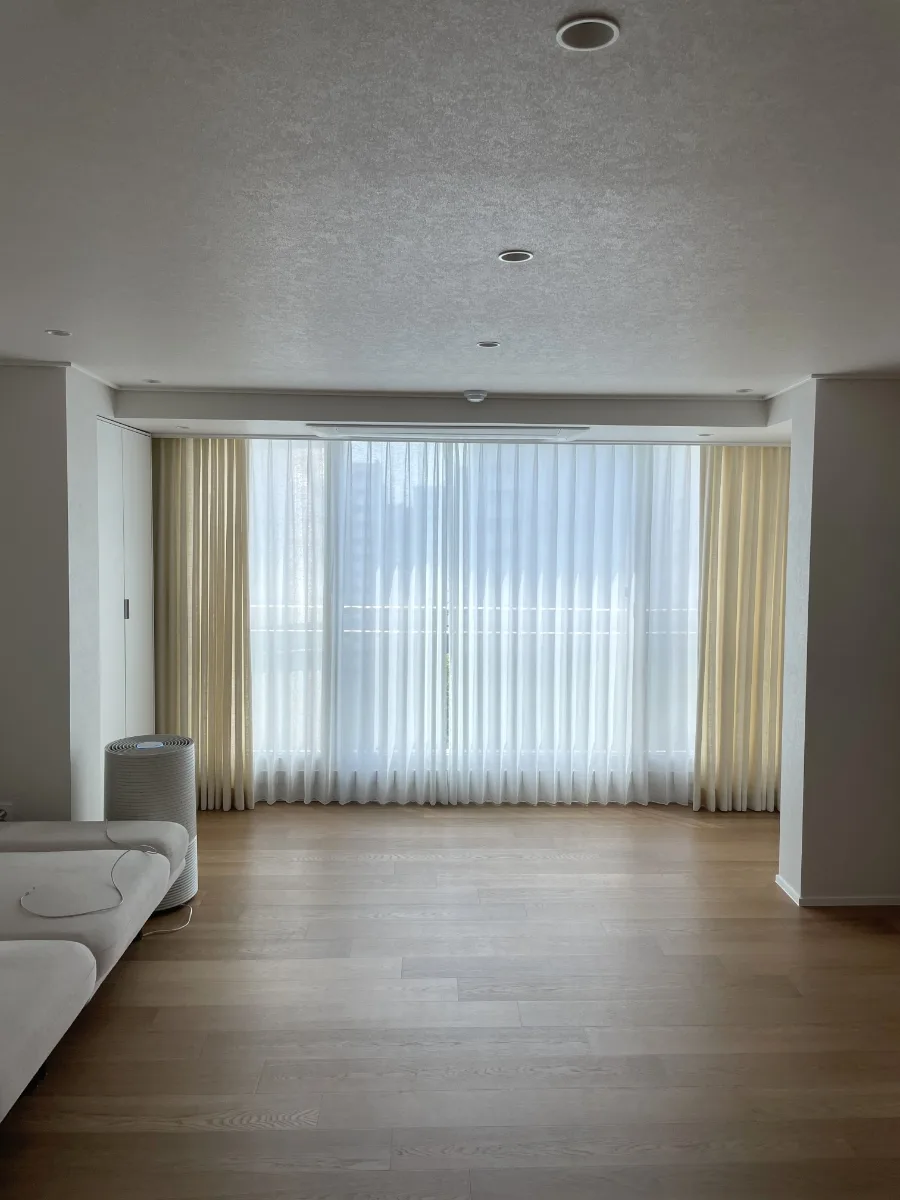
Staircase-style apartments offer a distinct advantage: the potential for abundant natural light from multiple directions. The key to interior design here is to fully leverage this natural light and create a sense of spaciousness. Connecting the kitchen and living room, perhaps with an island counter, enhances the flow and continuity of the space. Minimizing internal walls also contributes to an open-plan feel. For window treatments, consider using roller blinds or light, sheer curtains instead of heavy drapes to allow maximum light penetration. If you have a balcony that has been legally expanded, integrating this space into the living room or bedroom can further enhance the sense of openness. However, ensure proper insulation and waterproofing are addressed by professionals. Careful planning of furniture placement is also essential, considering the natural light available in each room. For example, positioning bedrooms to receive morning or afternoon sun while dedicating north-facing rooms to studies or walk-in closets can optimize the use of natural light throughout the home.
Legal and Safety Considerations for Apartment Layout Changes
When undertaking interior renovations that involve structural changes, it's crucial to be aware of legal and safety regulations. Removing load-bearing walls is strictly prohibited as it can compromise the building's structural integrity. Modifications like balcony expansions or window replacements are often subject to building codes and may require permits or official notifications. For instance, balcony expansions must comply with fire safety regulations, ensuring emergency egress is maintained. Window upgrades may need to meet specific energy efficiency standards. Furthermore, any electrical or plumbing work must be performed by licensed professionals and adhere to all relevant codes. Prioritizing safety means consulting with experts before making any structural alterations. Unsafe or non-compliant modifications can lead to accidents or legal issues, so always ensure your renovation plans are both safe and legal. Working with experienced designers and contractors is essential to navigate these requirements effectively.
For more details, check the original source below.