Mastering English to order food at restaurants in Seoul, especially around popular areas like Sangbong Station, is easier than you think. This 2026 guide provides practical English phrases for every step, from seating and menu selection to payment, along with effective practice methods for confident communication.
How to Order Food in English at Seoul Restaurants
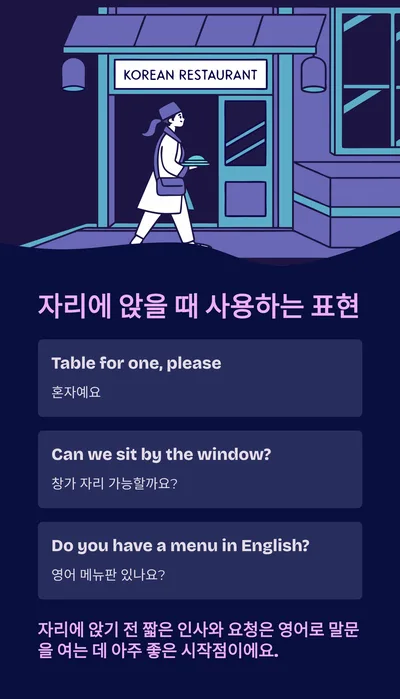
Sangbong Station is a vibrant hub in Seoul, boasting a diverse array of eateries from traditional Korean diners (like those serving hearty stews and rice dishes) to casual snack bars and refreshing cold noodle spots. My experience as a language planner has shown that practicing real-life conversations like ordering food is crucial for improving English fluency. Learning practical phrases for being seated, choosing from the menu, placing your order, and paying the bill will significantly enhance your dining experience. For instance, if you're dining alone, you can say, "Table for one, please." If you need an English menu, simply ask, "Do you have a menu in English?" Successfully navigating these initial steps is the first win in communicating in English at a Korean restaurant.
Useful English Questions for Menu Selection
When exploring a Korean menu, understanding the ingredients, flavors, and spice levels is key. Asking questions like, "What's the most popular dish here?" or "What's this dish made of?" can help you discover local favorites. If you're sensitive to spice, a simple "Is it spicy?" is essential. For those with dietary preferences, inquiring about vegetarian options with "Do you have vegetarian options?" is important. If you're keen on experiencing authentic Korean flavors, you can express that by saying, "I'd like to try something traditional." These questions not only help you make informed choices but also lead to a more satisfying meal. Don't hesitate to ask – it shows engagement and helps the staff assist you better.
Essential English Phrases for Placing Your Order
Ordering in English is straightforward once you grasp a basic sentence structure: Subject + Verb + Menu Item. For example, to order Bulgogi, you can say, "I'll have the Bulgogi, please." If you want Kimchi Jjigae with rice, ask, "Can I get the Kimchi stew with rice?" When dining with a group, clearly state the dishes and quantities, such as, "One Bibimbap and one cold noodle, please." If you have specific dietary needs, like avoiding onions, simply add, "No onions, please." Practicing these fundamental sentence patterns in various scenarios will build your confidence for real-world ordering.
English Requests During Your Meal and at Payment
Throughout your meal, you might need to request refills or additional side dishes. Phrases like "Can I get some water?" or "Excuse me, can we have some more side dishes?" are very useful. If you're enjoying the food, complimenting it with "This is delicious! What's in it?" can be a nice touch and might even reveal some interesting ingredients. When it's time to pay, ask, "Can I get the check, please?" It's also wise to confirm payment methods: "Do you take card?" If you're dining with others, you can ask, "Can we pay separately?" While tipping isn't customary in Korea, some visitors might wonder, so being prepared for "Is tip included?" is helpful, though the answer is typically no.
Boost your Seoul dining confidence with practice!