The Korean Food Safety Management Agency (HACCP Korea) is actively expanding K-Food's global reach in 2026 by strengthening food safety regulations with 8 Latin American countries. This initiative lowers export barriers and creates new market opportunities for Korean food products, building on successful programs from previous years.
What is the international cooperation project for K-Food export expansion?
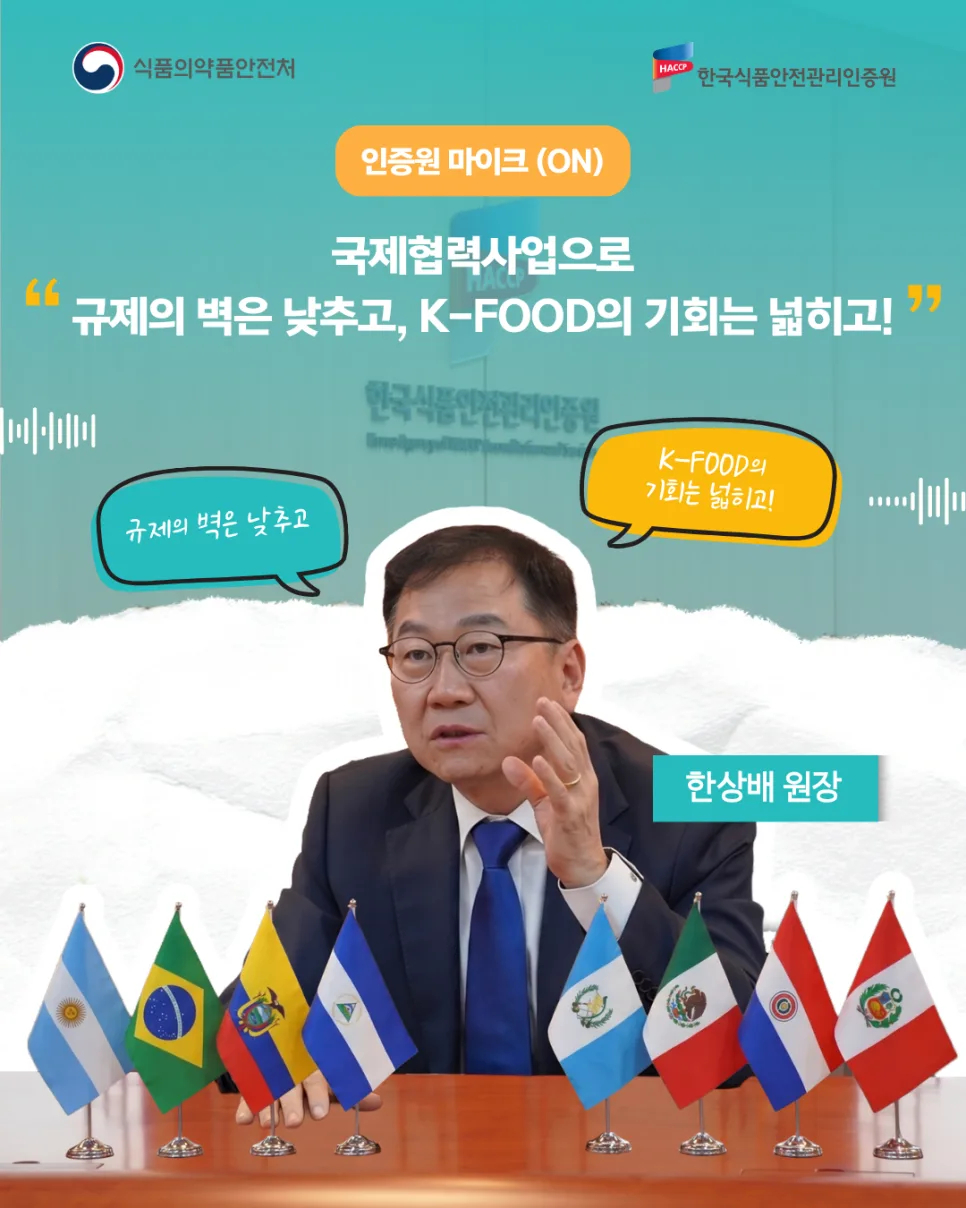
HACCP Korea, in collaboration with the Ministry of Food and Drug Safety (MFDS), is driving a significant food safety capacity-building initiative across 8 Latin American nations: Argentina, Brazil, Ecuador, El Salvador, Guatemala, Mexico, Paraguay, and Peru. Launched in 2023, this program centers on intensive training sessions, both on-site in Latin America and hosted in Korea, designed to transfer Korea's advanced food safety management technologies to officials in these countries. Beyond training, the agency organizes K-Food exhibitions and publishes comprehensive guides on Latin American food regulations. These efforts are crucial for dismantling practical export hurdles for Korean food companies, ultimately boosting the global competitiveness of K-Food.
What are the specific operational plans for this year's Latin American export support program?
This year's program is structured into two main phases: the first and second halves of the year. The first half features on-site training sessions in Mexico and Paraguay, each lasting 10 days, scheduled for April and June respectively. These sessions will focus on enhancing communication with local food safety regulatory bodies and sharing the latest information on import management systems and labeling standards. The program also includes direct visits to actual food manufacturing and distribution sites to provide companies with real-time regulatory insights. In the second half, a 10-day training program will be hosted in Korea during October, inviting officials from all 8 participating Latin American countries to offer an in-depth look at Korea's robust food safety management system.
What additional support measures are available for domestic Korean food companies?
To further assist domestic food companies in their international market entry, HACCP Korea hosts 'Export Support Briefings.' These sessions provide detailed information on food safety management systems, standards, and regulations, enabling Korean businesses to more easily understand and navigate the complex regulatory landscapes of their target export markets. This initiative is expected to not only promote the global expansion of K-Food but also create synergy effects for related industries like K-Beauty and K-Culture, significantly enhancing the global competitiveness of Korean companies. Director Han Sang-bae emphasized that these programs are vital for the overseas growth of Korea's food industry.
What should be considered when participating in the international cooperation project?
It's crucial for participating companies to recognize that food safety regulations vary significantly among Latin American countries and are subject to continuous change. Therefore, a thorough understanding of the latest regulatory trends and specific requirements of each target market is essential. For instance, certain countries may prohibit the use of specific food additives or mandate particular phrases on product labels. While leveraging the regulatory information provided by HACCP Korea, such as their published guides and briefing materials, it is highly recommended to collaborate with local experts or partners to verify information accuracy. This proactive approach will help minimize potential issues during the export process and contribute to a successful market launch.
English crawl path
Next English reads from this pilot cluster
Continue through the category hub, latest English stories, and related posts so this translated article is not an isolated URL.
Tags
💬Frequently Asked Questions
What should I check first in K-Food Export Strategy 2026: Navigating Regulations for Global Growth?
Does this Korean Food article link back to the Korean source?
Where can I find similar English stories?
English discovery path
Explore more English K-culture stories
Keep browsing the indexed English pilot cluster so Google and readers can move between this story, the category hub, and fresh discovery pages.
Original Source
Read the Korean original