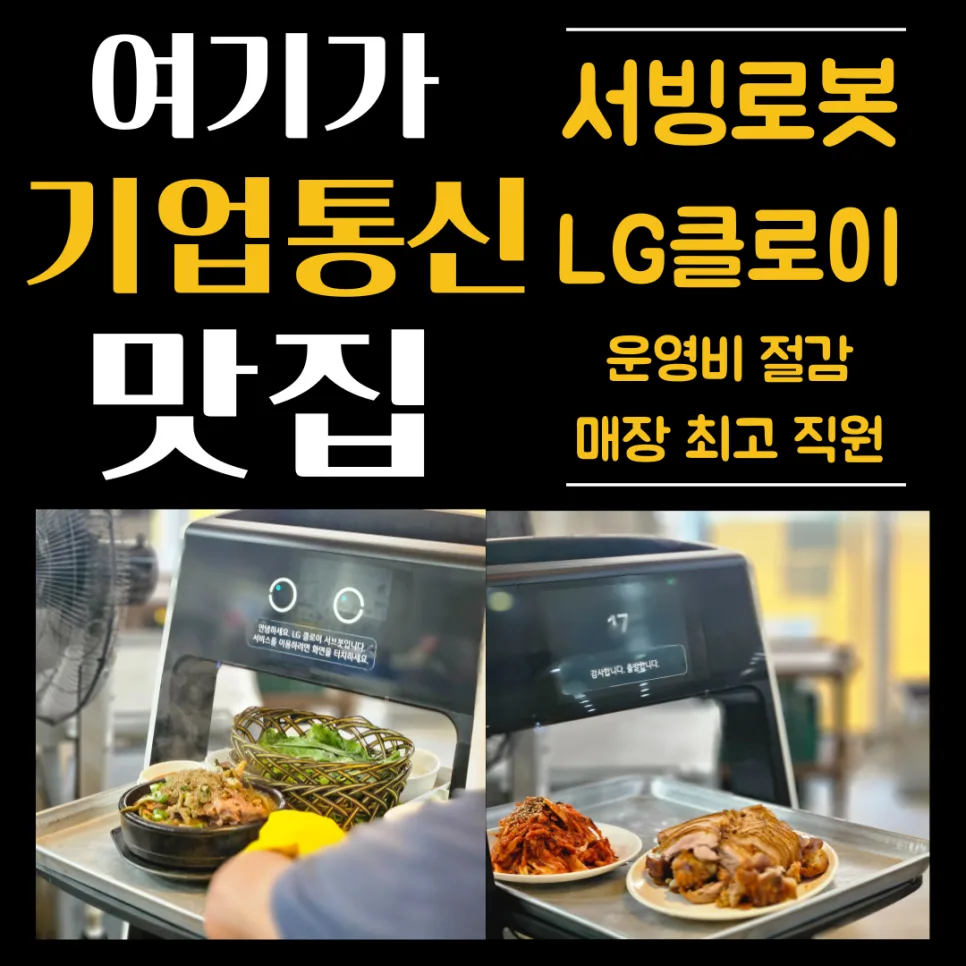
The Jangchungdong Jokbal restaurant in Daejeon, South Korea, significantly boosted its operational efficiency and customer satisfaction by implementing the LG ThinQ Serving Robot, nicknamed 'Ttol-ttol-i'. This advanced robot can operate continuously for up to 11 hours and carry up to four hot pots per tray, making it ideal for busy periods and handling large orders.
How Did Jangchungdong Jokbal Adopt the LG ThinQ Serving Robot?
The Daejeon branch of Jangchungdong Jokbal had previously considered adopting serving robots but hesitated due to concerns about unstable movements, high costs, and unhelpful support staff. They reached out to Beeple (an LGU+ corporate reseller) for a demonstration of the LG ThinQ Serving Robot. During the initial demo, the owner was so impressed by the robot's stable performance and efficiency that they affectionately nicknamed it 'Ttol-ttol-i'. This positive outcome was facilitated by a tailored solution that optimized the robot for the restaurant's specific environment and provided comprehensive training.
Optimizing for Your Restaurant: Key Features of the LG ThinQ Serving Robot
The LG ThinQ Serving Robot is designed to adapt to various restaurant layouts. It intelligently maps optimal routes considering factors like table spacing, floor conditions, kitchen and return station locations, customer traffic flow, and the presence of private rooms. Beeple leverages its extensive experience to provide customized solutions that not only install the robot but also enhance existing workflows for greater efficiency. The robot can integrate with call bells or chime systems, allowing customers in private rooms to receive notifications when their food arrives, significantly improving convenience. These optimized settings contribute to its superior stability and serving capabilities compared to other robots on the market.
Your 24/7 Employee: The Advantages of the LG ThinQ Serving Robot
The owner of Jangchungdong Jokbal often managed the busy lunch rush alone, struggling with staffing shortages. After introducing 'Ttol-ttol-i', the robot efficiently handles serving large orders, especially during peak times when many hot pot dishes are ordered. Its capacity to carry up to four hot pots per tray makes serving groups seamless. With its ability to operate continuously for up to 11 hours, it effectively works all day without breaks, leading the owner to remark, 'It's better than a person.' This has substantially reduced the owner's workload and stress.
Meeting Evolving Customer Needs: How Serving Robots Enhance Dining Experiences
Since the COVID-19 pandemic, there's been a noticeable increase in solo diners and smaller groups, leading to a greater demand for contactless ordering via table-side devices and a preference for personal space. While many restaurant owners worry that customers might find serving robots awkward or off-putting, the reality has been surprisingly positive. Customers naturally retrieve their food when the robot arrives at the table without needing explicit instructions. Interestingly, older customers often show more curiosity and engagement with the robots. The robot's interface is user-friendly, with simple button controls that allow anyone to learn its operation within an average of five minutes.
Systematic Training and Ongoing Support: Beeple's Unique Benefits
Beeple offers more than just installation and demonstrations; they provide comprehensive consulting that includes analyzing the restaurant's operational flow, market conditions, and marketing strategies. They design the most efficient routes tailored to each establishment's specific needs and have staff visit in person to conduct detailed training for employees. During the initial setup phase, Beeple staff remain on-site to ensure the robot operates smoothly. They analyze robot usage data through a management system to identify areas for improvement and continuously update the robot's features. A key advantage of Beeple is their commitment to ongoing support, including providing free promotional banners for the restaurant to announce the robot's arrival. For more details, please refer to the original source.