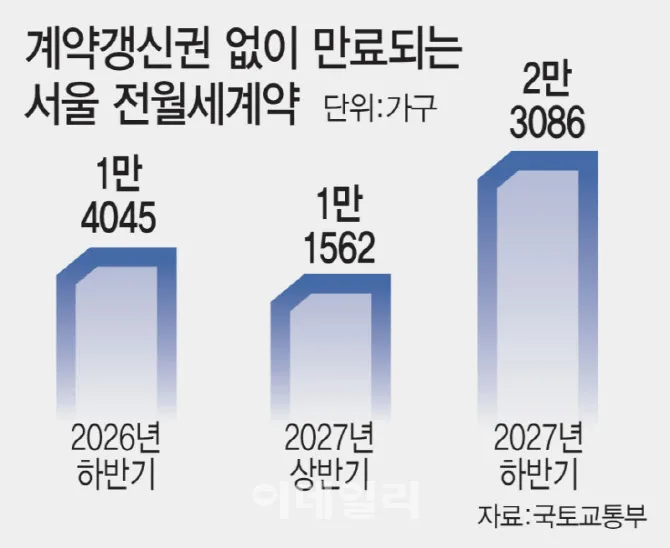
In 2026, Seoul's apartment rental market faces significant instability as approximately 50,000 units will see their lease contracts expire, exposing them to current market prices. This situation is compounded by potential delays in the GTX Samsung Station construction, increasing anxiety for tenants. Renters who secured leases in 2022 may now face hundreds of thousands of dollars in increased rental costs, creating a substantial financial burden.
Why Are So Many Seoul Leases Expiring in 2026?
Seoul's apartment rental market is bracing for a significant shift in 2026, with an estimated 50,000 households set to have their lease contracts expire. This means these properties will be directly exposed to current market rental rates. For tenants who signed leases in 2022 at relatively lower prices, this could translate into needing to cover hundreds of thousands of dollars more in rent. In prime areas like Nowon and Seocho, current rental listings are already showing increases of $75,000 to $225,000 compared to the previous contract rates. This intensifying rental crisis is a result of multiple factors, including a decrease in available rental units, a shift towards monthly rent payments (instead of large lump-sum deposits), and the reintroduction of capital gains tax surcharges for multi-homeowners. Tenants are facing difficult choices: renew at a higher rate, relocate to the outskirts, or consider purchasing a home.
How GTX Samsung Station Delays Impact the Rental Crisis
Concerns over construction quality have surfaced regarding the GTX-A line's crucial Samsung Station section. It was discovered that rebar was installed below design specifications in a significant portion of the station's pillars, potentially delaying the planned June opening of the entire line. Out of 80 pillars, 50 failed to meet standards. The construction company was reportedly aware of the issue since November but only recently reported it to the Ministry of Land, Infrastructure, and Transport, sparking criticism over oversight. Samsung Station is a vital transit hub connecting the GTX-A and C lines, as well as other subway and metropolitan rail lines. Any prolonged construction delays due to necessary reinforcement work could have cascading effects on subsequent construction phases. Coupled with rising construction costs and funding challenges for the overall GTX project, these quality control issues are further destabilizing the market.
Will Seoul's Rental Crisis Drive Demand to Redevelopment Areas?
The escalating rental crisis in Seoul, alongside potential delays at GTX Samsung Station, is beginning to impact redevelopment projects in adjacent areas. Neighborhoods like Geumho-dong and Jayang-dong, benefiting from the proximity and influence of the Seongsu district, are seeing renewed interest. Geumho-dong is planning its first 'Moa Town' (a type of urban regeneration project) with 518 units, and Geumho 21 district is awaiting integrated review later this year. Jayang 4-dong is also experiencing active redevelopment discussions. Despite high property values, with small 10-pyeong (approx. 350 sq ft) villas trading for around $1.1 million, demand is shifting towards these redevelopment zones as tenants seek more stable housing solutions amidst rental market uncertainty. However, the substantial initial investment required and the inherent uncertainties of redevelopment projects necessitate careful consideration.
Key Considerations for Tenants Facing Lease Expiration
As your lease expiration date approaches, tenants in Seoul should keep several key points in mind. First, thoroughly research current rental market rates and estimate the potential increase for lease renewal. Develop a clear financial plan to accommodate these changes. Second, verify your eligibility to use the lease renewal option and understand the terms, including any legal limits on rent increases. Third, if the rising costs of renting in Seoul become unmanageable, explore options such as relocating to the outskirts or other metropolitan areas, or consider transitioning to homeownership. However, if considering a purchase, carefully weigh the risks associated with fluctuating interest rates and potential property value declines. Your optimal decision will depend on your individual financial situation and long-term housing needs, making consultation with a real estate professional advisable.
English crawl path
Next English reads from this pilot cluster
Continue through the category hub, latest English stories, and related posts so this translated article is not an isolated URL.
Tags
💬Frequently Asked Questions
How many Seoul households will face market rental rates due to expiring leases in 2026?
What is the likelihood of delays for the GTX Samsung Station construction?
Could Seoul's rental crisis shift demand towards redevelopment areas?
What should tenants prepare for as their Seoul lease expires?
English discovery path
Explore more English K-culture stories
Keep browsing the indexed English pilot cluster so Google and readers can move between this story, the category hub, and fresh discovery pages.
Original Source
Read the Korean original





