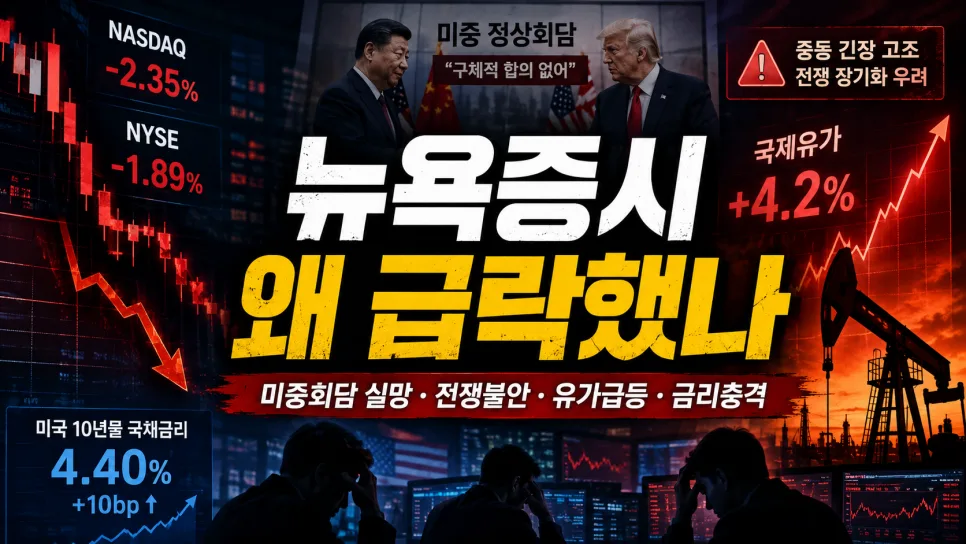
The New York Stock Exchange experienced a significant downturn in 2026, primarily driven by a confluence of factors: disappointing US-China summit outcomes, escalating geopolitical tensions, and a sharp rise in interest rates. An experienced market analyst breaks down the key elements impacting investor sentiment.
Why Did the US-China Summit Disappoint Investors?
Investors had pinned high hopes on the US-China summit, anticipating concrete steps toward de-escalating global tensions and resolving geopolitical risks. Specifically, there was optimism surrounding potential progress on the Iran issue, easing tensions in the Strait of Hormuz, stabilizing energy supplies, and signals of global inflation control. However, the post-summit statements were largely general, failing to deliver the substantive breakthroughs the market was looking for. This lack of significant progress led to immediate disappointment, triggering profit-taking and contributing to the bearish trend on Wall Street. Major indices saw a sharp reversal following the summit's conclusion, reflecting investor dissatisfaction.
How Did War Fears and Soaring Oil Prices Impact the Market?
The re-emergence of geopolitical risks proved to be a highly sensitive factor in the market's downturn. Escalating rhetoric between the US and Iran, in particular, rapidly heightened investor anxiety. The market began to price in the possibility of a prolonged conflict in the Middle East, which directly led to a more than 4% surge in crude oil prices within a single day. Rising oil prices inevitably exacerbate inflationary pressures, potentially influencing the US Federal Reserve's interest rate policy. This, in turn, fueled concerns about inflation and weakened expectations for interest rate cuts, creating a negative feedback loop for the stock market.
What Was the Impact of Soaring Treasury Yields on Stocks?
As fears of war and rising inflation intensified, investors gravitated towards safe-haven assets, causing US Treasury yields to climb rapidly. The US 10-year Treasury yield rose by over 10 basis points, and the 30-year yield surpassed 5.1%, significantly increasing the burden of long-term borrowing costs. Generally, rising interest rates increase corporate borrowing expenses and consumer loan burdens, negatively impacting the stock market. Growth stocks, particularly AI-focused technology companies that rely heavily on future earnings potential, are especially sensitive to interest rate hikes. These stocks faced increased selling pressure as higher rates directly affect their future valuation models.
Why Did Profit-Taking in AI Stocks Coincide with Market Overheating Concerns?
Recently, the New York Stock Exchange had seen a rapid ascent, largely propelled by AI-related technology stocks. Companies involved in semiconductors and servers, in particular, had experienced significant price appreciation driven by high market expectations. Against this backdrop, the confluence of disappointing US-China summit results, heightened Middle East war risks, soaring oil prices, and rising Treasury yields acted as catalysts for profit-taking. Selling pressure intensified, especially in AI stocks that had seen substantial gains. Coupled with existing discussions about market overheating, even minor negative news amplified volatility. These combined factors created a perfect storm for a market correction.
For more details, check the original source below.





