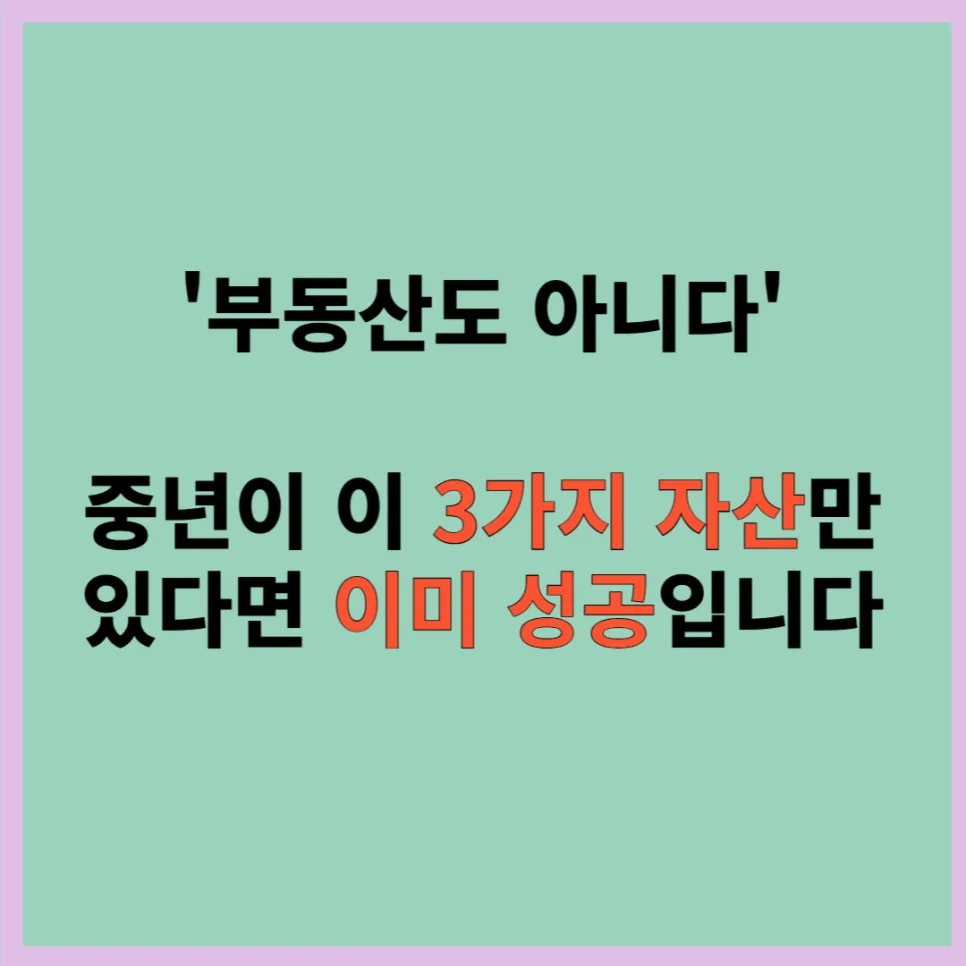
As of 2026, the most crucial assets for midlife individuals extend beyond real estate to encompass health, relationships, and personal capabilities. Cultivating these three pillars can lead to a stable and fulfilling life, irrespective of financial standing.
Why Are Non-Real Estate Assets Crucial After Midlife?
In younger years, financial goals like salary increases, homeownership, and debt reduction are clear. However, midlife brings a shift. Issues beyond monetary solutions—such as health concerns, shrinking social circles, declining work motivation, and loneliness—become significant aspects of life. Therefore, the focus moves from 'how much you've earned' to 'how sustainably you can maintain your overall life quality.' This isn't just about financial affluence; it's directly tied to your quality of life. Maintaining physical and mental well-being becomes a cornerstone for navigating life's later stages.
Health Assets: The Foundation for Life's Cash Flow
Experts identify health as the paramount asset after midlife. Good health enables you to work, socialize, pursue hobbies, and seize new opportunities. By your 40s and 50s, you'll likely feel the decline in physical stamina, making the importance of health undeniable. Instead of postponing health management, it's vital to consistently incorporate basic habits like regular walking, adequate sleep, strength training, and a balanced diet. These healthy practices become your most powerful asset for maintaining a high quality of life in your middle years and beyond.
Relationship Assets: A Strong Support System for Life's Stability

The second critical asset is relationships. While you might feel self-sufficient in your youth, as you age, having people to rely on during illness, confide in during tough times, or share meals with significantly impacts your life's stability. After midlife, the quality of relationships becomes more important than the quantity. A few genuine, long-lasting connections hold more value than a large network of superficial acquaintances. Positive relationships with a spouse, children, long-term colleagues, or even neighbors who check in on each other can make life more robust, even with limited financial resources. Therefore, managing your social connections should be recognized as a key part of asset management in midlife.
Personal Capability Assets: The Power to Adapt and Thrive Anew
Finally, the ability to 'live again'—your personal capability assets—is essential. After midlife, the threat of feeling obsolete can be more significant than a decrease in income. Reduced roles at work or changes in social standing can quickly destabilize an individual. It's crucial to continuously learn and update your expertise by pursuing new studies, finding side hustles, or developing hobbies to adapt to a changing world. These personal capabilities not only contribute to earning potential but also maintain your life's energy and purpose. Consistent self-development serves as a driving force for vitality throughout your later years.
Midlife Anxiety Beyond Just Money
Many people feel anxious despite financial security, often because their health, relationships, or personal capabilities have weakened. When your body is ailing, connections fade, and your ability to do things diminishes, money alone can lead to emptiness. Therefore, for true stability and happiness in midlife and beyond, it's key to expand your concept of assets beyond just finances to include the 'non-monetary assets' of health, relationships, and personal capabilities that support your entire life.
Discover more midlife wealth management strategies in the original article.