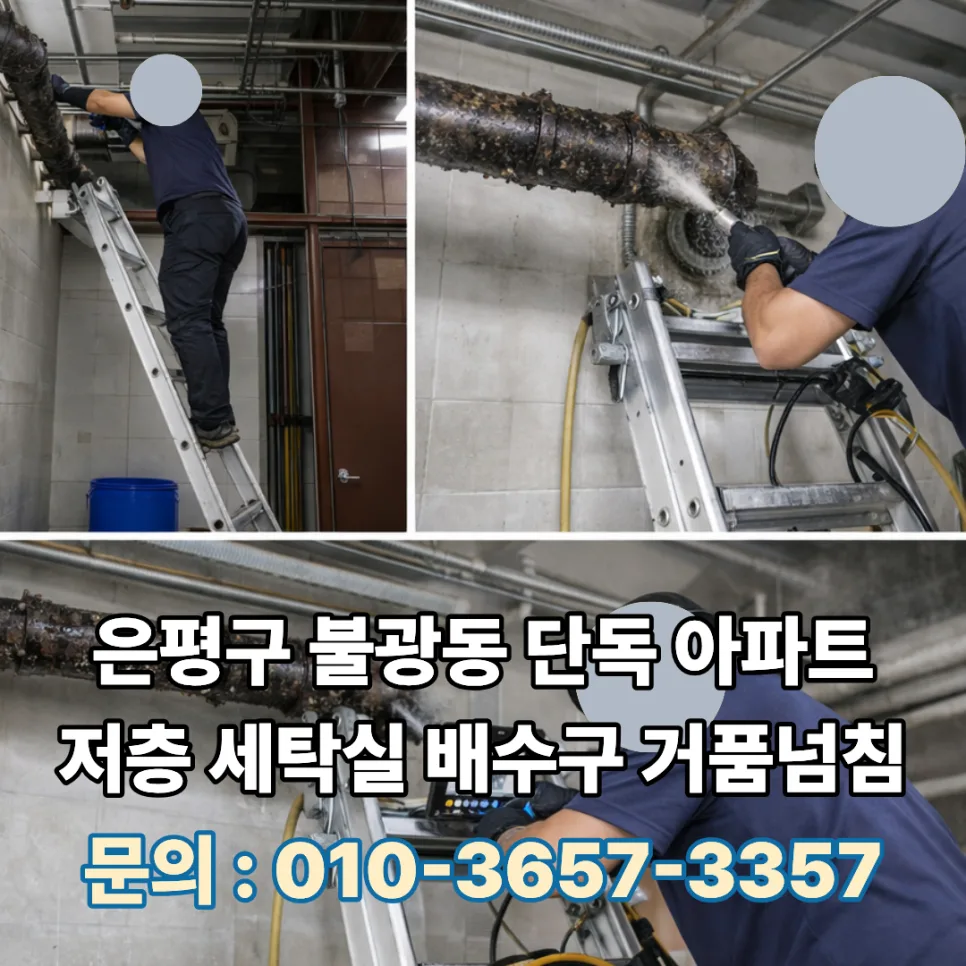
Low-floor laundry room backups in apartments, often seen as foam or wastewater backing up, are typically caused by severe blockages in the building's shared drainage pipes. In 2026, the most effective solution for this persistent issue is high-pressure cleaning of the main horizontal pipes, often located in the basement or underground parking areas.
What Causes Laundry Room Backups in Low-Floor Apartments?
In older apartment buildings, particularly in areas like Eunpyeong-gu, Seoul, low-floor laundry rooms experiencing foam or wastewater backups are usually a symptom of clogged communal sewer lines, specifically the main horizontal pipes (횡주관) that run through the building, often beneath the underground parking. Over time, laundry detergents, grease, and other debris accumulate, forming thick sludge that obstructs water flow. This blockage forces wastewater and foam to back up into the lowest drainage points – the laundry rooms of the lower-floor units. This isn't just an isolated problem for one unit; it's a clear indicator that the building's entire plumbing system needs attention, with the root cause often being these main horizontal pipes.
How Does High-Pressure Pipe Cleaning Work, and What Are Its Benefits?
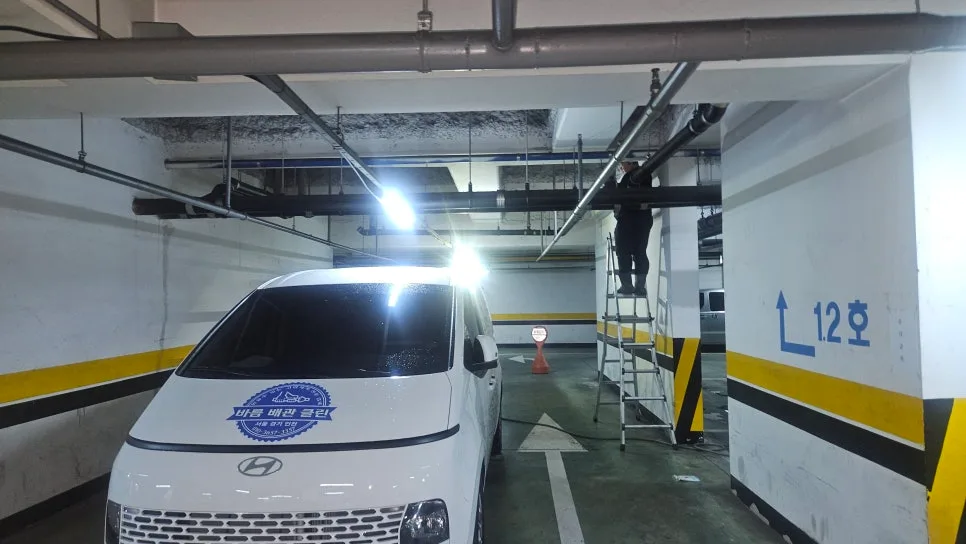
High-pressure pipe cleaning is a specialized service designed to tackle stubborn blockages in communal sewer lines, especially those in hard-to-access areas like underground parking garages. Technicians use powerful, specialized equipment to insert a high-pressure hose into the pipe. This hose then blasts water at extremely high volumes and pressures, effectively scouring away years of accumulated sludge, grease, and detergent residue from the pipe walls. This process thoroughly cleans the interior of the pipe, restoring normal water flow and fundamentally resolving the backup issue. Numerous cases have shown that this method successfully clears blocked pipes and eliminates recurring foam backups, bringing the building's drainage system back to optimal functionality.
How Can You Prevent Laundry Room Drain Backups?
Preventing foam backups in your laundry room involves adopting a few key habits. Firstly, avoid using excessive amounts of detergent; stick to the recommended dosage, as too much soap can contribute to foam buildup and pipe clogs. Secondly, be mindful of what goes down the drain. Avoid pouring greasy residues or food scraps directly into the laundry drain, as these can solidify and create stubborn blockages. It’s best to dispose of such waste separately or rinse containers thoroughly before washing. Additionally, consider scheduling professional high-pressure cleaning of the building's main horizontal pipes every 1-2 years. This proactive maintenance is highly effective in preventing major blockages and costly emergency repairs.
What Should You Do If You Notice Early Signs of Drainage Issues?
If you start noticing slow drains or foam appearing in your laundry room sink, don't ignore these early warning signs. They often indicate that a blockage in the communal pipes is worsening and could lead to a more severe backup incident. It's crucial to contact a professional plumbing service immediately for an inspection. Addressing the issue early through preventative measures, such as high-pressure cleaning of the main horizontal pipes, can save significant time and money compared to dealing with a full-blown emergency. This proactive approach ensures the building's plumbing remains in good condition and avoids disruptive and unpleasant backup situations.
For more details, check the original source below.





