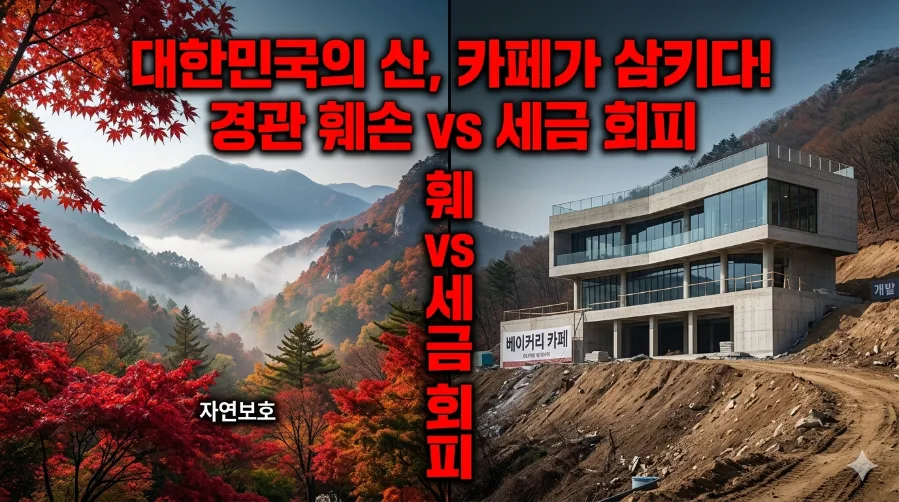
This article analyzes the trend of large cafes being built on mountainsides in Korea, focusing on how they exploit the business inheritance tax deduction system as of 2026. We'll uncover the risks associated with unregulated development and the truth behind circumventing property inheritance taxes.
Why Are Large Cafes Popping Up on Mountainsides? The 'Business Inheritance Tax Deduction' Loophole
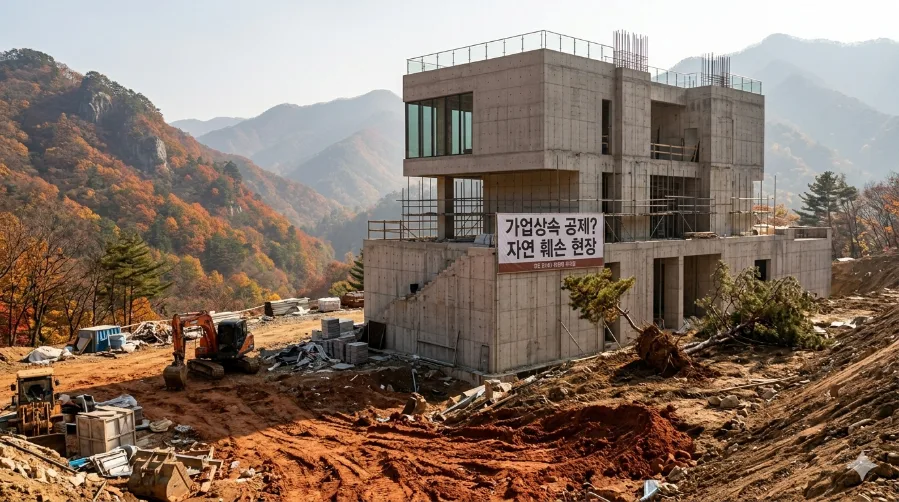
The proliferation of large cafes in scenic mountain areas often masks a hidden agenda beyond serving coffee. Many are strategically developed to exploit loopholes in Korea's business inheritance tax deduction system, aiming to inflate property values and significantly reduce inheritance taxes for the next generation. While these establishments often market themselves as bakeries to qualify for tax benefits, the reality is frequently far removed from actual baking operations. The primary goal is to acquire mountain land, develop it into a cafe, and then pass it on to heirs with minimal tax liability. This practice transforms precious natural landscapes into mere tools for asset management and tax evasion, undermining the principles of fair wealth transfer in society.
What Are the Risks of Mountain Development for Large Cafes? Landslides and Ecosystem Destruction
Developing large-scale cafes on mountainsides carries severe and often irreversible environmental consequences. Extensive deforestation and alteration of natural terrain significantly destabilize the ground, dramatically increasing the risk of massive landslides, especially during heavy rainfall. This poses a direct threat to human life and property. Furthermore, the constant noise and light pollution from these establishments disrupt wildlife habitats, fragmenting ecosystems and displacing native species. The large concrete structures and paved areas also reduce the land's natural water absorption capacity, exacerbating flood risks in downstream communities. In essence, these developments, driven by short-term tax avoidance, create substantial long-term environmental and societal costs.
How Are Cafes Exploiting the Business Inheritance Tax Deduction, and What Are the Government's Regulations?
Not all attempts to exploit the business inheritance tax deduction for cafe development succeed. The Korean government is actively cracking down on these practices. Recent regulations aim to exclude





