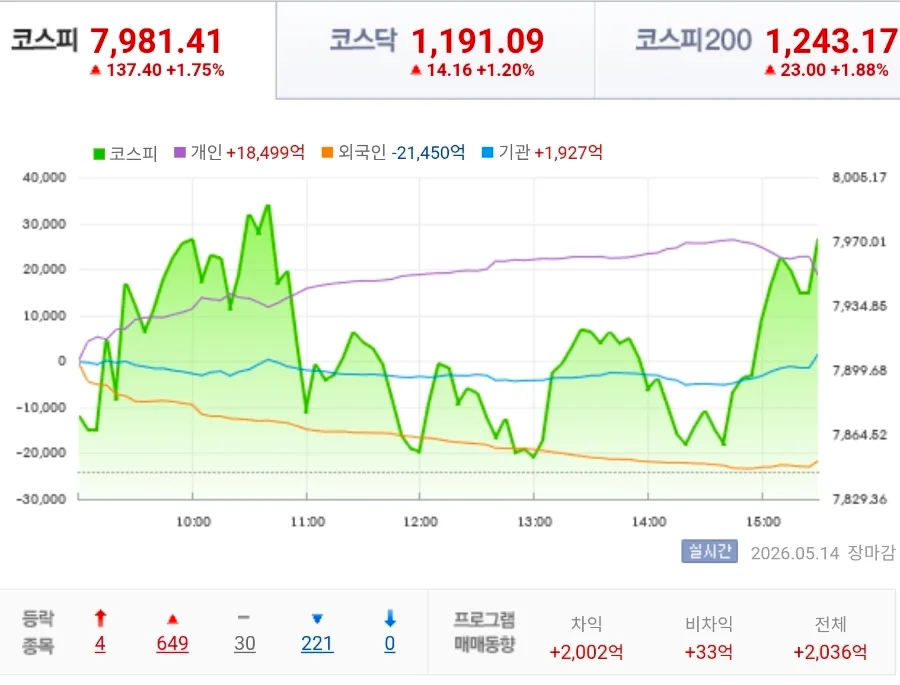
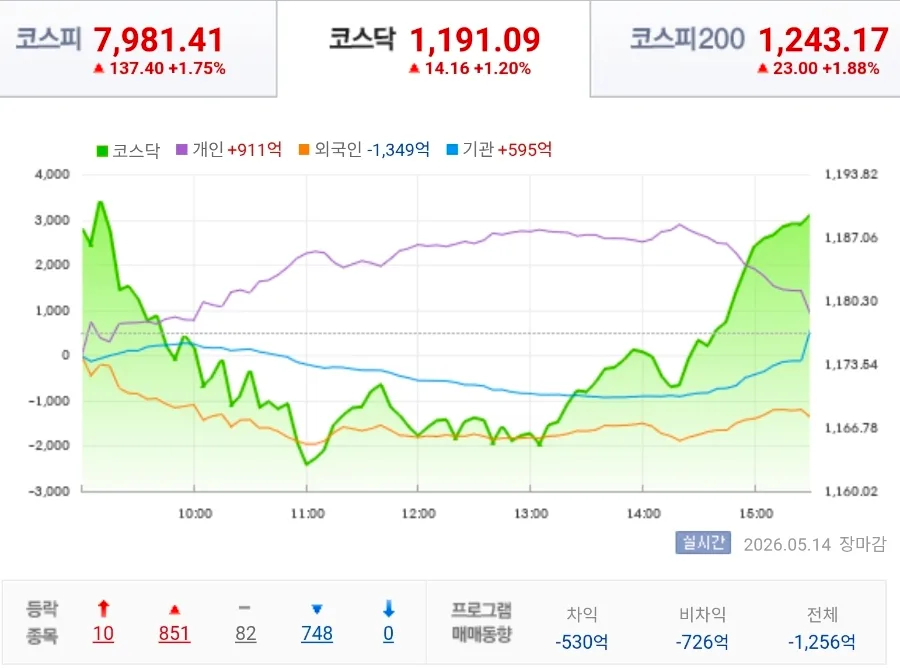
On May 14, 2026, the Korean stock market closed with mixed signals, influenced by anticipation surrounding the US-China summit and shifts in trading dynamics. The KOSPI rose 1.75% to 7,981.41, while the KOSDAQ saw a 1.2% increase, closing at 1,191.09. This analysis is based on real market participant experience and expert insights.
How Did the US-China Summit Impact the Market?
Following the CPI release, the US market showed strength, particularly in semiconductors and big tech, driven by optimism about the US-China summit. The Korean market mirrored this trend, with Samsung Electronics (+4.2%) leading the KOSPI closer to the 8,000-point mark. Positive news regarding Nvidia's H200 chip purchase approval also boosted related Korean semiconductor stocks. However, some gains were tempered by heightened tensions concerning Taiwan discussed during the summit. Chinese President Xi Jinping emphasized China's openness and potential for economic cooperation, signaling a significant factor for global economic and market outlooks.
Why Are Consumer Goods Stocks So Strong?
The consumer goods sector continued its strong performance, fueled by a series of positive earnings reports and a simultaneous improvement in both exports and domestic demand. Companies like Samyang Foods (+11.1%), benefiting from robust ramen exports, along with food and beverage (Nongshim +7.2%), beauty (APR +5.7%), and department stores (Shinsegae +10.9%), all saw significant gains. The outlook for increased inbound tourism also positively impacted the hotel and leisure industries (Hotel Shilla +8.0%, Lotte Tour Development +7.4%). This sector's strength reflects growing confidence in the domestic economic recovery.
What Are the Key Sector Features and Potential Risks in Semiconductors?
Today's market also highlighted specific sectors such as solar power and aviation. HD Hyundai Energy Solutions (+15.1%) and Hanwha Solutions (+10.8%) surged on expectations of data center growth through collaborations like Google and SpaceX. The approval of the merger board for Asiana Airlines (+16.9%) and Korean Air (+6.0%) provided a boost to the aviation industry. Asset-heavy companies like Seobu T&D (+10.8%) and Harim Holdings (+8.9%), whose land values were highlighted by development plans in Seoul, also performed well. Meanwhile, a potential risk emerged in the semiconductor sector as Samsung Electronics announced preemptive production cuts ahead of a union strike, raising concerns about future output disruptions. Market attention is now focused on the government's mediation efforts next week.
What Should Investors Consider?
Foreign investors recorded their sixth consecutive day of net selling on the KOSPI, totaling approximately $1.5 billion (₩2 trillion), which could contribute to market volatility. Trading patterns showed rotation into various sectors beyond the initial semiconductor rally, with shipbuilding, automotive, pharmaceutical, construction, insurance, cosmetics, entertainment, and petrochemical stocks all experiencing gains. Investors should closely monitor these shifts in supply and demand, alongside macroeconomic indicators such as US retail sales for April and Korean export/import price data. This is not financial advice. Consult a licensed financial advisor before making investment decisions.
For more details, check the original source below.





