The KODEX Gold Futures ETF (H) tracks gold futures prices with currency hedging (H) to eliminate exchange rate volatility. In 2026, this ETF offers potential gains from rising gold prices, but investors must consider rollover costs and management fees. It's generally more suitable for portfolio stabilization than aggressive growth.
Is Investing in Gold ETFs a Good Idea in 2026?
Amidst ongoing global economic uncertainty and inflation concerns, gold prices have shown a steady upward trend. In times like these, gold is recognized as a premier safe-haven asset, leading more investors to consider adding it to their portfolios. From my personal experience, gold ETFs have proven effective in enhancing portfolio stability during periods of market volatility. Products like the KODEX Gold Futures ETF (H), which include currency hedging, offer the advantage of focusing purely on gold price movements. However, timing is crucial in all investments, and decisions regarding gold ETF investments should be made after a thorough analysis of the current market conditions and individual investment goals. This is not financial advice. Consult a licensed financial advisor.
What is the Structure and Key Features of the KODEX Gold Futures ETF (H)?
The KODEX Gold Futures ETF (H) operates not by directly holding physical gold, but by tracking the price fluctuations of gold futures contracts. The '(H)' signifies currency hedging, meaning it aims to eliminate the risk associated with fluctuations in the USD/KRW exchange rate. Consequently, the ETF's returns are determined solely by the movement of gold prices. While you can profit from rising gold prices, you won't benefit from additional gains due to a strengthening US dollar against the Korean Won. This structure is advantageous for investors seeking to avoid currency-related risks but may be a drawback for those looking to capitalize on currency appreciation. It's essential to carefully assess whether this product aligns with your investment profile and objectives before investing.
What's the Difference Between Physical Gold ETFs and Futures ETFs?
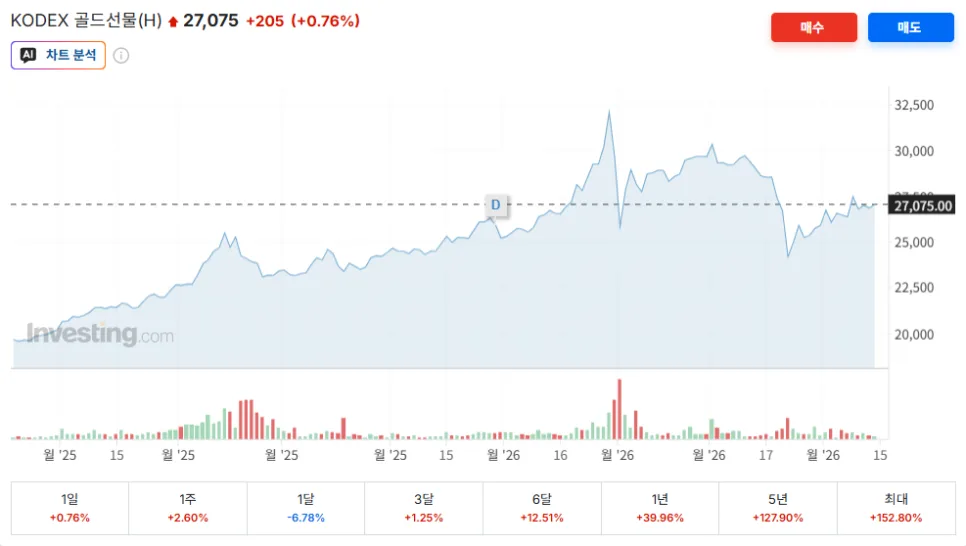
Gold ETFs can be broadly categorized into physical gold ETFs, which track the price of actual gold, and futures ETFs, which track gold futures contracts. The KODEX Gold Futures ETF (H) falls into the latter category. Because futures contracts have expiration dates, futures ETFs undergo a process called 'rollover' to automatically switch to the next expiring contract. This rollover process can incur costs, potentially reducing the ETF's returns over the long term. In contrast, physical gold ETFs typically hold actual gold or equivalent assets, thus avoiding rollover costs. For long-term investors seeking value preservation and long-term appreciation, a physical gold ETF might be more suitable. However, if you aim to capitalize on short-term gold price movements or use it for portfolio diversification, a futures ETF could be an option. It's also important to compare the total expense ratios (TER) of futures ETFs against physical ETFs.
What Should Investors Consider Before Investing in KODEX Gold Futures ETF (H)?
There are three key points to consider before investing in the KODEX Gold Futures ETF (H). Firstly, it's a currency-hedged product. This minimizes exchange rate risk but also means you forgo potential profits from a strengthening US dollar. Secondly, as a futures ETF, it incurs rollover costs. These costs, arising from the continuous replacement of expiring futures contracts, can impact long-term returns, so it's crucial to consider your investment horizon. Thirdly, the total expense ratio (TER) for KODEX Gold Futures ETF (H) is not insignificant, so factor this into your long-term investment plans. Weighing these factors against your investment goals and timeframe is essential. Your individual circumstances may lead to different outcomes, so consulting with a financial professional is recommended.
Who is Gold ETF Investment Suitable For?
The suitability of investing in the KODEX Gold Futures ETF (H) depends heavily on individual investment objectives. It can be a good choice for investors looking to enhance the overall stability of their portfolio or reduce the high volatility often seen in stock markets. Gold typically has a low correlation with stocks, offering diversification benefits and acting as a store of value during times of market uncertainty. However, it may not be ideal for investors seeking aggressive short-term gains or those who wish to profit from currency appreciation. Personally, I utilize gold ETFs for about 5-10% of my total assets to buffer portfolio risk, as I believe they are better suited for defensive asset management than aggressive profit generation. Therefore, clearly defining your investment profile and goals before making a decision is paramount. This is not financial advice. Consult a licensed financial advisor.
See the original source for more detailed investment strategies.