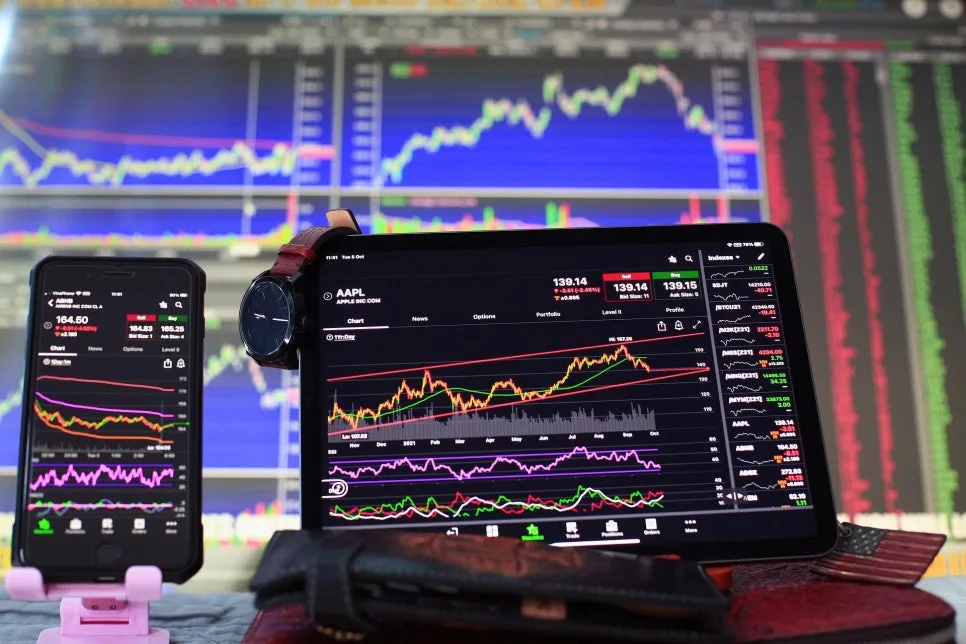
High-Frequency Trading (HFT) is a strategy involving the trading of financial instruments in fractions of a second, aiming to profit from minute price fluctuations. Unlike traditional long-term investing, HFT relies entirely on cutting-edge technology and complex algorithms. This approach is crucial for understanding modern market dynamics and its distinction from value-based investing strategies.
What is High-Frequency Trading (HFT) and Why Did It Emerge?
High-Frequency Trading (HFT) utilizes ultra-fast computer systems and sophisticated algorithms to execute a massive volume of trades in financial instruments like stocks, futures, and options, often within milliseconds (1/1000th of a second). The primary goal of HFT is to capture profits from minuscule price differences (spreads) or short-lived patterns that appear in the market. This fundamentally differs from traditional investment methods because trades occur at speeds far exceeding human cognitive abilities. HFT became feasible with the introduction of Electronic Communication Networks (ECNs) and decimalization in the US stock market in the late 1980s, which allowed for more granular pricing. Its full potential was unlocked by advancements in computing power and high-speed communication networks. HFT algorithms analyze real-time market data to automatically execute buy and sell orders when specific conditions are met. Common HFT strategies include market making, arbitrage, and momentum tracking.
What Are the Characteristics of HFT Algorithms?
HFT algorithms are defined by several key characteristics that set them apart from human-driven or slower algorithmic trading. Firstly, they possess extreme speed, executing trades in microseconds or nanoseconds. Secondly, they engage in high-volume trading, executing thousands or even millions of orders daily. Thirdly, HFT strategies typically maintain very short-term positions, often closing them within seconds or minutes to avoid market risk. Fourthly, they are heavily reliant on algorithms, with trading decisions made by complex mathematical models rather than human discretion. Finally, HFT requires substantial investment in technology, including co-location services, high-speed data feeds, and powerful processing hardware. These algorithms are designed to exploit fleeting market inefficiencies, making them highly sensitive to latency and data accuracy. The constant evolution of these algorithms is driven by the need to stay ahead in a highly competitive environment.
HFT vs. Long-Term Investing: What's the Core Difference?
The fundamental divergence between HFT and long-term investing lies in their objectives, analytical methods, and holding periods. HFT aims to profit from short-term price fluctuations, employing mathematical and statistical algorithms to identify and exploit micro-opportunities. Positions are held for mere seconds or minutes. In contrast, long-term investing focuses on the growth of a company's intrinsic value over months, years, or even decades. It relies on fundamental analysis, evaluating a company's financial health, management, and industry position. While HFT contributes to market liquidity and can narrow bid-ask spreads, it can also exacerbate volatility during market stress. Long-term investing, on the other hand, supports capital allocation and corporate governance, fostering sustainable economic growth. The risks associated with HFT include system failures, algorithmic errors, and intense competition, whereas long-term investors face risks from business cycles, industry disruption, and macroeconomic shifts.
What Are the Requirements and Precautions for Participating in HFT?
Direct participation in HFT for individual retail investors is practically impossible due to extremely high technological and capital barriers. Firstly, establishing the necessary 'technical infrastructure' is paramount. This involves co-locating servers in the same data centers as exchange servers and securing ultra-high-speed communication networks, often using fiber optics or microwave transmission. Secondly, 'algorithm development' is crucial, requiring the translation of profitable trading logic into mathematical models and programming them using high-performance languages like C++ or FPGA. The developed algorithms must then undergo rigorous 'historical data testing (backtesting)' for validation and optimization. Subsequently, 'live operation and monitoring' are conducted, managing potential risks like infinite loop bugs in real-time. Finally, algorithms require 'continuous improvement' to adapt to market structure changes and competitive pressures. Given these demanding requirements, individual investors are better advised to focus on developing suitable long-term investment strategies.
For more details, check the original source below.





