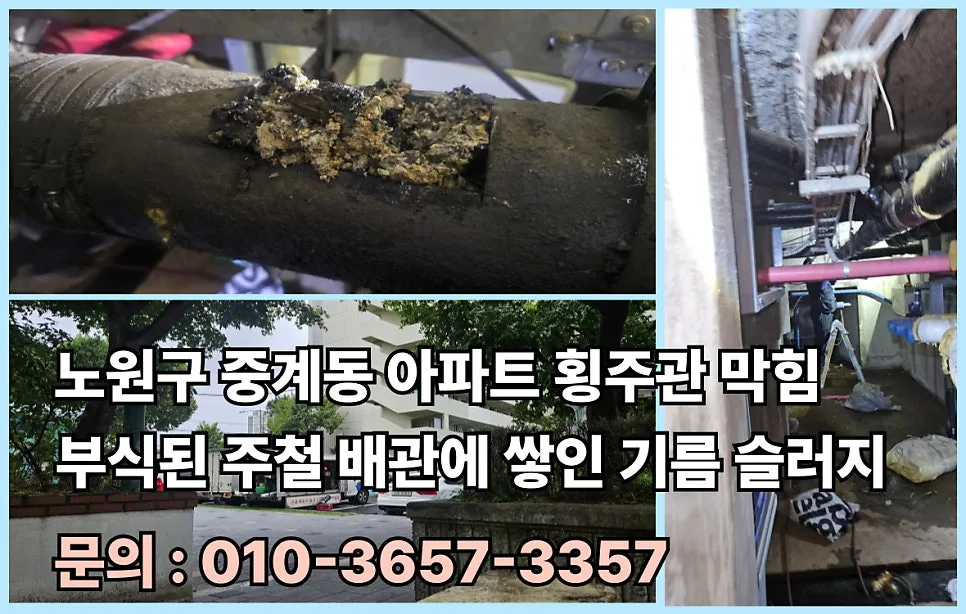
The primary causes of clogged cast iron pipes are grease sludge, detergent residue, and material corrosion. Based on real-world experience with high-pressure cleaning in a 30-year-old apartment, this guide details the root causes of clogs, corrosion risks, and the resolution process.
Why Do Old Cast Iron Pipes Get Clogged?
Clogged cast iron pipes, common in older apartments, result from a combination of accumulated debris and the aging and corrosion of the pipes themselves. Especially in buildings over 30 years old, the limitations of cast iron material lead to severe internal corrosion. This causes grease sludge, detergent residue, and other waste to harden, obstructing drainage flow. In one apartment in Nowon-gu, Junggye-dong, the laundry room drain backed up, revealing that the horizontal pipe was over 90% blocked and at risk of damage due to corrosion. These blockages are critical warning signs that, if ignored, can lead to pipe rupture, necessitating prompt action.
What Are the Risks of Cast Iron Pipe Corrosion?
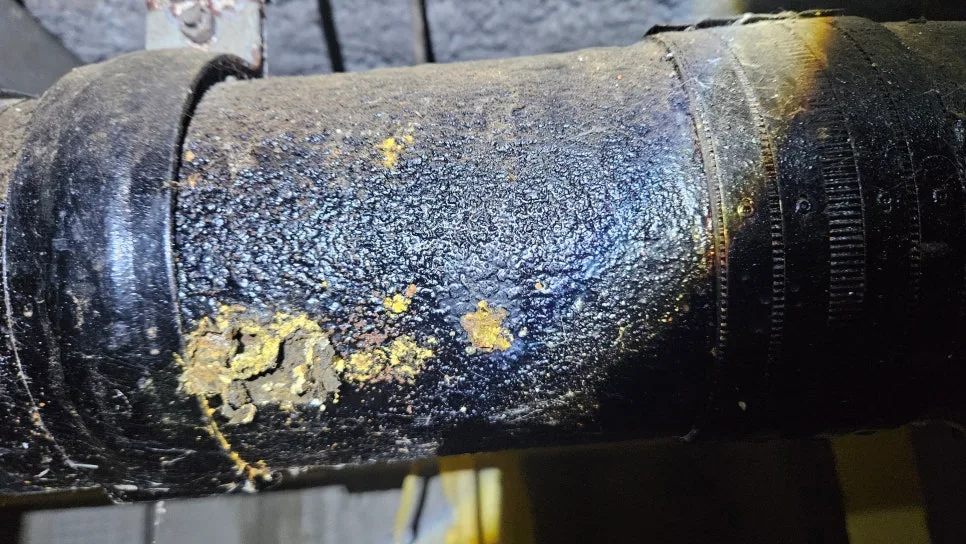
Cast iron pipes offer good pressure resistance but are susceptible to corrosion over time. Hydrogen sulfide gas generated within the pipes reacts with water to form sulfuric acid, accelerating internal corrosion. Accumulated sludge from grease and detergent residue also promotes anaerobic bacteria growth, further intensifying the corrosive process. This weakens the pipe walls, making them vulnerable to cracks and breaks from external factors like moisture, ground settlement, or vibrations from traffic. Corrosion at joints, where lead or rubber seals are used, can lead to leaks and spread the damage. This degradation shortens the pipe's lifespan and increases the severity of damage if leaks occur.
High-Pressure Cleaning: Key to Resolving Clogged Cast Iron Pipes
High-pressure cleaning is the most effective method for resolving clogged cast iron pipes. However, with corroded pipes, simply using high pressure can cause further damage, requiring careful execution. In the Junggye-dong apartment case, the high-pressure cleaning process took approximately two hours. After a thorough diagnosis of the pipe's condition, the water pressure was maintained consistently, and the nozzle angle was adjusted to prevent damage to the corroded walls. Hardened sludge was removed incrementally to widen the passage. A subsequent endoscopic inspection confirmed that the drainage flow had returned to normal. This illustrates that for old cast iron pipes, a meticulous high-pressure cleaning process, considering the pipe's condition, is essential.
Cast Iron Pipe Maintenance: Prevention is Key
Preventing cast iron pipe clogs is crucial, as it directly impacts the pipes' lifespan. Regularly prevent grease, food scraps, and hair from entering drains in your laundry room, kitchen, and bathrooms. Periodically clean debris from drain traps and avoid excessive use of detergents. If you notice slow drainage or backflow, it's vital to seek professional diagnosis promptly before the pipe becomes completely blocked. Given the risk of rupture in old cast iron pipes, regular inspections and maintenance are highly recommended.
For more details, check the original source below.





