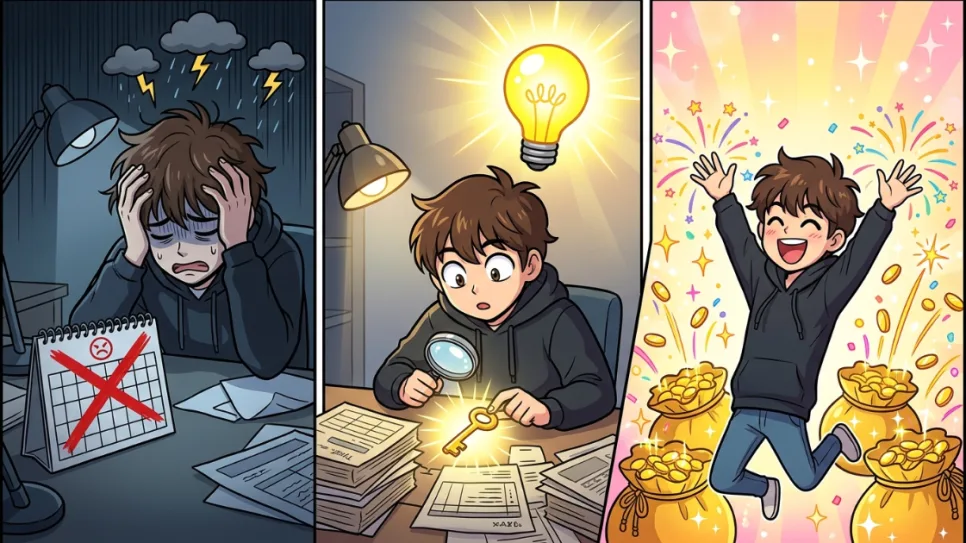
If you missed the deadline for filing your income tax or forgot to claim deductions, you can still get a refund for overpaid taxes from the past five years through a process called a corrective tax return, or 'Gyeongjeong Cheonggu' in Korean. This system allows you to reclaim taxes paid up to five years ago, offering a significant opportunity to recover funds you might have unknowingly overpaid.
What is a Corrective Tax Return and When Can You File?
A corrective tax return is a mechanism designed to protect taxpayers by allowing them to rectify overpayments made after the official filing deadline has passed. This system is crucial for ensuring tax fairness and can be initiated up to five years from the original statutory filing deadline. For instance, if you missed the filing deadline for your 2023 income tax in Korea, you have until 2028 to file a corrective return and claim a refund. The five-year window is substantial, making it vital to review past tax filings carefully. Many individuals overlook common deductions like personal exemptions, medical expenses, or housing-related credits, leading to overpayments they are unaware of.
What Deductions Are Often Missed, and What's the Refund Potential?
Common deductions that individuals, especially employees and self-employed professionals, often miss when filing their income taxes include: First, personal exemptions for dependents. If you're supporting family members who live separately, you might be eligible for deductions you didn't claim. Second, disability deductions. Individuals with severe conditions like cancer or dementia may qualify for disability-related tax benefits that are often unknown. Third, housing-related deductions. This can include credits for monthly rent payments or contributions to housing savings accounts that were not reported. Finally, tax credits for new employment in small and medium-sized enterprises (SMEs). Young individuals, seniors, or others taking on jobs in SMEs might be eligible for significant income tax reductions. Properly identifying these overlooked items can lead to substantial tax refunds, potentially amounting to hundreds of dollars. For example, claiming a dependent can provide an exemption equivalent to about $1,200 USD (based on ₩1.5 million KRW), which translates to significant tax savings depending on your tax bracket.
How Do You File a Corrective Tax Return Using Hometax (Korea's Tax Portal)?
Filing a corrective tax return is conveniently done through the National Tax Service's Hometax website. After logging in, navigate to the 'Tax Certificate/Filing/Payment' menu, select 'Income Tax Filing,' and then choose the 'Corrective Return' option. You'll need to select the relevant tax year for which you are filing the correction. The system allows you to import your previous filing details and then add or modify the missed deductions. Supporting documents, such as family certificates or receipts for rent payments, can be scanned and uploaded as PDF files. Increasingly, many supporting documents are available electronically, simplifying the process. For instance, to claim a rent deduction, you would typically need your lease agreement and proof of rent payments.
What Is the Processing Time for a Corrective Tax Return, and What Should You Watch Out For?
Once submitted, your corrective tax return will be reviewed by the tax office. While the legal processing period is up to two months from the submission date, refunds are often processed and deposited into your registered bank account within about a month, provided there are no significant issues. It's crucial to be aware that intentionally submitting false claims or attempting to claim deductions without proper substantiation can result in penalties and additional taxes. Therefore, always ensure that your claims are based on actual expenses and eligible deductions. If your tax situation is complex, or if you're unsure about the specific tax laws applicable to your circumstances, consulting with a tax professional is highly recommended to ensure accuracy and maximize your potential refund. This is not financial advice. Consult a licensed financial advisor.
Don't miss out on unclaimed tax refunds – check yours today!