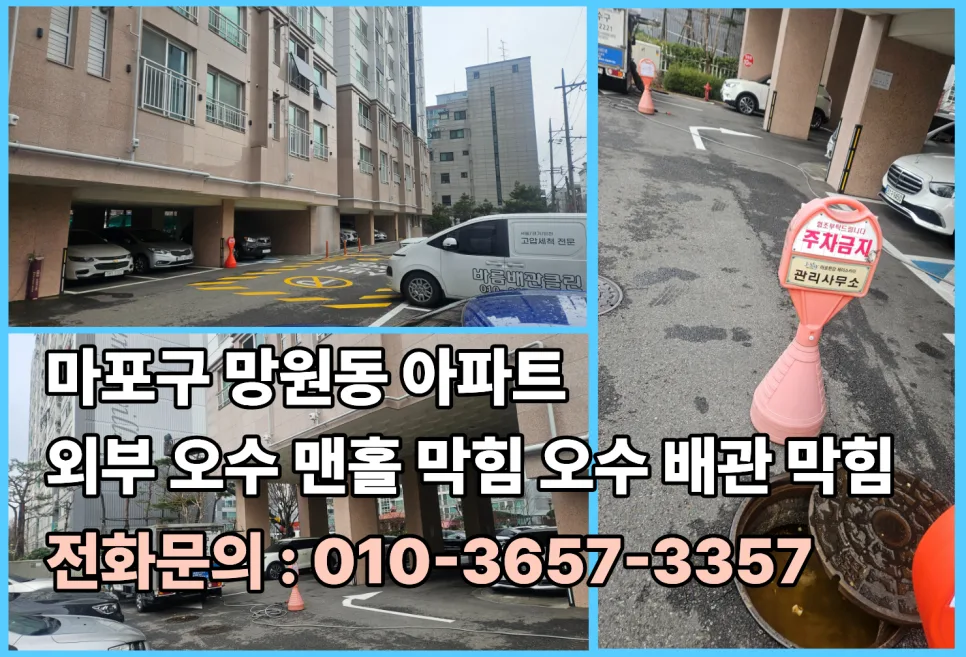
A severe sewer manhole and septic tank pipe clog in a Mangwon-dong apartment complex was swiftly resolved using high-pressure jetting in 2026. The investigation uncovered a critical structural issue: a reduced pipe diameter, posing a significant risk to the entire complex's sanitation.
What Causes Sewer Manhole Clogs in Seoul Apartments?
An urgent call brought technicians to a Seoul apartment complex in Mangwon-dong, where external sewer manholes and septic tank inlet pipes were severely blocked, causing sewage to back up. Upon arrival, all external manholes behind the building were overflowing with sewage. Typically, apartment sewage lines collect waste from individual units through several manholes before reaching the septic tank. However, in this case, a blockage at the final discharge point caused a backup in all preceding manholes. This situation created a serious risk of foul odors, sewage overflow, soil contamination, and increased pressure within the building's plumbing, necessitating immediate clearing.
How Does High-Pressure Jetting Clear Septic Tank Pipe Clogs?
Related Articles
The primary cause of the blockage was identified as accumulated sludge in the final manhole section. Standard equipment was insufficient, so professional high-pressure jetting equipment was deployed. The process began with opening the final manhole to assess the internal condition and pinpoint the blockage in the pipe leading to the septic tank. High-pressure water jets were then used to thoroughly clean the pipe's interior, effectively removing accumulated grease, sludge, and debris. This restored normal flow, clearing the blocked pipes. Following the main clearing, all manholes within the complex were inspected and cleaned using high-pressure jets to remove settled waste, toilet paper, and grease, further improving flow and mitigating odor issues.
What Structural Pipe Issues Were Discovered?
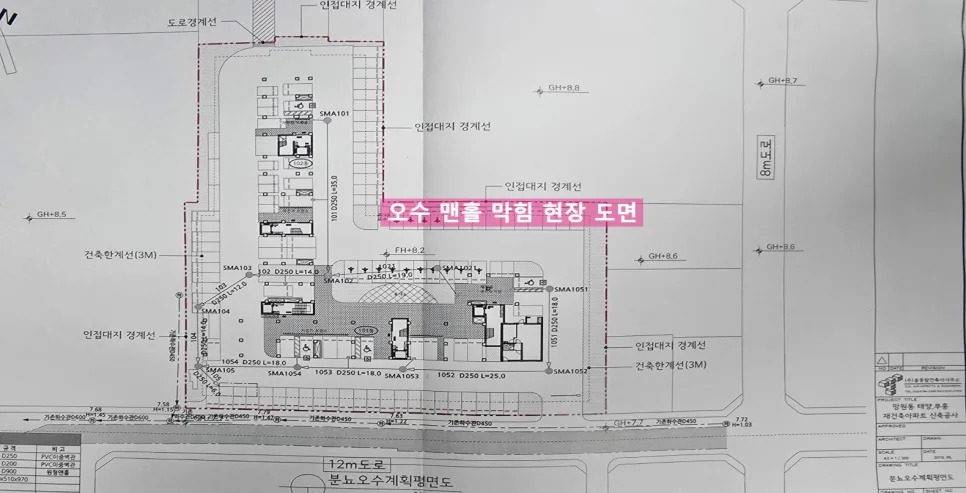
During the final inspection with cameras and visual checks, a significant structural defect was uncovered. The pipes carrying sewage from apartment buildings 101 and 102 were 200mm (approx. 8 inches) in diameter. However, these combined flows then entered a single final discharge pipe that was only 125mm (approx. 5 inches) in diameter before reaching the septic tank. This design, where multiple larger pipes merge into a smaller one, is highly inefficient and deviates from standard plumbing practices, which typically require the main line to be equal to or larger than the incoming pipes. This bottleneck inevitably led to sewage flow stagnation and frequent clogs.
What Are the Solutions for Structural Pipe Problems?
Discussions with the apartment management revealed that blockages due to this pipe diameter issue had been a recurring problem for years. The management had even won a lawsuit against the original construction company, but the necessary pipe repair work had not yet been completed. Such structural defects can lead to persistent manhole clogs, persistent odors, sanitation problems throughout the complex, and ongoing emergency service costs. Therefore, a fundamental solution requires a renovation project to replace the undersized pipe with one that meets standard design specifications. Consulting with plumbing professionals is crucial to determine the most effective repair strategy for your specific situation.
For more details, check the original source below.