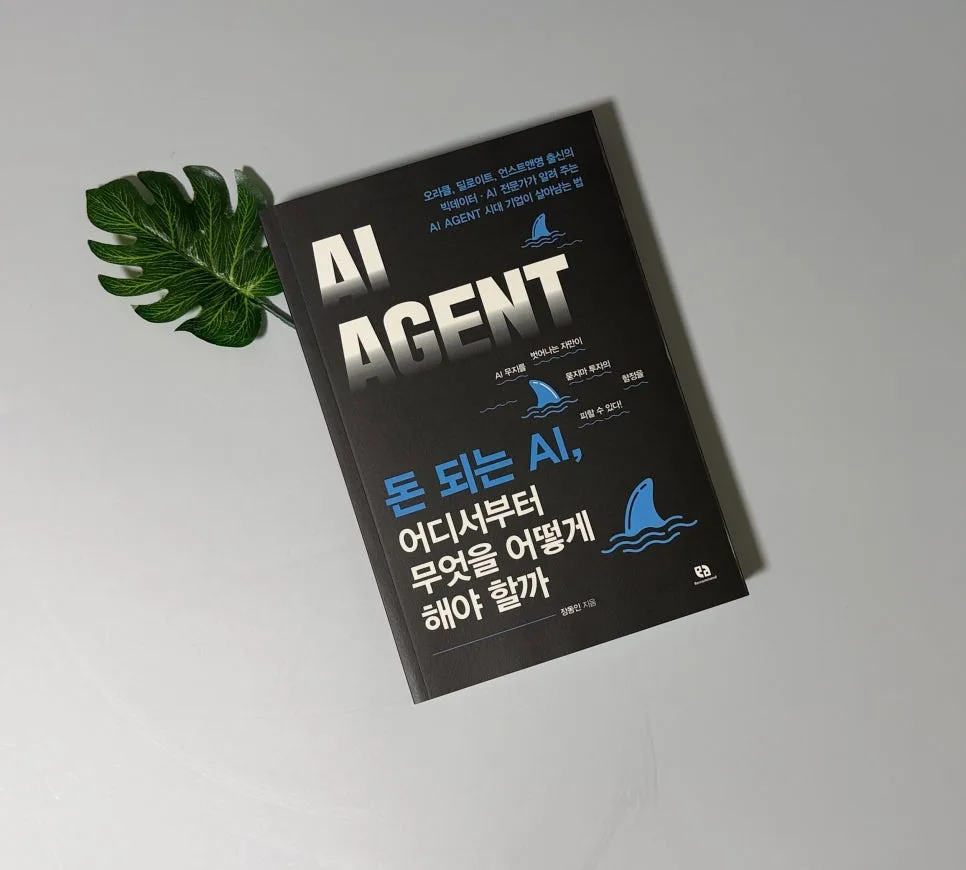
Successfully implementing and leveraging AI like ChatGPT in your business hinges on clear problem definition and a phased execution roadmap. Beyond just adopting new technology, successful AI integration requires selecting problems with a clear ROI in mind and establishing company-wide collaboration. Discover how to generate tangible business value through AI in 2026.
Why Do AI Implementations Fail? Key Reasons for Success in 2026
A primary reason many companies falter in AI adoption is the complacent belief that 'we won't go bankrupt if we don't use AI right now.' This often leads to AI teams becoming isolated from other departments, creating a disconnect in understanding and objectives between leadership and frontline staff. Relying solely on external experts without fostering internal talent can also doom a project. For instance, one company invested heavily in AI but saw little adoption because the operational departments weren't involved. To prevent such failures, clear communication about why employees should use AI and fostering company-wide collaboration through a shared AI implementation process are crucial. Leadership must engage deeply with AI, and a balanced approach that prioritizes internal talent development while leveraging external expertise as support is essential.
Monetizing AI: A 4-Step Problem Definition Guide for Maximum ROI

To successfully apply AI in business and generate real profits, the 'problem definition' stage demands careful consideration. It's not just about implementing technology, but about prioritizing 'Does it make money? (ROI)'. A four-step filtering guide is useful here. First, define the problem you aim to solve 'narrowly and sharply.' Overly broad problems are difficult for AI to tackle. Second, confirm the defined problem is 'related to data,' as AI learns and predicts based on data. Third, determine if the issue is 'solvable by AI.' Fourth, and most importantly, calculate 'whether a tangible ROI can be achieved' by solving this problem with AI. For example, reducing customer support costs through automated inquiries or minimizing raw material waste by predicting production defects are clear business objectives. Through this process, AI can transform from a mere technological tool into a key driver for improving a company's profitability.
AI Business Transformation Roadmap: A 4-Step HR-Centric Action Plan
To maximize operational efficiency and boost business performance using AI, a concrete roadmap is necessary. A phased approach, particularly centered around HR (Human Resources), is effective. The first step is 'task automation' to reduce repetitive and time-consuming work. Examples include automating job posting generation or payroll management. The second step is 'prediction,' forecasting future demand or trends, which can be applied to inventory management or marketing strategy development. The third step involves 'simulation' to review outcomes under various 'what-if' scenarios, supporting optimal decision-making for new product launches or crisis management. The final, fourth step is 'process optimization,' achieving goals in the most efficient way. Similar to how Salesforce optimizes customer management by analyzing complex data, AI can present the best solutions. Systematically executing this four-step roadmap allows AI to be utilized not just as a technology adoption, but as a core engine for creating tangible business value.
Common AI Implementation Pitfalls and Advice for Success
Many companies encounter unexpected hurdles during AI implementation. A common mistake is treating AI as a 'specialized technology' and overlooking its integration into existing workflows. AI should be viewed as a universal tool, much like Microsoft Excel, applicable across various business functions. Instead of pursuing 'completely novel' solutions, leveraging proven success cases and focusing on 'narrow, sharp areas' rather than 'grandiose fields' can increase ROI. AI projects should originate from 'business objectives,' not just 'data.' Furthermore, relying solely on external experts is less effective long-term than systematically training internal staff to build in-house capabilities. For instance, one IT company successfully developed AI-based services at less than half the cost of external solutions by focusing on intensive AI training for its internal developers. The success of AI adoption ultimately depends less on the technology itself and more on its alignment with business goals, as well as organizational collaboration and cultural improvement.
English crawl path
Next English reads from this pilot cluster
Continue through the category hub, latest English stories, and related posts so this translated article is not an isolated URL.
Tags
💬Frequently Asked Questions
What should I check first in AI Business Strategy 2026: Master ChatGPT for ROI?
Does this Finance article link back to the Korean source?
Where can I find similar English stories?
English discovery path
Explore more English K-culture stories
Keep browsing the indexed English pilot cluster so Google and readers can move between this story, the category hub, and fresh discovery pages.
Original Source
Read the Korean original





