The peak season for Korean amaranth (Bireumnamul) is May to June, and when seasoned with doenjang (fermented soybean paste), it's a side dish that can easily make you eat two bowls of rice. Here's a recipe for amaranth seasoned with doenjang, offering both health benefits and delicious flavor with its tender texture and rich nutrients.
When Is Korean Amaranth in Season and What Are Its Benefits?
Korean amaranth is best enjoyed from spring to early summer, particularly in May and June. Amaranth harvested during this time has tender leaves and a natural sweetness, resulting in a very soft texture. Its abundant dietary fiber aids in gut health, while calcium and iron are effective for fatigue recovery and preventing anemia. Additionally, it helps cool the body, making it beneficial for managing your condition during seasonal changes. Personally, I've found that a plate of amaranth provides a significant energy boost when I'm feeling tired. It's a fantastic 'rice thief' side dish that will have you finishing a bowl of rice in no time.
How Do You Make Seasoned Amaranth with Doenjang?
Making amaranth seasoned with doenjang is simpler than you might think. First, it's crucial to wash the amaranth thoroughly under running water multiple times to remove any dirt. Trim off any tough stems by snapping them off with your fingers for an even more tender bite. The secret to preserving amaranth's crisp texture is to blanch it briefly: add a little salt to boiling water, submerge the stems first for about 30 seconds to 1 minute, then add the leaves and blanch quickly. Immediately rinse the blanched amaranth in cold water to maintain its vibrant color, and then squeeze out excess water firmly with your hands to prevent the seasoning from becoming diluted. If the stems are long, cut them into bite-sized pieces.
What Is the Golden Ratio for Amaranth Doenjang Seasoning?
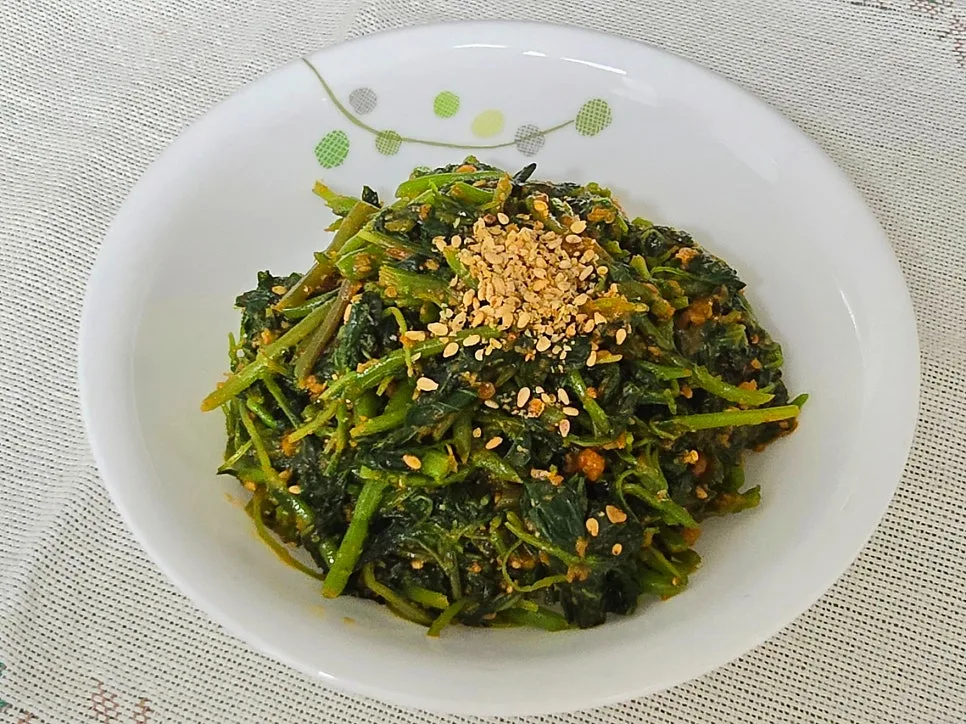
The seasoning for delicious amaranth doenjang salad is straightforward. Prepare 1 tablespoon of doenjang, half a tablespoon of gochujang (Korean chili paste), minced garlic, toasted sesame seeds, and sesame oil. This golden ratio means you won't need to adjust the seasoning separately for optimal flavor. In a bowl, combine the blanched amaranth with the prepared seasonings and gently mix with your hands. This ensures the seasoning is evenly distributed and the nutty flavor is fully developed. The process of mixing by hand allows the amaranth and seasonings to meld, creating a deep, satisfying taste. This homemade amaranth doenjang salad is a wholesome and heartfelt addition to any Korean kitchen.
What Are Some Tips for Making Delicious Amaranth Salad?
Here are a few tips to make your amaranth salad even more delicious. First, use doenjang in moderation; too much can make the dish taste heavy or pasty. Second, add sesame oil at the very end to preserve its fragrant aroma. Third, mixing by hand helps the seasoning penetrate evenly, resulting in a deeper flavor. By keeping these three tips in mind, anyone can make a successful and tasty amaranth salad. You can also adjust the amount of doenjang according to your preference, or use toasted sesame seeds instead of regular ones for an enhanced nutty flavor.
What Should You Be Careful About When Making Amaranth Salad?
There are a few points to be mindful of when preparing amaranth salad. If you don't wash the amaranth thoroughly, dirt or debris can remain, affecting the texture and taste, so it's essential to wash it multiple times. Also, over-blanching can cause the amaranth to lose its crispness and become mushy, so it's important to blanch it for a short period. If you don't squeeze out the water properly, the seasoning will become watery and less flavorful, so squeezing the water out with your hands is a crucial step. Paying attention to these details will help you enjoy a more delicious amaranth salad.
For more details, check the original source below.