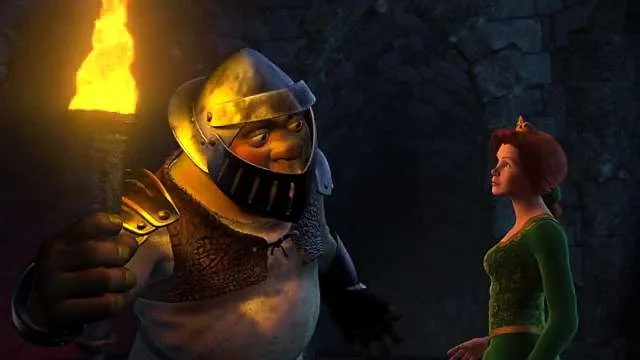
Mastering English conversation skills can be surprisingly fun and effective by using the beloved animated movie 'Shrek.' This approach leverages the film's rich everyday vocabulary and engaging humor, making the learning process enjoyable rather than a chore. Consistent viewing and practice with Shrek's dialogue can help you naturally absorb pronunciation, intonation, and speaking pace.
What Makes Learning English with 'Shrek' So Effective?
Animated films offer a unique advantage for language learners by combining visual cues with spoken dialogue, making comprehension more intuitive. In 'Shrek,' the characters' expressive facial animations and the context of the scenes directly reinforce the meaning of their words. For instance, when Donkey exclaims 'Are we there yet?' with an impatient tone while Shrek rolls his eyes, the visual and auditory cues together clearly convey his frustration. This multi-sensory approach aids in understanding nuances that might be missed in audio-only lessons. Furthermore, the movie's plot, centered around a grumpy ogre and his unlikely companions, provides a relatable narrative that keeps learners engaged. The humor, often based on wordplay and cultural references, also offers insights into idiomatic expressions and common conversational patterns used in informal English settings. This makes 'Shrek' a fantastic resource for anyone looking to improve their conversational English, especially for those who find traditional methods tedious.
How to Use 'Shrek' for English Conversation Practice
The most effective method for learning English with 'Shrek' is through shadowing. Begin by watching the movie to grasp the overall story and dialogue. Then, focus on specific scenes and mimic the characters' speech. Pay close attention to their tone, rhythm, and accent, and try to replicate them as closely as possible. Start with simpler lines like 'What?' or 'Wait.' and gradually move to more complex sentences. For example, practicing Shrek's gruff delivery of 'Ogres are like onions' or Donkey's rapid-fire questions can significantly improve your pronunciation and intonation. Utilizing subtitles—first in English, then without—can also be beneficial. After watching and shadowing, try to analyze the dialogue: understand the context, the meaning of idioms, and how the phrases are used in different situations. You can even try role-playing scenes yourself or with a study partner to solidify your learning. This active engagement transforms passive viewing into an effective learning experience.
Beginner-Friendly Lines from 'Shrek' to Practice
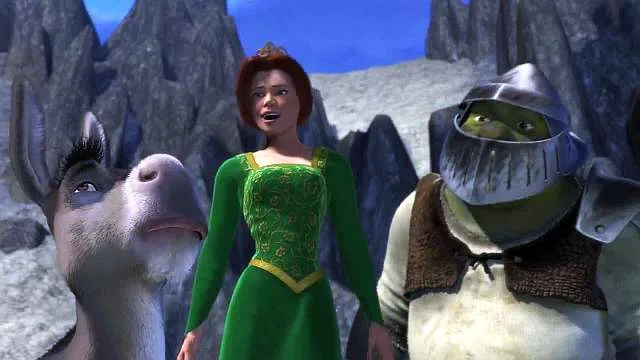
For those new to learning English through animation, 'Shrek' offers a treasure trove of accessible phrases. Simple interjections and questions are excellent starting points. Try practicing lines like 'What?', 'Wait.', 'Now let's go.', and 'No.' These are fundamental and frequently used in everyday conversation. As you progress, you can tackle slightly more complex but still common phrases such as 'Are you Princess Fiona?' or 'I'm making waffles!' Donkey's enthusiastic exclamations, like 'Oh, we're gonna have a problem,' can help you practice expressing assertiveness. Shrek's more grounded lines, such as 'That'll do, Donkey,' introduce polite but firm responses. Even seemingly simple lines carry nuances in tone and context. For instance, the way Donkey says 'Please, I'm all alone here!' conveys a sense of desperation that’s crucial for understanding emotional expression in language. Focusing on these varied expressions will build your confidence and conversational toolkit.
Important Considerations for Animated English Learning
While learning English with 'Shrek' is highly beneficial, it's crucial to go beyond simple mimicry. Understanding the context and nuances of each line is vital. For example, Shrek's sarcastic remarks or Donkey's exaggerated pleas have specific meanings that depend heavily on the situation and tone. Simply repeating these lines without grasping their underlying intent might lead to misunderstandings if used inappropriately in real-life conversations. It's also important to recognize that the language used in animation, while often based on everyday speech, can sometimes be stylized for comedic effect or characterization. Therefore, always consider whether a particular phrase or expression is suitable for formal settings or professional communication. Cross-referencing with other learning resources or native speakers can help you discern the appropriate usage and context for the vocabulary and phrases you learn from the movie.
For more details, check the original source below.