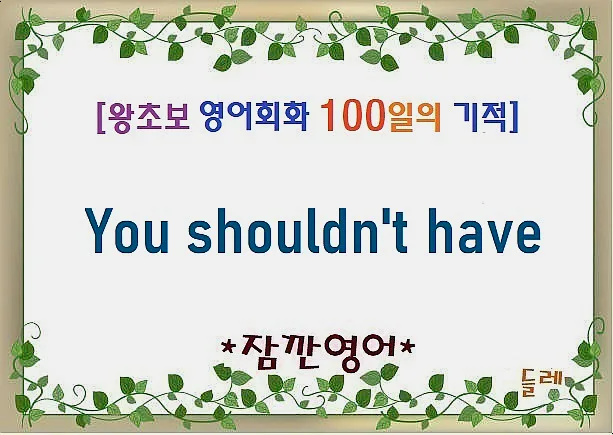
Many English learners understand "You shouldn't have" solely as a polite way to say "You shouldn't have bought me this" when receiving a gift. However, this versatile phrase carries a much broader range of meanings, expressing regret, criticism, or disappointment about past actions. By mastering its hidden nuances and correct usage in 2026, you can significantly elevate your English conversation skills.
What Does "You Shouldn't Have" Really Mean?
At its core, "You shouldn't have" signifies regret or a missed opportunity regarding a past action. It's a variation of "should have + past participle," which is used for advice or expressing regret about the past. The negative form implies "It would have been better if you hadn't done that" or "I regret doing that." When used upon receiving a gift, it conveys not just gratitude but also a touch of humility and concern, as in, "You didn't need to go to such lengths for me." Beyond simple politeness, this phrase can express genuine remorse or disappointment about past events.
When Is "You Shouldn't Have" Used for Regret?
Native English speakers utilize "You shouldn't have" in various contexts. For instance, if a friend overeats and feels unwell, you might say, "You shouldn't have eaten so much." This directly addresses their past action and expresses concern. Similarly, if someone made a mistake or took a wrong turn, you could say, "You shouldn't have gone that way." This isn't about assigning blame but rather reflecting on a past decision that led to an undesirable outcome. Understanding these varied applications is key to using the phrase naturally in everyday conversation.
How to Pronounce "You Shouldn't Have" for Clarity
To sound more natural when using "You shouldn't have," focus on stressing the key words: "shouldn't" and "have." The pronunciation often sounds like "yoo-shoodn't-uv." Pay attention to the contracted form of "should not," which is "shouldn't." The "have" is often reduced to "uv" in casual speech. Practicing this rhythm will help you communicate the intended meaning more effectively. For example, when expressing regret about eating too much, saying "I shouldn't have eaten so much" with this natural cadence makes the regret clear.
Common Scenarios and Examples for "You Shouldn't Have"
Let's look at practical examples. If someone buys you an expensive gift, a common polite response is, "Oh, you bought me a gift? You shouldn't have!" This expresses surprise and gratitude, implying it wasn't necessary but is appreciated. In contrast, if you regret a past decision, like spending too much money, you'd say, "I shouldn't have spent so much money." This clearly conveys self-reproach. Another example: if someone stayed up too late and is tired the next day, you might say, "You shouldn't have stayed up so late." This is a gentle critique of their past choice.
Alternatives to "You Shouldn't Have" for Expressing Regret
While "You shouldn't have" is a common and useful phrase, other expressions can convey similar sentiments. For general regret about past actions, you can use "I regret + [gerund/noun]," such as "I regret eating so much." Another option is "I wish I hadn't + [past participle]," like "I wish I hadn't eaten so much." These are more direct ways to express remorse. However, "You shouldn't have" often carries a more nuanced, conversational tone, especially when used in the context of receiving gifts or making gentle observations about someone else's past choices.
For more details, check the original source below.