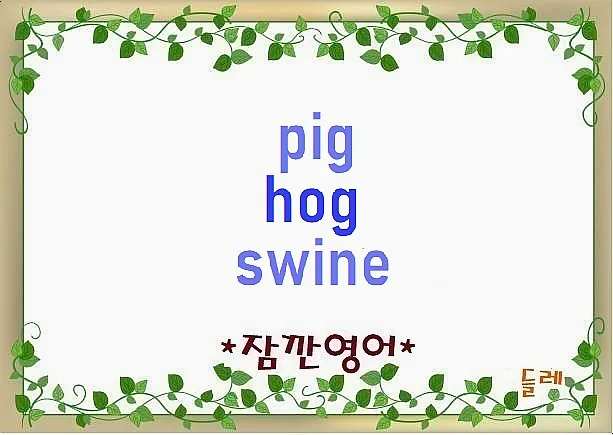
Understanding the difference between 'pig,' 'hog,' and 'swine' is crucial for mastering English vocabulary in 2026. While all refer to the animal, 'pig' is the most common, general term. 'Hog' typically denotes a larger, mature pig raised for meat, often used in agricultural or culinary contexts. 'Swine' is a more scientific or formal term, encompassing the entire species, especially in discussions about disease control or public health. Mastering these distinctions will enhance your fluency and prevent misunderstandings.
When to Use Pig, Hog, and Swine in English
In everyday American English, 'pig' is the go-to term for the animal. You'll find it in children's books, casual conversations, and general descriptions. For instance, if you see a farm animal, you'd likely call it a 'pig.' 'Hog,' on the other hand, is more specific, particularly in the US. It refers to a larger, mature pig, especially one being raised for meat. You'll often hear 'hog' in discussions about farming, agriculture, or the pork industry. For example, a farmer might say, 'We raise hogs for market.' My experience shows that while 'pig' is universal, 'hog' carries a connotation of scale and purpose, often related to food production. It's less common in casual chat unless discussing meat or farming.
Distinguishing Between Pig, Hog, and Swine
Beyond the common terms, English offers more specific vocabulary for pigs based on age and sex. A male pig is a 'boar,' especially a wild one ('wild boar'). A female pig that has had piglets is called a 'sow.' For young pigs, the term is 'piglet.' A young female pig that hasn't had piglets yet is a 'gilt,' and a castrated male pig is a 'barrow.' These terms are vital in agricultural settings, veterinary science, and zoology for precise communication. For example, a veterinarian discussing reproductive health might differentiate between a 'sow' and a 'gilt.' Understanding these nuances helps learners grasp the full scope of English animal terminology.
Figurative Meanings of Pig, Hog, and Swine
These words can also be used figuratively, often with negative connotations. 'Pig' can be used to insult someone perceived as greedy, dirty, or unpleasant. For instance, 'He's such a pig!' implies greed or messiness. 'Hog' is frequently used to describe someone who takes more than their fair share, as in, 'Don't be a hog; leave some for others!' This usage directly relates to the idea of a pig consuming large amounts of food. 'Swine' is less common in figurative speech but can be used in a more formal or literary context to describe someone as morally corrupt or repulsive, akin to calling them 'swinish.' It's important to be aware of these idiomatic uses to avoid causing offense, as they carry strong negative weight.
Important Considerations When Using Pig, Hog, and Swine
When learning to use 'pig,' 'hog,' and 'swine,' always consider the context. 'Pig' is the safest bet for general conversation. 'Hog' is best reserved for discussions about meat production or large, mature animals. 'Swine' is typically used in scientific, medical, or official contexts, such as disease outbreaks (e.g., 'swine flu') or agricultural regulations. Using 'swine' in casual conversation would sound unnatural and overly formal. For example, if you're discussing a farm visit, you'd say you saw 'pigs' or 'hogs,' not 'swine.' If you encounter 'swine' in a news report about animal health, understand it refers to the species collectively. Being mindful of these distinctions ensures your English is accurate and appropriate for the situation, much like understanding when to use formal vs. informal Korean phrases.
For more details, check the original source below.