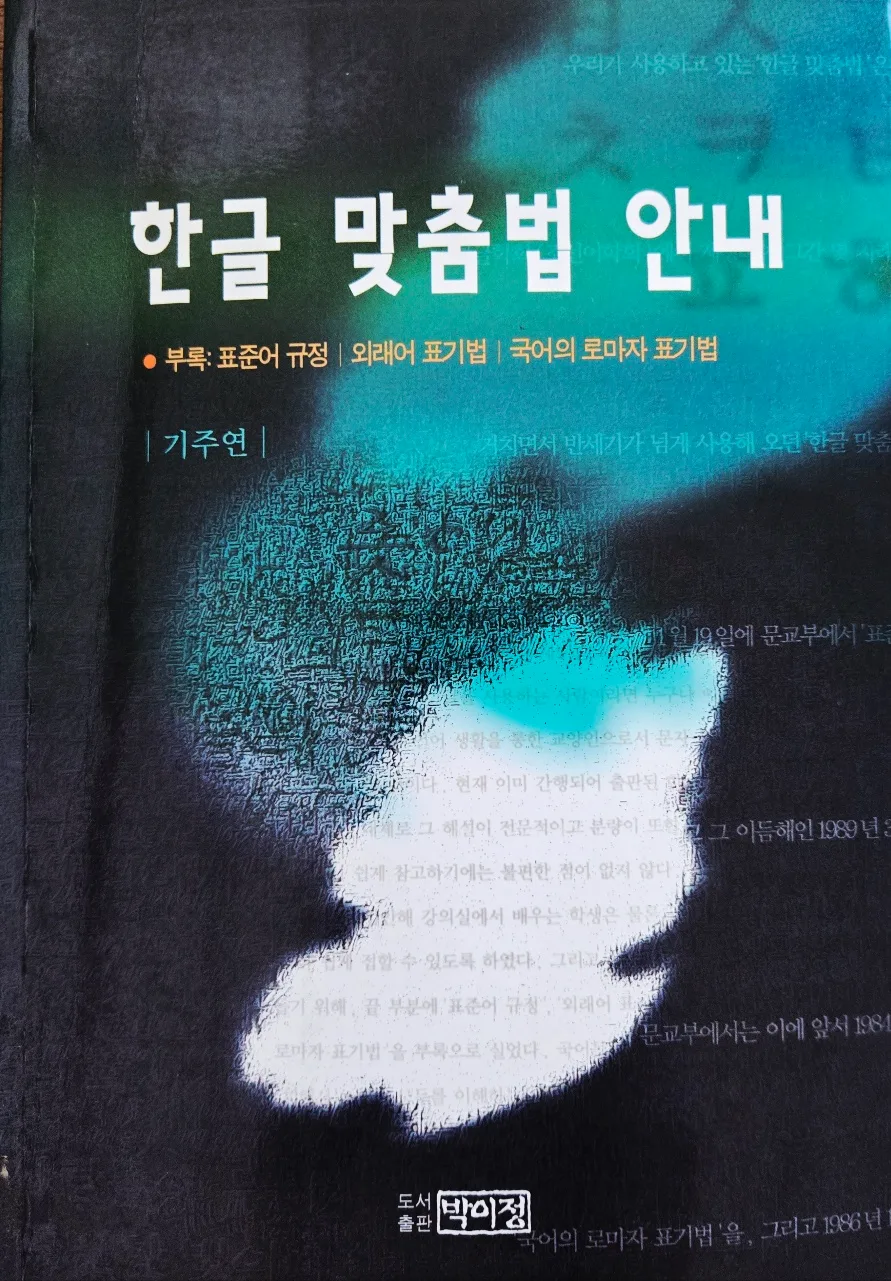
Mastering Korean spelling, known as Hangeul orthography, follows the principle of writing the standard language as it is pronounced, while adhering to grammatical rules. In 2026, accurately writing Hangeul is essential for enhancing the credibility and clarity of your written Korean, whether you're a beginner learning phrases or an advanced student preparing for the TOPIK exam.
What are the fundamental principles of Korean spelling?
The Hangeul orthography is structured into several sections, with the core principle, as stated in Article 1, being: 'Hangeul orthography shall follow the principle of writing the standard language as it is pronounced, while adhering to grammatical rules.' Here, 'standard language' refers to the modern Seoul dialect used by educated people across the country. This means that spelling isn't just about phonetic transcription; it emphasizes the importance of considering established grammatical rules, or 'eobeop,' to ensure clarity and logical consistency in writing. Many writers stress the significance of correct spelling in elevating the overall quality of their work. For instance, correctly distinguishing between '되' and '돼,' or '안' and '않,' significantly improves the precision of your message, a crucial aspect for Korean language learners aiming for fluency.
Related Articles
How are Hangeul letters (jamo) composed and ordered?
Hangeul is built upon a set of 24 basic jamo: 14 consonants (like ㄱ, ㄴ, ㄷ) and 10 vowels (like ㅏ, ㅓ, ㅗ). These fundamental characters are combined to form the 19 consonants and 21 vowels used in modern Korean. Additional consonants were created by adding strokes to basic consonants (gahaek), writing them side-by-side (byeongseo), or modifying their shapes (iche). Vowels are formed by adding basic characters to initial vowels to create derived vowels. The official order for listing these jamo in dictionaries is: Consonants: ㄱ, ㄲ, ㄴ, ㄷ, ㄸ, ㄹ, ㅁ, ㅂ, ㅃ, ㅅ, ㅆ, ㅇ, ㅈ, ㅉ, ㅊ, ㅋ, ㅌ, ㅍ, ㅎ. Vowels: ㅏ, ㅐ, ㅑ, ㅒ, ㅓ, ㅔ, ㅕ, ㅖ, ㅗ, ㅘ, ㅙ, ㅚ, ㅛ, ㅜ, ㅝ, ㅞ, ㅟ, ㅠ, ㅡ, ㅢ, ㅣ. Understanding this jamo system is foundational for accurate Hangeul spelling, especially when learning Korean for beginners.
What are the spelling rules related to pronunciation?
Spelling rules concerning pronunciation primarily address three areas: tense consonants (ssoreum), palatalization (gugye-eumhwa), and the 'ㄷ' sound at the end of a syllable. The rule for tense consonants (Article 5) states that tense sounds (ㄲ, ㄸ, ㅃ, ㅆ, ㅉ) that occur without a clear reason within a word should be written with the initial sound of the following syllable as a tense consonant. Examples include '어깨' (eokkae - shoulder) and '으뜸' (eutteum - best). The palatalization rule (Article 6) dictates that when 'ㄷ' or 'ㅌ' at the end of a syllable is followed by '-이' or '-히' in a dependent grammatical relationship, the pronunciation may shift to 'ㅈ' or 'ㅊ', but the spelling must remain 'ㄷ' or 'ㅌ'. Examples are '맏이' (mad-i, pronounced 'maji' - eldest son/daughter) and '걷히다' (geod-hida, pronounced 'geochida' - to clear up). These rules maintain the uniformity of Hangeul despite pronunciation changes. Lastly, the rule for the 'ㄷ' sound (Article 7) specifies that if a syllable ends with a sound that is pronounced like 'ㄷ' but lacks a basis for being written as 'ㄷ', it should be written as 'ㅅ'. Examples include '덧저고리' (deotjeogori - a type of vest) and '돗자리' (dotjari - a mat). These pronunciation-related rules help bridge the gap between spoken and written Korean.
What are the spelling rules related to word forms?
Spelling rules concerning word forms cover the notation of nouns and particles, stems and endings, words formed with suffixes, compound words and words with prefixes, and abbreviations. The first section on nouns and particles (Article 8) deals with how particles are attached to nouns, pronouns, and numerals, such as writing '꽃을' (kkocheul - flower + object particle) as a separate unit. The section on stems and endings (Article 9) governs the spelling when verb or adjective stems combine with endings, like '먹습니다' (meokseumnida - to eat + formal ending). Rules for words formed with suffixes (Article 10) address notations when a suffix creates a new word. Compound words and words with prefixes (Article 11) explain the principles for writing when two or more words combine into one, such as '책가방' (chaekgabang - book bag) or '풋사과' (put-sagwa - unripe apple). Finally, rules for abbreviations (Article 12) cover the spelling when words are shortened. These form-related rules contribute to the clarity of meaning by accurately reflecting the structure and meaning of words, aiding learners in precise Korean writing.
How can I easily master tricky Korean spelling?
To easily master tricky Korean spelling, first, understand the fundamental principles of Hangeul orthography, remembering it's not just phonetic but also grammatical. Second, create a dedicated list of commonly misspelled words and phrases for focused, repetitive study. For example, pay special attention to common confusions like '되/돼' (dwae/dwae), '안/않' (an/an-h), and '든지/던지' (deunji/deonji). Third, actively apply what you learn in your writing. Practice composing sentences and use spell-check tools to identify and correct errors, reinforcing your learning. Finally, consult resources from the National Institute of Korean Language or reputable Korean language learning platforms like Talk To Me In Korean (TTMIK) or Duolingo. Consistent effort and attention will help you conquer challenging Korean spelling.
For more details, check the original source below.





