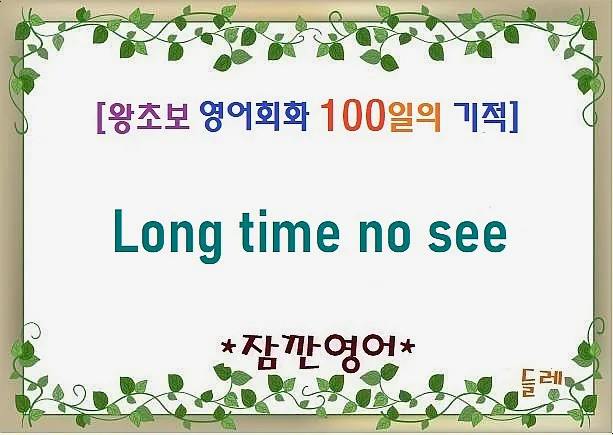
The English phrase "Long time no see" is a common greeting used to express happiness upon meeting someone after a significant period, directly translating to the Korean sentiment of '오랜만이야' (oraenmaniya). It's best used in informal settings among friends and acquaintances, with alternatives like 'It's been ages' offering a similar vibe. This guide covers its 2026 usage, pronunciation, and cultural context for English learners.
What Exactly Does "Long Time No See" Mean?
Literally translated, "Long time no see" means 'I haven't seen you for a long time.' While not a grammatically complete sentence in standard English, it functions as a widely recognized idiomatic expression to convey warmth and pleasure when reuniting with someone after an extended absence. For instance, you might greet an old friend or colleague you unexpectedly encounter with a cheerful, "Hey, long time no see!" This phrase is primarily used in informal contexts. In more formal situations, such as a business meeting or official presentation, it might sound too casual. Using it appropriately shows you recognize the time that has passed and are happy to reconnect, often inviting a follow-up conversation about what each person has been up to.
When and How Should You Use "Long Time No See"?
"Long time no see" is best reserved for people you know well – friends, family, or acquaintances you haven't seen in a while. Imagine running into a college buddy at a reunion or greeting a friend who's back in town after years abroad; this phrase fits perfectly. You can easily extend the greeting by adding a question like, "Long time no see! How have you been?" to encourage further conversation. Another common way to use it is by adding an exclamation of delight: "Hey, long time no see. It’s great to see you again!" This emphasizes your genuine happiness. While primarily spoken, this casual phrase is also acceptable in informal written communication like text messages or casual emails.
What Are Some Alternatives to "Long Time No See"?
Several other English expressions convey a similar sentiment to "Long time no see." A very common alternative is "It's been ages," which emphasizes that a considerable amount of time has passed, perhaps even more so than "long time no see." Similarly, "It's been a long time" directly states the duration since your last meeting. Another option is "I haven't seen you in ages," which focuses on the speaker's perspective of not having seen the other person for a long time. All these phrases are suitable for informal settings and can be chosen based on the specific context and your relationship with the person you're greeting. For example, you might tell an old coworker, "It's been ages since we last met!"
What is the Pronunciation and What Should You Be Aware Of?
When pronouncing "Long time no see," it's important to emphasize the key words for a natural flow. Generally, it's pronounced as 'long TIE-m NO SEE,' with the stress falling on 'no' and 'see.' Because this is an idiomatic and colloquial expression, it doesn't adhere to strict grammatical sentence structure. Therefore, it's advisable to avoid using it in highly formal settings or official business negotiations, especially when meeting someone for the first time. In such situations, a more appropriate greeting would be something polite and professional, like, "It's a pleasure to finally meet you." Choosing the right phrase based on the context and your relationship with the individual is crucial for effective communication.
For more details, check the original source below.