Mastering common English phrases like 'Let's take a break' is key for fluent conversations in 2026. This guide breaks down its exact meaning, usage, and provides practical examples for everyday and professional settings, helping you communicate more effectively and naturally.
What Does 'Let's Take a Break' Mean and When to Use It?
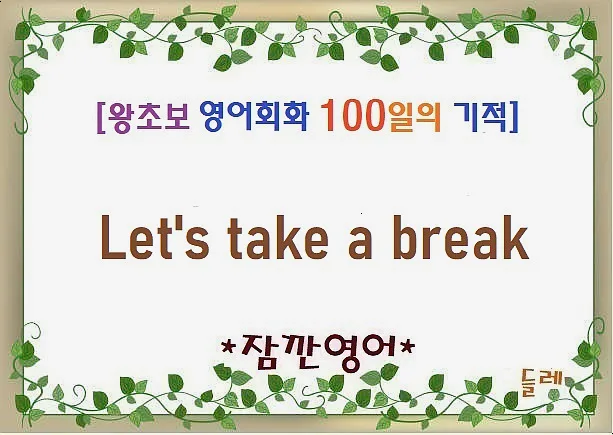
The phrase 'Let's take a break' is one of the most common ways to suggest a pause in any activity, whether it's work, study, or play. It directly translates to '우리 잠시 쉬자' in Korean, meaning 'Let's rest for a moment.' You'd use this when you or your group feel tired or need a moment to recharge. For instance, after a long study session or a demanding work task, you might say to a colleague or friend, 'I'm starting to feel drained. Let's take a break for 10 minutes before we continue.' This shows consideration for others' energy levels and promotes a healthier pace, preventing burnout and improving overall productivity. It's a simple yet effective way to manage energy and maintain focus.
How to Pronounce and Use 'Let's Take a Break' in Daily Life
Pronouncing 'Let's take a break' correctly involves emphasizing the key words 'take' and 'break' with a natural rhythm. Think of it as 'Leh-ts TAY-kuh BRAYK.' In casual conversation, you might hear contractions or slight variations, but the core meaning remains the same. For example, if you're out with friends and have been walking for a while, you could say, 'My feet are killing me! Let's take a break and grab a coffee.' This is a universally understood request. Even in informal settings, using this phrase shows you're aware of your group's needs and are proactive about maintaining comfort and energy. It’s a friendly way to suggest a pause without sounding demanding.
Practical Examples: Using 'Let's Take a Break' in Meetings and Work
In a professional context, 'Let's take a break' is incredibly useful for managing meetings and workflow. If a discussion becomes too long, complex, or heated, suggesting a break can help everyone reset. For example, during a lengthy business meeting, you could say, 'We've been discussing this for over two hours. Let's take a break for 15 minutes to clear our heads before we tackle the next agenda item.' This not only allows participants to stretch their legs or grab a drink but also provides a moment for reflection, potentially leading to better decisions. It signals that you value efficiency and the well-being of your team members, fostering a more positive and productive work environment.
Understanding Different Types of Breaks: Lunch, Coffee, and More
While 'Let's take a break' is a general term, specific types of breaks have their own names. A 'lunch break' is dedicated to eating lunch, typically lasting 30 minutes to an hour. A 'coffee break' is shorter, usually 10-15 minutes, for a quick refreshment like coffee or tea. You might also hear 'coffee run' for a very brief coffee grab. If you're feeling particularly overwhelmed or tired, you might say, 'I'm exhausted. Let's take a break,' which is a direct plea for rest. Understanding these nuances helps you communicate your needs more precisely and respond appropriately to others' suggestions.