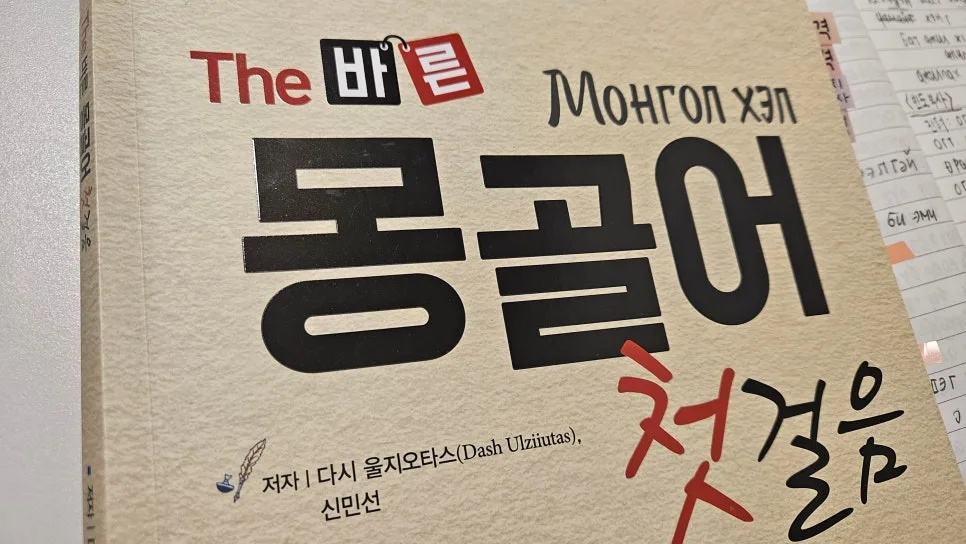
For those starting their Mongolian language journey in 2026, mastering the nuances of 'to be' verbs like 'байна' (baina), 'бий' (biy), and 'байдаг' (baidag), along with their negative form 'байхгүй' (baikgui) and postposition usage, is crucial. This guide breaks down these fundamental concepts, offering a clear path to building a solid foundation in Mongolian grammar.
What are the nuances between Mongolian 'to be' verbs?
In Mongolian, expressing existence goes beyond a simple 'to be.' The choice of verb conveys specific nuances and emphasis. The most fundamental is 'байна' (baina), which neutrally indicates something exists in the present. In contrast, 'бий' (biy) emphasizes 'it exists' or 'it is definitely there,' often used in more formal or written contexts. For example, 'Сургууль байна' (Surgoil baina) means 'There is a school' as a general fact, while 'Сургууль бий' (Surgoil biy) stresses the actual existence of a school. Furthermore, 'байдаг' (baidag) signifies habitual or constant existence, used when something is always or typically present in a certain place or situation. For instance, 'Энд сургууль байдаг' (End surgoil baidag) implies 'This is a place where a school is usually located.' Understanding these distinctions is key for accurate communication and conveying the intended meaning in Mongolian.
How do Mongolian postpositions expand noun meanings?
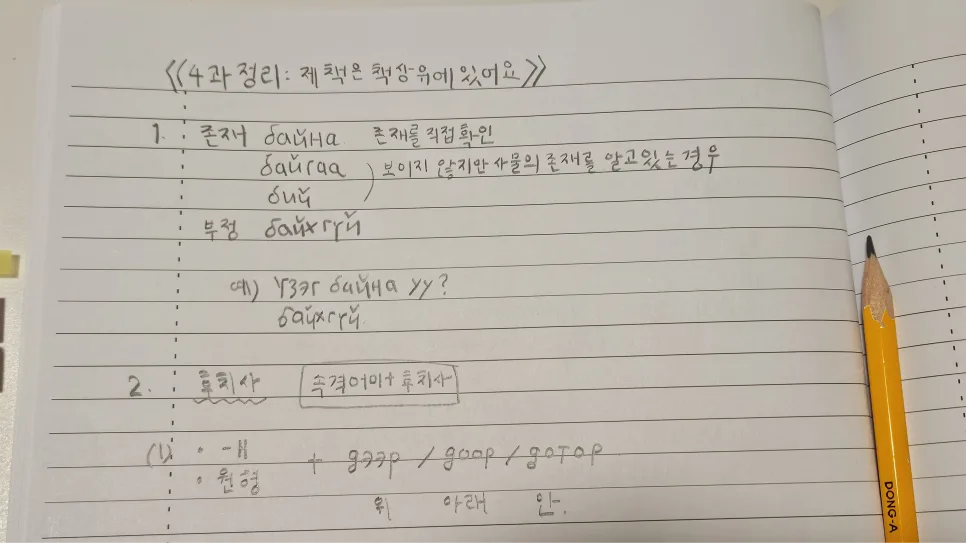
Mongolian postpositions function similarly to prepositions in English or post-nominal particles in Korean, attaching to nouns to add context about location, direction, or relationship. They clarify the meaning of the noun by specifying its position relative to other elements. For example, 'компьютер ширээн дээр байна' (kompyuter shireen deer baina) translates to 'The computer is on the desk.' Here, 'ширээ' (shiree - desk) is followed by the postposition 'дээр' (deer - on/above), clearly defining the computer's location. Similarly, 'цүнх сандлын доор байна' (tsunh sandlyn door baina) means 'The bag is under the chair,' with 'סנדл' (sandl - chair) combined with 'доор' (door - under). Mastering these postpositions is essential for constructing descriptive sentences and improving comprehension in Mongolian.
What's the difference between Mongolian postpositions like 'н/йн' and others?
Mongolian postpositions ending in 'н' (n) or 'йн' (yin) are crucial for indicating possession or spatial relationships between nouns. These often attach to the noun itself, modifying its form to show connection. For instance, postpositions like 'урд' (urd - front), 'ард' (ard - back), 'хажууд' (khajuud - beside), 'хооронд' (khoorond - between), and 'гада' (gada - outside) are commonly used. In the sentence 'манай сургуулийн гадна талбай байна' (manai surgoiliin gadna talbai baina), 'сургууль' (surgoil - school) takes the possessive suffix '-ийн' (-iin) and is followed by 'гада' (gada - outside), meaning 'the area outside our school.' Another example is 'гэрийн хажууд морь байна' (geriin khajuud mori baina), where 'гэр' (ger - house) with the possessive suffix '-ийн' (-iin) is followed by 'хажууд' (khajuud - beside), meaning 'a horse is beside the house.' These postpositions, often used with the genitive case of the noun, add precision to location and relationships within a sentence.
What are the key considerations when using Mongolian 'to be' verbs and postpositions?
When using Mongolian 'to be' verbs like 'байна' (baina), 'бий' (biy), and 'байдаг' (baidag), and postpositions, keep a few points in mind. Firstly, differentiate between the neutral 'байна' for general existence and the emphatic 'бий' for stressing existence, often found in formal writing. Avoid using 'байдаг' for single events; reserve it for habitual or general truths. Secondly, postpositions require careful selection based on the noun and context. Pay close attention to how they combine with noun cases, especially the genitive case often used with 'н/йн' (n/yin) suffixes for possessive and locational meanings. Lastly, the negative form 'байхгүй' (baikgui) is used to express absence. Consistent practice with various sentence structures and examples is vital for mastering these elements and improving your fluency in Mongolian.
English crawl path
Next English reads from this pilot cluster
Continue through the category hub, latest English stories, and related posts so this translated article is not an isolated URL.
Tags
💬Frequently Asked Questions
What should I check first in How to Learn Mongolian: 'To Be' Verbs & Postpositions (2026)?
Does this Language Learning article link back to the Korean source?
Where can I find similar English stories?
English discovery path
Explore more English K-culture stories
Keep browsing the indexed English pilot cluster so Google and readers can move between this story, the category hub, and fresh discovery pages.
Original Source
Read the Korean original





