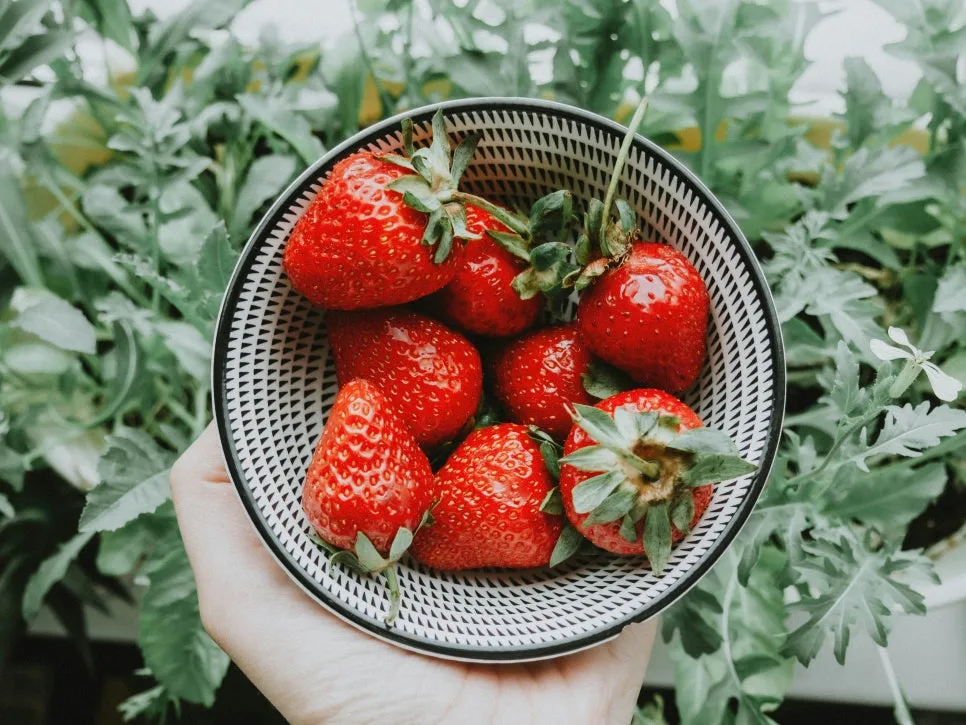
English learners often confuse countable and uncountable nouns, but understanding the difference is key to fluency. Take strawberries, for instance: 'strawberry' can be countable when referring to individual fruits, but uncountable when discussing it as an ingredient or flavor. For example, you might say 'I ate two strawberries' (countable), but 'This cake has strawberry in it' (uncountable, referring to flavor or ingredient). This flexibility in English nouns, especially when they represent ingredients or abstract concepts, is crucial to grasp. By listening to and analyzing how native speakers use these words in context, you'll master their nuanced meanings and improve your natural English expression.
When is 'Strawberry' a Countable Noun?

When 'strawberry' refers to the individual fruit itself, it functions as a countable noun. This is common when you're buying strawberries at the grocery store or counting them on a plate. Native speakers will use 'a strawberry' or 'two strawberries' to specify the quantity. During my study abroad in Australia, I frequently heard expressions like, 'I bought three strawberries today' at the fruit stand. This usage treats each strawberry as a distinct item. So, when discussing the fruit as a whole, discrete object, think of 'strawberry' as countable.
When is 'Strawberry' an Uncountable Noun?
Conversely, 'strawberry' becomes an uncountable noun when it denotes the fruit as an ingredient, a flavor, or a mass substance. For instance, when making a cake or smoothie, you'd say, 'Add some strawberry to the batter' or 'I love strawberry smoothies.' In these cases, 'strawberry' refers to the essence or component, not individual fruits. My linguistics studies at Kansai Gaidai University in Japan highlighted how 'strawberry' in sentences like 'I love the taste of strawberry in my smoothie' refers to the flavor profile. Similarly, 'Mix some strawberry into the cake batter' implies using chopped strawberries or strawberry puree as an ingredient. This usage treats the strawberry component as a mass or abstract concept.
What's the Core Principle Behind Countable/Uncountable Noun Shifts?
The primary reason a countable noun like 'strawberry' can become uncountable lies in the context and the shift in meaning. Many English nouns are flexible; they can represent a specific item (countable) or a substance, abstract concept, or type (uncountable). For example, 'chicken' can refer to the live bird (countable) or the meat (uncountable). This adaptability is a hallmark of English. Understanding this requires more than just memorizing dictionary definitions. It involves actively observing how native speakers use words in various situations. Listening to podcasts, watching TV shows, and reading books will expose you to these nuances, helping you internalize the flexible usage of English nouns.
How Can You Master English Noun Countability?
To truly master the countability of English nouns, focus on understanding the fundamental nature of the word and, more importantly, observing its usage in real-world contexts. Pay close attention to how native speakers employ these words in different sentences and situations. Analyzing authentic materials like English-language dramas, news articles, or even song lyrics can provide invaluable insights. For instance, noticing whether 'hair' refers to individual strands (countable) or the mass on your head (uncountable) in a given sentence is key. Consistent practice and exposure to diverse linguistic environments will help you intuitively grasp these flexible noun usages, leading to more natural and accurate English expression.
For more details, check the original source below.





