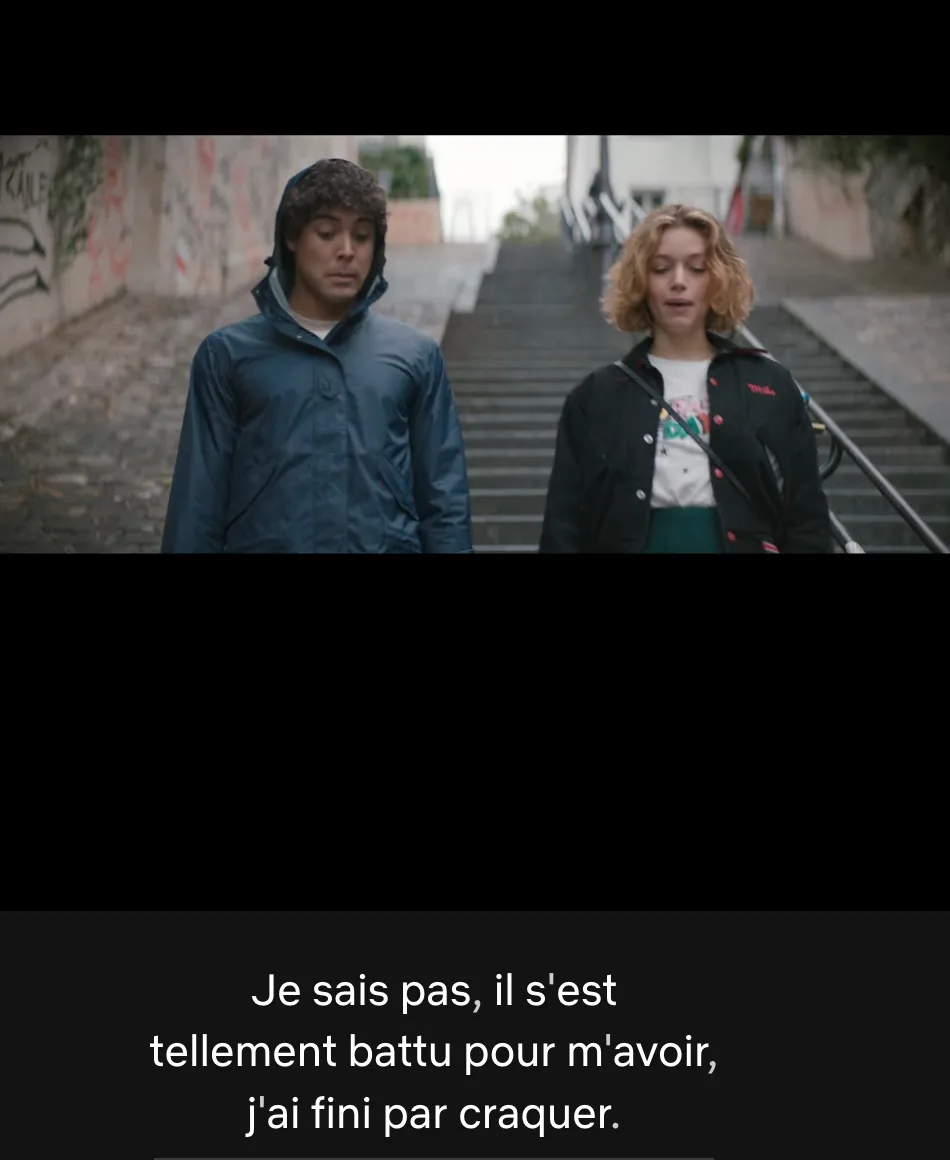
Mastering essential French phrases like 'se battre' (to strive), 'finir par' (to end up doing), and 'craquer' (to break down) through movie dialogues will make your communication with native speakers much more natural. This is especially crucial for students preparing for study abroad, language immersion programs, or working holidays in France.
How to Learn French Through Movies?
Learning French by studying movie scripts, focusing on sentence structures and vocabulary commonly used by native speakers, is highly effective. Phrases like 'se battre' (to strive), 'finir par' (to end up doing), and 'craquer' (to break down) are frequently used to express emotional changes or shifts in situations. For instance, you might understand a context where someone 'se battre' (strove hard) to win someone over, eventually leading them to 'craquer' (give in). Repeatedly studying these expressions can significantly improve your ability to communicate with locals. Imagine enjoying a coffee on a Parisian terrace as rain falls, a common sight in autumn, adding a romantic ambiance to the European architecture. This immersive experience can be a delightful way to absorb the language.
Practical Usage of 'se battre', 'finir par', 'craquer'

Related Article
'Se battre' means 'to fight,' but in movies, it often implies 'to strive hard' or 'to make a great effort.' For example, 'Il s'est tellement battu pour m'avoir' translates to 'He fought so hard to have me.' This shows intense effort towards a goal. 'Finir par + infinitive' indicates the eventual outcome of a situation, meaning 'to end up doing something.' For instance, 'Après des heures de négociation, ils ont fini par trouver un accord' means 'After hours of negotiation, they finally reached an agreement.' 'Craquer' is versatile; it can mean 'to break down emotionally,' 'to give in to temptation,' or 'to give up.' A common usage is 'J'ai craqué pour cette robe' ('I gave in to temptation for this dress' or 'I bought this dress'). These expressions are vital for understanding nuanced conversations and emotional depth in French cinema.
Understanding 'dès que', 'à fond', and 'teuf'
'Dès que' is a conjunction meaning 'as soon as,' used to describe immediate actions or events. For example, 'Dès que le film a commencé, j'ai été captivé' means 'As soon as the movie started, I was captivated.' It emphasizes the immediacy of the action. 'À fond' is an adverb meaning 'fully,' 'completely,' or 'to the fullest.' When used in phrases like 'travailler à fond' (to work thoroughly) or 'faire la fête à fond' (to party hard), it signifies total commitment or immersion. 'Teuf' is informal slang for 'party' or 'celebration,' similar to 'bash' in English. So, 'On a fait une grosse teuf' means 'We had a big party.' Understanding these colloquialisms is key to grasping casual conversations and the vibrant social life depicted in French films.
Expressing Regret and Theoretical Situations in French
In French, regret about past actions is often expressed using the conditional perfect tense. For example, 'J'aurais dû vous écouter' means 'I should have listened to you.' Here, 'aurais dû' signifies 'should have done,' conveying regret over a past choice. The phrase 'Sur le papier, t'as tout ce qu'il faut pour plaire' translates to 'On paper, you have everything it takes to be charming.' 'Sur le papier' means 'theoretically' or 'on paper,' indicating a situation that might differ in reality. 'Tout ce qu'il faut' means 'everything necessary,' and 'plaire' means 'to please' or 'to be charming.' Mastering these expressions will further enhance your French proficiency, allowing you to express complex ideas and emotions accurately, much like the characters in your favorite French films.
For more details, check the original source below.





