Boost your English speaking skills by mastering the versatile 'I'm on~' phrase! This expression is incredibly useful in everyday conversations, conveying meanings like 'I'm currently doing something,' 'I'm in charge,' or 'I agree.' It's especially handy when you're running late for an appointment, responding to a work request, or showing support for someone. By learning these phrases, which remain relevant in 2026, your English conversations will sound much more natural.
How to Boost English Confidence with 'I'm on~' Phrases in 2026
When learning English, you might find that knowing individual words doesn't always translate into smooth conversations. Short, seemingly simple phrases can be particularly tricky to use correctly. The 'I'm on~' construction offers a practical solution to this common challenge. Its meaning expands based on the noun or phrase that follows, but the core nuances revolve around 'in progress,' 'responsibility,' and 'agreement.' For English learners aiming for fluency in 2026, mastering these expressions is essential. For instance, if you're running late, saying 'I'm on my way' helps the other person understand your situation. Similarly, responding with 'I'm on it' to a work request conveys efficiency and responsibility. These concise phrases are often more effective than constructing longer sentences.
Specific Uses and Examples of 'I'm on~'
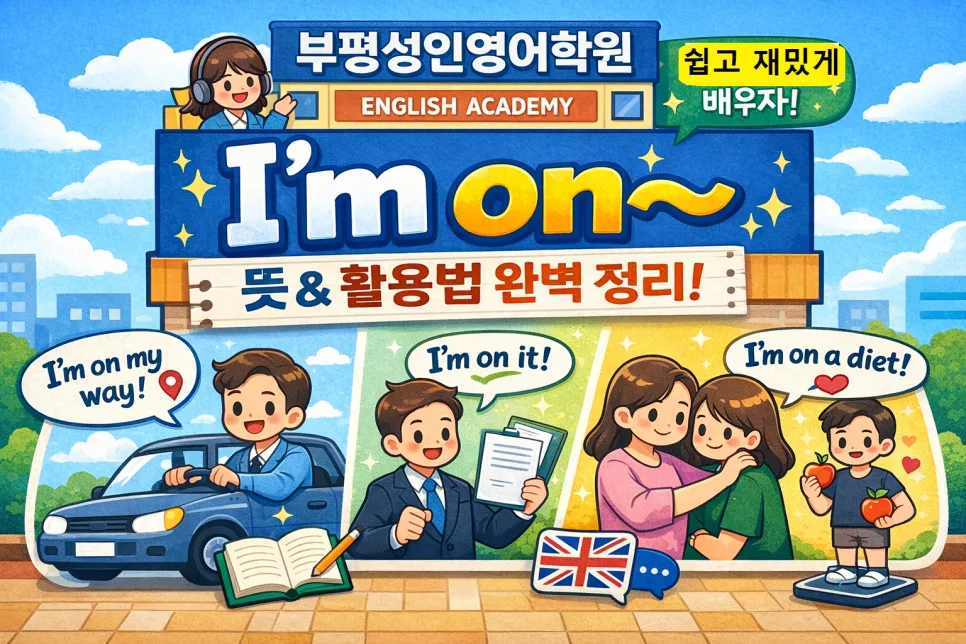
One of the most frequently used 'I'm on~' phrases is 'I'm on my way,' meaning 'I'm currently traveling to a location.' This is perfect for when you're late for a meeting or when someone asks about your ETA. You can say, 'I’m on my way now,' or 'Don’t worry, I’m on my way.' Another common phrase, especially in professional or daily tasks, is 'I'm on it,' which means 'I'll take care of it' or 'I'm currently handling it.' It’s a quick and responsible way to acknowledge a request. For example, to the question 'Can you send the file?', you can reply, 'Sure, I’m on it.' Additionally, 'I’m on your side' signifies support and agreement, useful for comforting a friend or showing solidarity. A warm example is, 'Don’t be nervous. I’m on your side.'
Status Expressions with 'I'm on~' and What to Watch Out For
You can also use 'I'm on~' to describe your current status or ongoing activities. Common examples include 'I'm on a diet,' indicating you are currently trying to lose weight, or 'I'm on leave,' meaning you are on vacation or away from work. This 'I'm on + status/activity' structure clearly communicates your present situation. When learning these phrases, it's more effective to memorize them as complete chunks, like 'I'm on my way' or 'I'm on it,' rather than individual words. This approach makes it easier to use them spontaneously in conversation. For instance, 'I'm on the phone' is another useful phrase to indicate you are currently engaged in a call.
Additional Tips for Mastering 'I'm on~' Phrases
Beyond fluent sentence construction, the ability to use short, impactful phrases naturally is key to improving your English speaking skills. Learning practical expressions like 'I'm on~' significantly boosts your confidence when making plans, responding to requests, or explaining your situation. Start with the most common phrases and gradually incorporate them into your practice. You might even explore more complex idioms like 'I'm on the verge of something' (meaning you are about to do something) once you're comfortable with the basics. Consistent practice will undoubtedly lead to noticeable improvements in your English fluency.
For more details, check the original source below.