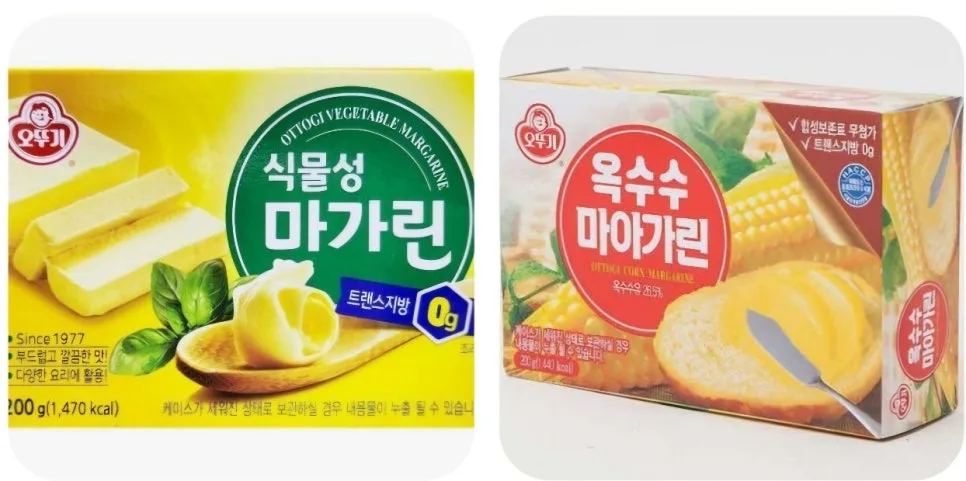
Confused by Korean loanword spelling? This guide clarifies the official rules for foreign words like 'workshop,' 'rocket,' and 'margarine' as they are commonly used in Korean. We break down the fundamental principles and provide practical examples based on the 2026 Korean orthography standards, making it easier for English speakers to understand and use these words correctly.
Why Are Standardized Korean Loanword Spelling Rules Necessary?
Words like 'taxi,' 'bus,' and 'coffee' are all loanwords that have become integral to the Korean language. While they're used naturally in daily conversation, their spelling can often cause confusion. For instance, is it 'workshop' or 'work-shop'? Is it 'rokket' or 'roket'? To reduce this confusion and ensure consistency, the 'Korean Language and Literature Regulations' include standardized 'Loanword Spelling Rules.' These rules serve as a crucial guideline for accurately and consistently spelling loanwords in a way that fits the Korean phonetic environment.
What Are the Basic Principles of Korean Loanword Spelling?
The core principle of Korean loanword spelling is to use only the 24 current Korean alphabet characters (Hangul). This means that when spelling loanwords, only the 14 consonants (ㄱ, ㄴ, ㄷ, ㄹ, ㅁ, ㅂ, ㅅ, ㅇ, ㅈ, ㅊ, ㅋ, ㅌ, ㅍ, ㅎ) and 10 vowels (ㅏ, ㅑ, ㅓ, ㅕ, ㅗ, ㅛ, ㅜ, ㅠ, ㅡ, ㅣ) are used. Consequently, tense consonants (ㄲ, ㄸ, ㅃ, ㅆ, ㅉ) and diphthongs (ㅒ, ㅖ, ㅘ, ㅝ, ㅙ, ㅞ, ㅢ) are generally not used in loanword spelling. The rule also aims for a one-to-one correspondence between each sound in the loanword and a Korean character (e.g., 'file' becomes '파일'). For final consonants, only 'ㄱ, ㄴ, ㄹ, ㅁ, ㅂ, ㅅ, ㅇ' are permitted. A key rule is that tense consonants are not used for aspirated sounds. While some loanwords that have become widely adopted and are used conventionally may have separate, specific spellings, these fundamental rules apply broadly.
What Are Common Areas of Confusion in Actual Loanword Spelling?
One of the most frequent errors in loanword spelling involves final consonants. Unlike Korean's 'final consonant sound rule,' Korean loanword spelling often uses 'ㅅ' instead of 'ㄷ' for final consonants. For example, spelling 'rocket' as '로켙' would lead to an awkward pronunciation like 'roketsi' when a particle like '-i' is attached. To ensure natural pronunciation, it's spelled as '로켓' (roket), allowing for a smooth 'roket-i' sound. Similarly, 'coffee shop' should be spelled '커피숍' (keopisyop) rather than '커피숖' (keopisyup) for natural pronunciation like 'keopisyop-i.' Furthermore, the principle is to avoid tense consonants (ㄲ, ㄸ, ㅃ) for aspirated sounds, using plain consonants (ㄱ, ㄷ, ㅂ) or aspirated consonants (ㅋ, ㅌ, ㅍ) instead. 'Bus' is spelled '버스' (beoseu), not '뻐스' (ppeoseu), and 'Paris' is '파리' (pari), not '빠리' (ppari).
Loanword Spelling Rules: Key Points to Remember!
There are a few specific points to keep in mind when applying Korean loanword spelling rules. Firstly, long vowel sounds are generally not indicated separately. For instance, 'margarine' is spelled '마가린' (magarin), not '마아가린' (maagarin). Secondly, 'ㅑ, ㅕ, ㅠ' are not used after 'ㅈ', with 'ㅏ, ㅓ, ㅜ' being used instead. Thus, '주스' (juseu) is correct, not '쥬스' (jyuseu), and '장르' (jangneu) is correct, not '쟝르' (jjangneu). Additionally, many commonly misspelled words exist. For example, incorrect spellings like '액세서리' (aekseseori), '배터리' (baeteori), and '서비스' (seobiseu) are often seen, but the correct spellings are '액세서리' (aekseseori), '배터리' (baeteori), and '서비스' (seobiseu). Mastering these rules and applying them in practice is essential for accurate Korean writing.
For more details, check the original source below.





