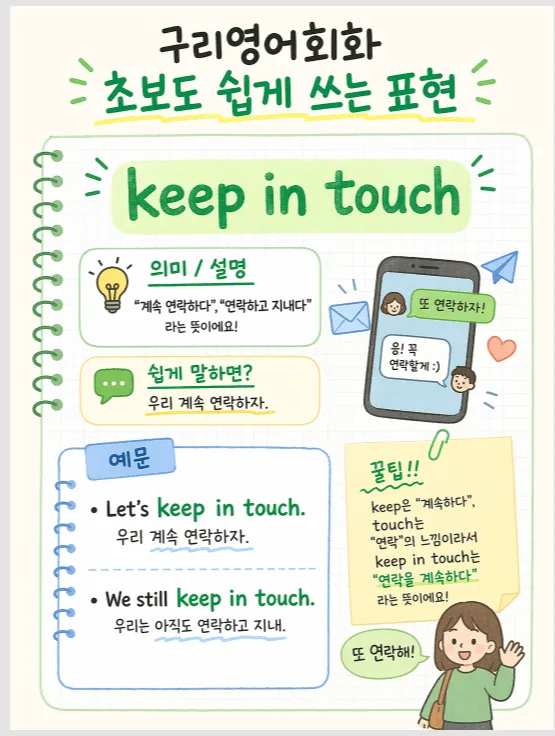
Unlock the essential English phrase 'keep in touch' with this 2026 guide, perfect for beginners. This phrase is crucial for maintaining connections and is commonly used when ending conversations or reconnecting after a period of silence. Mastering it will significantly enhance your conversational English skills.
What Does 'Keep in Touch' Actually Mean?
In English conversations, 'keep in touch' is a frequently used idiom that signifies the desire to maintain a connection and exchange updates with someone. It goes beyond a simple translation of 'stay in contact'; it carries a warmer, more personal nuance, implying that you value the relationship and wish to continue hearing from them. This phrase is versatile, suitable for friends, colleagues, and even business acquaintances when you want to end a conversation on a friendly and forward-looking note. Adding 'Let’s keep in touch' at the end of a chat can make your interactions feel more genuine and lasting.
When Should You Use 'Keep in Touch'?
The most common scenario for using 'keep in touch' is at the conclusion of a conversation, especially when parting ways. If you've met a new friend or reconnected with an old one, saying 'It was great seeing you, let’s keep in touch!' expresses your interest in maintaining the friendship. It’s also perfect for situations where you'll be separated for a while, like before a long trip or after a productive business meeting where you want to ensure future communication. Using this phrase can leave a positive impression, showing you're thoughtful and value the connection beyond the immediate interaction.
What Are Some Basic Example Sentences for 'Keep in Touch'?
To truly grasp the usage of 'keep in touch,' let's look at some practical examples. The most fundamental phrase is 'Let’s keep in touch,' which directly translates to 'We should stay in contact.' For a slightly more formal request, you might say, 'Please keep in touch with me.' The sentence 'We should keep in touch' expresses a mutual desire to maintain the relationship. If you want to convey a hopeful sentiment, 'I hope we can keep in touch' works well. When specifying who you want to stay in touch with, use the structure 'keep in touch with + person.' For instance, 'I still keep in touch with my college friends' means you regularly communicate with them. Similarly, 'She keeps in touch with her former coworkers' indicates ongoing communication. These examples illustrate how to clearly define the connection you wish to maintain.
What Are Some Tips for Using 'Keep in Touch' More Naturally in English?
Beyond understanding the literal meaning, using 'keep in touch' naturally involves appreciating its friendly and warm undertones. When meeting someone new, a phrase like 'It was a pleasure meeting you. Let’s keep in touch!' adds a personal touch. If someone has helped you or you've shared a great experience, saying 'Thanks for everything! Keep in touch!' conveys gratitude and a desire for continued connection. For closer relationships, you might even hear 'Don’t be a stranger! Keep in touch,' which is a casual way of saying 'Stay in touch and don't disappear.' These variations help make your English sound more authentic and engaging.
What's the Difference Between 'Keep in Touch' and 'Stay in Touch'?
You might also encounter the phrase 'stay in touch,' which is very similar to 'keep in touch.' In everyday American English, these two phrases are often used interchangeably and carry almost the same meaning: to maintain communication. While 'keep in touch' can sometimes imply a more active effort to connect, and 'stay in touch' might suggest maintaining an existing state of connection, this distinction is subtle and rarely impacts understanding. Both are perfectly natural and widely accepted ways to express the desire to remain in contact with someone, so feel free to use whichever comes to mind.
For more essential English phrases, check the original source.