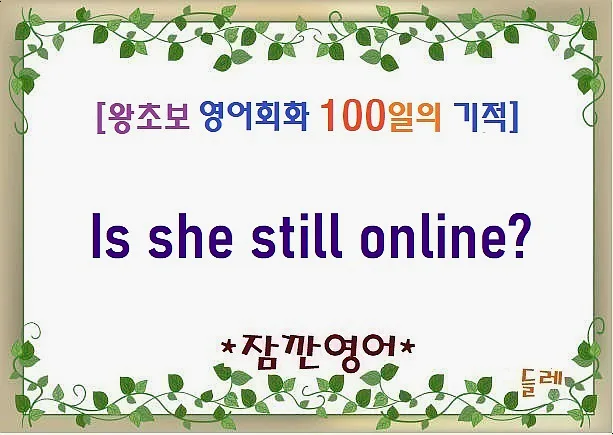
The English phrase 'Is she still online?' is used to check if someone is currently connected to the internet, particularly on messaging apps or games. The inclusion of 'still' emphasizes whether they have remained online despite the passage of time. This phrase is a common way to inquire about someone's online presence in digital communication.
How to Ask About Online Status in English
When you're curious about someone's online presence, the most common English phrase to use is 'Is she still online?'. This is a direct question asking if a specific person (she) is currently maintaining an online connection. The word 'still' adds the nuance of asking if they have been online continuously up to the present moment. For instance, if a friend hasn't responded for a while, you might use this phrase to check their status. I personally use 'Is he still online?' when chatting with international friends if they take a long time to reply. The 'still' effectively conveys the temporal aspect of the question, focusing on their current state after a period has passed.
Understanding 'Online' Beyond Just Status Checks
Beyond asking about someone's immediate online status, the word 'online' has broader applications in English. For example, if you purchased an item through e-commerce, you could say, 'I got this online.' If you're interested in someone's hobbies, you might ask, 'Do you like to play online games?'. In these contexts, 'online' functions as an adjective or adverb describing activities or states related to the internet. Therefore, understanding 'Is she still online?' also helps in grasping the broader concept of being 'online' in various digital interactions.
Pronunciation and Real-World Examples of 'Is she still online?'
To use this phrase naturally, pay attention to pronunciation and intonation. 'Is she still online?' is best pronounced with emphasis on 'still' and 'online', creating a rhythm similar to 'iz shee STILL ON-line?'. In actual conversations, this phrase and its variations are used in several scenarios:
- Is he still online? I need to ask him something important. (This is used when you urgently need to ask someone a question and want to confirm they are available.)
- Is she still online or did she already log out? (Use this when you want to clearly distinguish whether the person is currently connected or has finished their session.)
- He was online about an hour ago. (This statement refers to someone's online status in the past, indicating they were connected approximately sixty minutes prior.)
These examples show how 'Is she still online?' and its related forms are frequently used in online communication to gauge someone's current availability.
Exploring Additional English Phrases Related to Online Status
Besides asking about someone's online status, there are many other English expressions related to online activities. For instance, to indicate someone is online, you might say, 'He is online.' or 'She is currently active.' Conversely, to show they are not connected, you can say, 'He is offline.' or 'She is not available right now.' Furthermore, 'log in' and 'log out' are essential verbs for accessing and exiting online services. You might ask, 'Did you log in successfully?' to confirm someone's access. Familiarizing yourself with these phrases will enhance your fluency in online communication.
Important Considerations When Checking Online Status
While checking online status can be convenient, it's crucial to be mindful of a few points. Firstly, excessively checking someone's online status or becoming fixated on it can feel like an invasion of privacy. Repeatedly asking 'Is she still online?' or sending multiple messages when someone is online but not responding can negatively impact your relationship. Secondly, an online status indicator doesn't always reflect actual activity. Some apps or platforms might show a user as online even if they are merely keeping the app running in the background. Therefore, avoid making assumptions about someone's situation based solely on their online status. If you have an important matter to discuss, it's often better to contact them directly or leave a message rather than solely relying on their online presence. Consider the individual's preferences and the nature of your relationship before inquiring about their online status.
For more detailed English expressions and usage, refer to the original source.