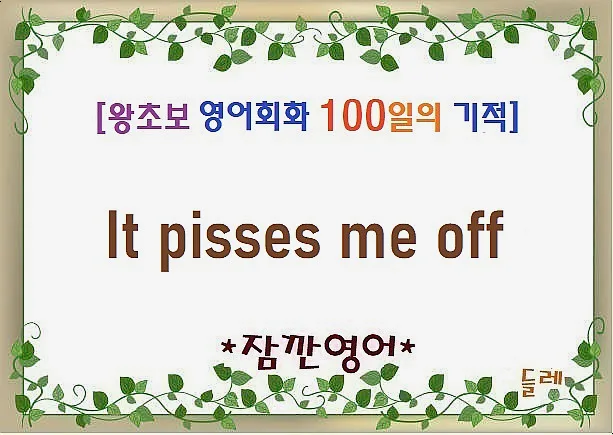
The English phrase 'It pisses me off' is a colloquial expression used to convey extreme annoyance or anger. While it literally translates to 'that makes me angry,' its actual meaning is closer to 'it really bugs me' or 'I'm so fed up.' It's a much stronger way to express frustration than common phrases like 'annoy,' 'bug,' or 'irritate,' and is best reserved for situations where you want to emphasize a high level of displeasure.
When and How to Use 'It Pisses Me Off'
Because 'piss' in this context is considered vulgar slang, it's crucial to avoid using 'It pisses me off' in formal settings or professional environments. This phrase is best suited for casual conversations among close friends or family where you can openly express strong emotions. For instance, if a friend is consistently late or behaving in a way you find unreasonable, you might say, 'It really pisses me off!' to voice your strong dissatisfaction. While effective for conveying the intensity of your feelings, be mindful that it can sound offensive to others, so use it judiciously.
Expressing Strong Anger in English
When you want to convey that you are extremely angry or upset, you can say, 'I'm so pissed off.' While 'It pisses me off' refers to a specific situation causing anger, 'I'm so pissed off' directly describes your current emotional state. Similar expressions include 'I'm fired up,' which can indicate intense enthusiasm but also strong anger or determination depending on the context, and 'It burns me up,' used to describe a deep, internal feeling of frustration or anger. These phrases can effectively communicate strong emotions in everyday conversations.
Pronunciation and Real-Life Examples of 'It Pisses Me Off'
To pronounce 'It pisses me off' correctly, focus on stressing the words 'pisses' and 'off,' linking them together with a natural rhythm: 'It-PISS-es-me-OFF.' Practicing this flow will make it sound more natural. Here are some real-life examples: 'It really pisses me off' is used to express strong displeasure about a situation. 'His attitude pisses me off' conveys annoyance with someone's behavior. 'It pisses me off when he talks back to me' shows direct frustration with disrespectful responses. The phrase 'talk back to' means to respond rudely or defiantly.
Important Considerations When Using 'It Pisses Me Off'
While 'It pisses me off' can be a useful way to express strong feelings among close friends, it's wise to refrain from using it in formal settings, with new acquaintances, or in business contexts. This expression can come across as rude or aggressive and may negatively impact your relationships. If you need to express your feelings more politely, consider softer alternatives like 'I find that quite frustrating' or 'I'm a bit annoyed by that.' It's also advisable to use this phrase when you've calmed down slightly, rather than in the heat of the moment, to avoid misunderstandings. In YMYL (Your Money Your Life) categories like finance, health, or law, always use formal and reliable language, avoiding slang entirely.
For more details, check the original source below.