
If you're looking for the perfect English phrase to describe someone who's passionate about food, 'You're a sucker for food' is the most natural and widely understood expression. This idiom is ideal for describing someone who is enthusiastically devoted to or incredibly fond of food, often to the point of being unable to resist it.
What's the Best English Translation for '먹는 거라면 사족을 못 쓴다'? 2026
Imagine your friend immediately grabs a slice of cake the moment they see it. If you wanted to playfully say, 'You're really a sucker for food,' in English, it's best to use a natural idiom rather than a direct translation. Simply saying 'obsessed with food' can sometimes carry a strong or even negative connotation, implying an unhealthy fixation. In a lighthearted situation with a friend, a more casual and friendly phrase is usually more appropriate. 'You're a sucker for food' is the most natural way to describe someone who loves food so much they can't resist it. Other excellent alternatives include 'You just can’t resist food,' or 'You really love food.' These phrases effectively convey a strong liking for food without the potential negative baggage of 'obsessed.'
Why 'Obsessed with Food' Can Sound Awkward 2026
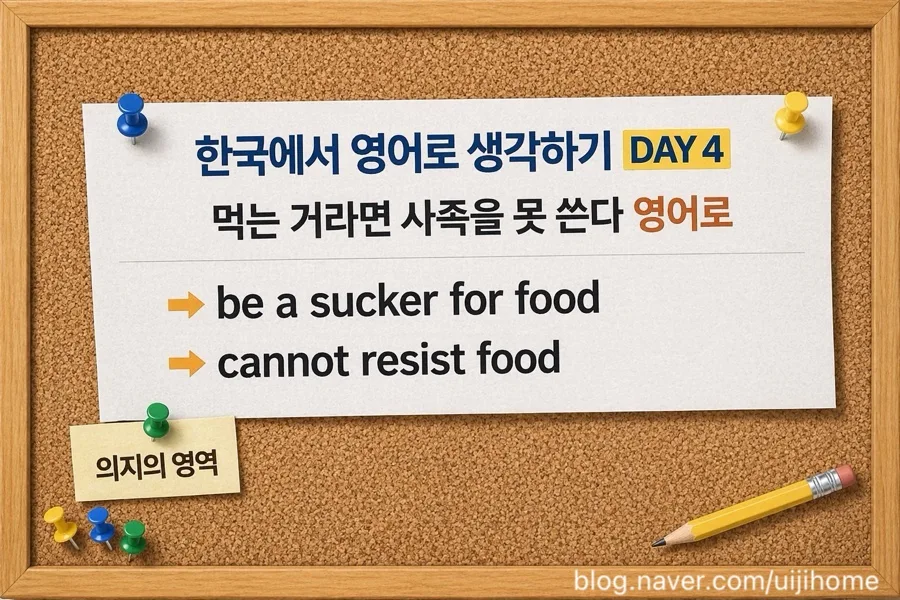
While grammatically correct, the phrase 'obsessed with food' can sometimes sound a bit too intense or even negative for everyday conversation. The word 'obsessed' carries a strong meaning of fixation or preoccupation, which might be an overstatement when you simply want to say someone really enjoys eating. For instance, if you see a friend enthusiastically digging into a delicious meal, calling them 'obsessed' might imply a deeper, perhaps unhealthy, relationship with food. In Korean culture, expressions like '먹는 거라면 사족을 못 쓴다' are often used playfully to describe a strong liking. To capture that same lighthearted spirit in English, phrases like 'You're a sucker for food' are much better suited. They convey a genuine love for food in a way that's relatable and positive, avoiding the potential for misinterpretation that 'obsessed' might bring.
Natural English Alternatives for Food Lovers 2026
Beyond the classic 'You're a sucker for food,' there are several other natural ways to express a strong love for food in English. If you want to emphasize the irresistible nature of food for someone, 'You just can’t resist food' is a fantastic option. This phrase highlights how someone is drawn to food, almost as if they have no choice but to indulge. For a more straightforward and universally understood compliment, 'You really love food' works perfectly. It's simple, direct, and clearly communicates a positive appreciation for cuisine. These expressions are commonly used by native English speakers and effectively capture the sentiment of someone who is genuinely enthusiastic about eating, much like the Korean idiom '사족을 못 쓴다' implies a deep affection and inability to resist.
Key Considerations When Using 'Sucker for Food' in English 2026
The Korean expression '사족을 못 쓴다' (sajok-eul mot sseunda) is often used humorously to describe someone who is extremely enthusiastic about something, to the point where they might lose a bit of rational control. When translating this sentiment into English, especially regarding food, it's crucial to pay attention to nuance. The word 'obsessed' in English can carry a strong connotation of fixation and might sound overly intense or even negative when describing someone's love for food. Therefore, using 'You are obsessed with food' might not always be the best fit, especially in casual conversation. A more appropriate and friendly phrase is 'You’re a sucker for food,' which implies a strong, almost irresistible liking for food without the negative undertones. Additionally, remember that 'food' is generally treated as an uncountable noun in English. This means you typically wouldn't use the indefinite article 'a' before it, so 'a food' is generally incorrect unless you're referring to a specific type or dish of food. Opting for 'food' or 'foods' (when referring to different types) is standard practice.
For more English expressions, check the original source below.





