If it's been about three weeks since your last haircut, it's time to learn some fresh English phrases for a new style. Saying "It's been three weeks since I last had my hair cut" naturally conveys that you're due for a trim. This expression clearly communicates the time elapsed and is useful for informing others about your current situation, especially when you're ready for a refresh.
How to Say "It's Been 3 Weeks Since My Haircut" in English
When you want to express that three weeks have passed since your last haircut, the most direct and clear way is: "It's been three weeks since I last had my hair cut." This sentence accurately conveys that three weeks have gone by since you last visited the salon. Based on real-life experiences, this phrase is often used when you want to signal a change in your hairstyle or acknowledge that it's time for a refresh. For instance, it's useful when telling a friend that it's time to get your hair trimmed. Including specific time information like this enriches the conversation and provides clear context about your appearance.
What's the English Phrase for Getting a Hair Trim?
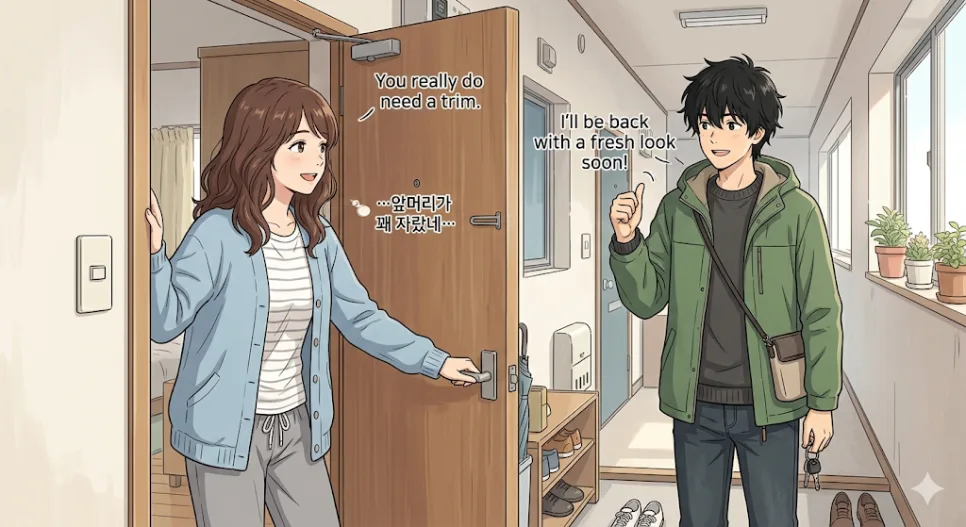
The English phrase for getting a hair 'trim' is "need a trim." This is used when you're not getting a completely new haircut but rather tidying up the length or shape of your hair. For example, saying "You really need a trim" is a gentle way to suggest to someone that their hair is a bit long and could use some tidying. This expression is useful not only when you're at the salon but also in everyday conversations about someone's appearance. In practice, "trim" is the perfect word for slightly cutting your hair or cleaning up messy ends.
Useful English Patterns for Everyday Conversation
The pattern "I'll be back [time/state] soon!" is incredibly useful in everyday English conversations. This expression lets others know you'll return shortly, and you can even specify what state you'll be in upon your return. For example, after getting a haircut, you could say, "I'll be back with a fresh look soon!" This conveys that you'll be back with a refreshed appearance. You can also adapt it to various situations, such as "I'll be back in an hour" (I'll return in one hour) or "I'll be back refreshed soon!" (I'll be back feeling rejuvenated). This pattern is effective for clearly communicating your plans and reassuring others.
How to Use the "Need a [Noun]" Structure and "Right?"
In English grammar, the structure "Need a [Noun]" is frequently used to express the need for something. For instance, "I need a haircut" means you need to get your hair cut, while "I need a trim" specifically implies the need for a light tidying of your hair. Here, 'trim' functions as a noun referring to the act of lightly shaping one's hair. Additionally, the word "Right?" at the end of a sentence is a very common colloquialism used to seek agreement or, as in "I know, right?", to express strong empathy with what someone else has said. Using these expressions appropriately can lead to more natural and engaging English conversations.
For more English conversation tips, check the original source below.