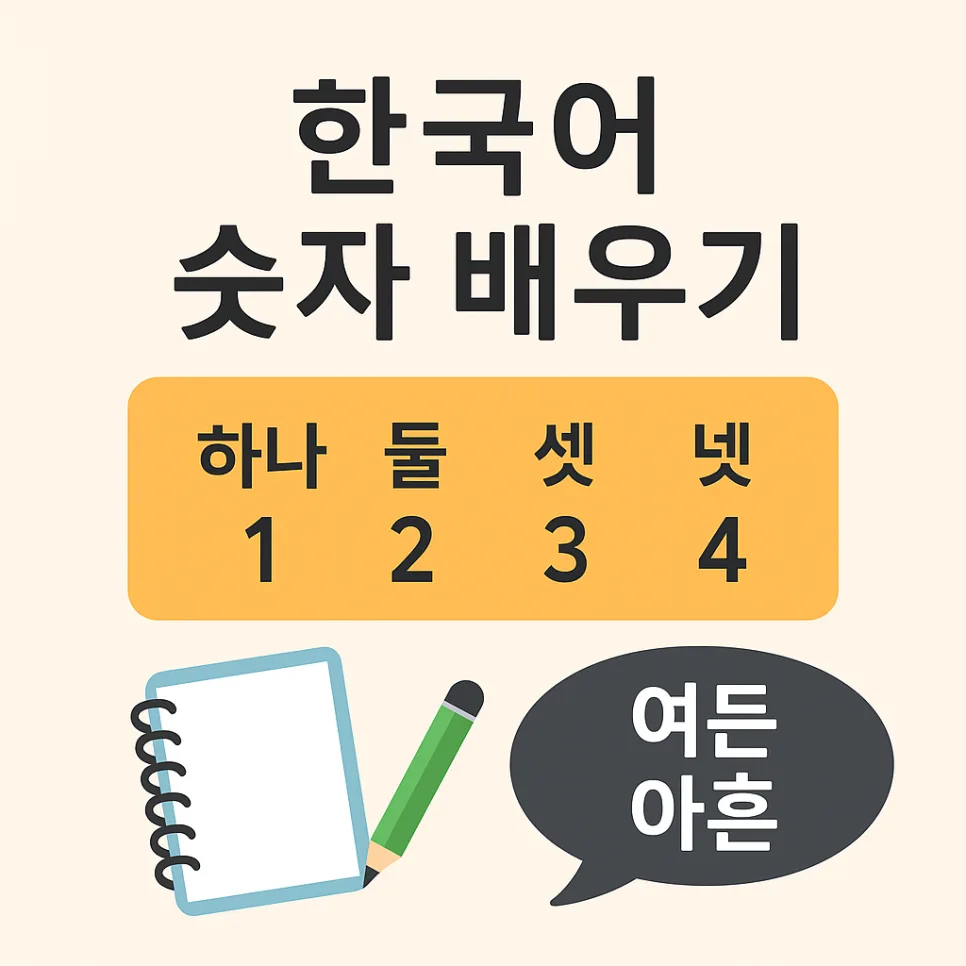
Mastering Korean numbers is crucial for learners, especially with the dual system of native Korean and Sino-Korean digits. This 2026 guide clarifies how to read numbers, including native vs. Sino-Korean usage, time/date expressions, and number transformations, ensuring you can confidently navigate Korean numerals.
Why Do Foreigners Find Korean Numbers Confusing?
The primary reason Korean numbers trip up learners is the coexistence of two distinct number systems: native Korean and Sino-Korean. Native Korean numbers are used for counting items, age, and time (hours), while Sino-Korean numbers (derived from Chinese characters) are used for dates, money, phone numbers, and numbers over 99. This duality, combined with native Korean number transformations before nouns, creates complexity. For instance, distinguishing between 'five items' (daseot gae) and 'the 5th day' (o-il) requires understanding context. Even native Korean speakers can sometimes pause to recall the correct system, highlighting the unique nature of Korean numeration.
Native Korean vs. Sino-Korean Numbers: How to Tell Them Apart
In modern Korean, native numbers are primarily used for quantities up to 99. They are essential for counting tangible items, expressing age, and indicating hours. For example, you'd say 'five apples' (sagwa daseot gae) or 'twenty-five years old' (seumudaseot sal). Sino-Korean numbers, however, are the go-to for dates, phone numbers, floor levels, academic grades, and monetary values. So, 'January 3rd' becomes 'ilwol sam-il', and '5th floor' is 'o-cheung'. When dealing with larger numbers, generally above 100, Sino-Korean numbers take precedence, such as '130 people' (baek-sam-sip myeong) or '315 items' (sam-baek-sip-o gae). Understanding these contexts is key to accurate number usage.
What Are the Specific Rules for Reading Time and Dates in Korean?
Reading time and dates in Korean involves specific rules that can initially confuse learners. For time, native Korean numbers are used for the hour ('시', si) and Sino-Korean numbers for the minutes ('분', bun). For instance, 3:45 PM is read as 'se si sa-sip-o bun' (three o'clock, forty-five minutes). Dates predominantly use Sino-Korean numbers, with '월' (wol) for month and '일' (il) for day. So, October 1st is 'siwol il-il'. Mastering these distinctions requires consistent practice and exposure to real-life examples, making it a crucial step in achieving fluency.
What Are the Transformation Rules for Native Korean Numbers and How Do We Read Compound Numbers?
Native Korean numbers undergo fascinating transformations when placed before a noun. Numbers like '둘' (dul, two), '셋' (set, three), and '넷' (net, four) change to '두' (du), '세' (se), and '네' (ne) respectively. For example, it's '두 명' (du myeong, two people), not '둘 명'. The number '하나' (hana, one) shortens to '한' (han) before a noun, as in '한 사람' (han saram, one person). These rules also apply to compound numbers. For instance, 'eleven' (yeolhana) becomes '열한' (yeolhan) before a noun, like '열한 개' (yeolhan gae, eleven items), and 'twenty-one' (seumulhana) becomes '스물한' (seumulhan) before a noun, such as '스물한 명' (seumulhan myeong, twenty-one people). Understanding these modifications leads to more natural Korean expression.
What Are Common Mistakes When Learning to Read Korean Numbers?
The most frequent errors for foreign learners involve confusing native and Sino-Korean numbers or misapplying them in contexts like time expressions. For example, saying 'o gae' (five items) instead of 'daseot gae', or 'sam si' (three o'clock) instead of 'se si'. Overlooking the transformation rules for native numbers, such as using 'dul myeong' instead of 'du myeong', is also common. Mistakes can also occur when reading larger numbers, blending the two systems incorrectly. To minimize these errors, it's vital to clearly grasp the usage context for each number system and practice with numerous examples. Utilizing diverse learning resources tailored to your style is highly recommended.
English crawl path
Next English reads from this pilot cluster
Continue through the category hub, latest English stories, and related posts so this translated article is not an isolated URL.
Tags
💬Frequently Asked Questions
What should I check first in How to Read Korean Numbers: A 2026 Guide?
Does this Language Learning article link back to the Korean source?
Where can I find similar English stories?
English discovery path
Explore more English K-culture stories
Keep browsing the indexed English pilot cluster so Google and readers can move between this story, the category hub, and fresh discovery pages.
Original Source
Read the Korean original





