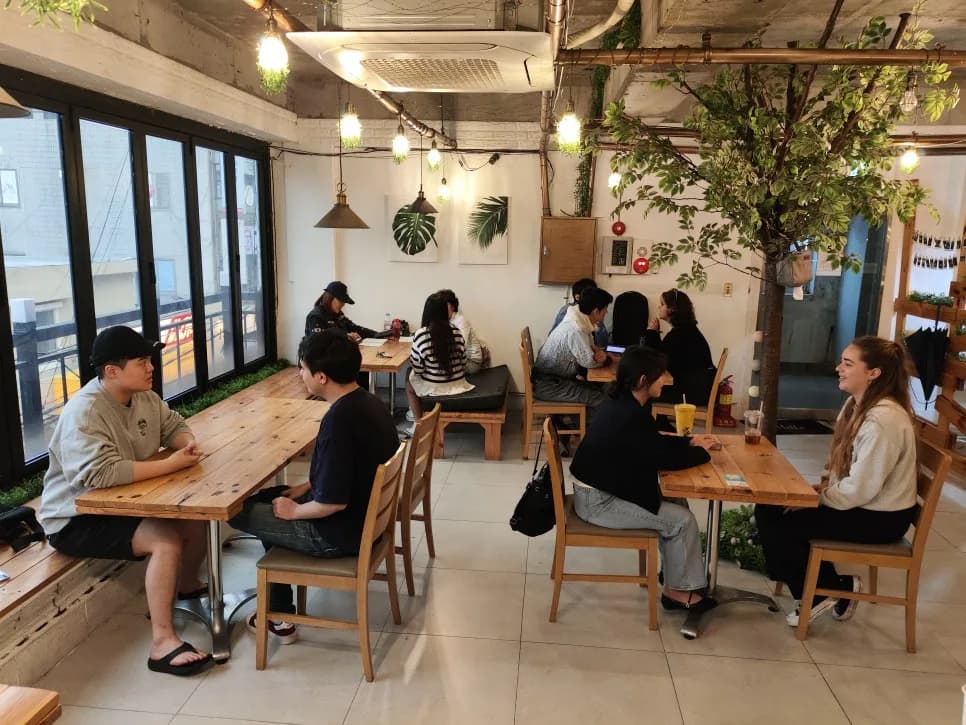
For US learners aiming to speak Korean fluently, focusing on conversational practice is key. Many find that traditional methods fall short, but intensive programs like LZONE (though not US-based, its principles apply) demonstrate that achieving conversational ability in Korean within 3 months is possible with the right approach, transforming fear into confidence.
Why is Korean Language Learning So Popular in the US?
The global surge of Hallyu, or the Korean Wave, has dramatically boosted interest in learning the Korean language among Americans. Driven by the massive popularity of K-Pop groups like BTS and BLACKPINK, and critically acclaimed K-dramas on platforms like Netflix and Viki, millions of US fans are motivated to understand their favorite content without subtitles. This cultural immersion creates a strong desire to learn Korean, moving beyond casual interest to dedicated study. Resources like Talk To Me In Korean (TTMIK) and Duolingo offer accessible entry points, while dedicated learners pursue the TOPIK (Test of Proficiency in Korean) exam to certify their skills. The journey from mastering Hangul (the Korean alphabet) in under a week to holding basic conversations within a month, and achieving fluency in 6-12 months, is an achievable goal for many US-based learners.
What's the Best Approach for Learning Korean Conversationally?
The most effective strategy for US learners to gain conversational Korean skills quickly involves prioritizing speaking practice over rote memorization. This means actively engaging in dialogues, even from the beginner stages. Instead of just learning vocabulary lists, focus on using new words and phrases in simulated real-life scenarios. Think of it like learning to swim: you can read about swimming all day, but you won't get better until you get in the water. For Korean, this translates to finding conversation partners, joining language exchange meetups (online or in major US cities), or utilizing apps that facilitate speaking practice. The goal is to make mistakes, receive feedback, and learn from them in a low-pressure environment, much like the 'make them speak' philosophy found in intensive Korean language programs. This hands-on approach builds confidence and practical fluency.
How Can K-Pop and K-Dramas Accelerate Korean Learning?
Leveraging K-Pop and K-dramas is a highly effective and enjoyable method for US-based Korean language learners. By listening to song lyrics and dialogue repeatedly, learners can improve their listening comprehension and pronunciation. Many fans use lyric videos or K-drama subtitles to follow along, pausing to look up unfamiliar words and phrases. This immersion helps learners pick up natural speech patterns, slang, and cultural nuances that textbooks often miss. For instance, understanding the honorifics system in Korean, crucial for politeness, becomes clearer through observing character interactions in dramas. Online communities and fan-made resources often provide detailed breakdowns of language used in specific songs or episodes, offering a rich, context-specific learning experience. This method transforms passive consumption into active learning, making the process far more engaging and sustainable.
What Are Common Pitfalls for US Learners of Korean?
US learners of Korean often encounter several common challenges. One major hurdle is the difference in sentence structure; Korean is an SOV (Subject-Object-Verb) language, unlike English's SVO. Mastering particles, which indicate the grammatical function of words, can also be tricky. Another significant challenge is the honorifics system, where speech levels change based on the age and social status of the person you're speaking to – a concept less pronounced in American English. Many learners also struggle with pronunciation, particularly differentiating between similar-sounding consonants and vowels. Finally, relying solely on free apps like Duolingo without supplementing with speaking practice can lead to a gap between passive knowledge and active conversational ability. Overcoming these requires consistent practice, seeking feedback, and understanding the cultural context behind the language.