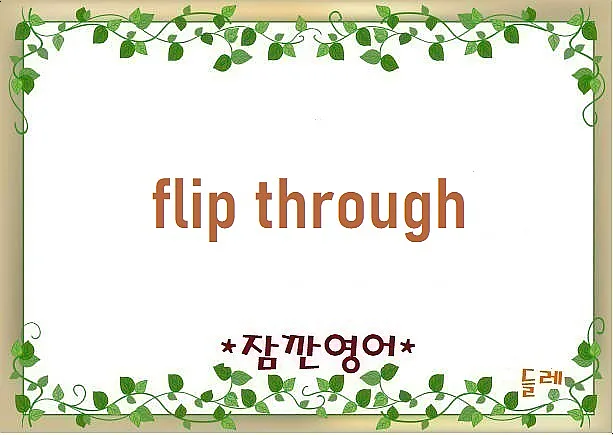
In English, 'flip through' means to quickly turn the pages of a book, magazine, or screen, or to casually browse content. It's a useful expression for describing the action of skimming through materials or channels without deep engagement. This 2026 guide will break down the precise meaning and usage of this versatile phrase.
What Exactly Does 'Flip Through' Mean?
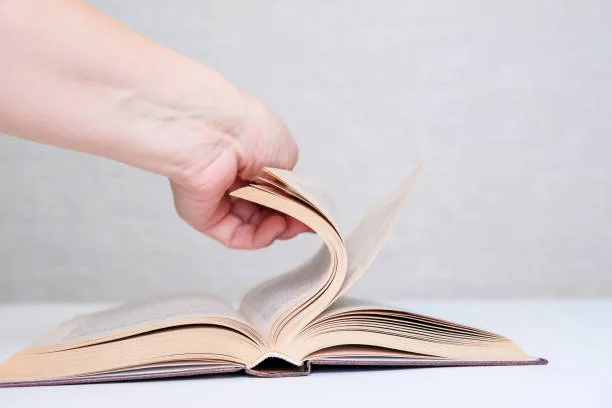
'Flip through' combines 'flip' (to turn) and 'through' (indicating movement across). It primarily describes the action of rapidly turning the pages of a book, magazine, or album to get a general sense of its contents. The nuance is less about in-depth reading and more about a casual scan. For example, 'I'm just flipping through the magazine for ideas' means you're quickly looking through it to find inspiration. This expression extends beyond physical media to digital environments. You can 'flip through' online videos or blog posts by scrolling quickly, much like turning pages. Similarly, 'flipping through TV channels' refers to rapidly changing channels to find something to watch. This phrase is used in various contexts to mean 'quickly turn,' 'skim,' or 'casually look through.'
When Is 'Flip Through' Most Useful?
'Flip through' is particularly useful in several scenarios. Firstly, when you want to quickly find an interesting article or photo in a book or magazine. For instance, 'He flipped through the book to find the chapter he was looking for' illustrates this. Secondly, it's used when browsing online stores or social media feeds to find appealing products or content. 'She flipped through the online store to find a good item' captures this usage. Thirdly, you can use it when quickly scanning song titles in a playlist to find a desired track. 'He flipped through the playlist for a good song' is a good example.
What Are Similar Expressions and Their Differences?
While 'flip through' has similar meanings to other English expressions, there are subtle differences. 'Browse' typically refers to looking around casually in a store or on a website, often with a more relaxed feel than 'flip through.' For example, 'I'm just browsing' implies looking without a specific purchase in mind. 'Skim' focuses on quickly reading through text to grasp the main points, like 'He skimmed the report to get the main points.' In contrast, 'flip through' emphasizes the physical act of turning pages, often with a sense of casualness or speed.
What Misunderstandings Can Arise from Incorrect Use of 'Flip Through'?
Using 'flip through' incorrectly can lead to confusion. The most common mistake is confusing it with 'flip' or 'flip over,' which are used for actions like turning food. Saying 'flip through' in the context of cooking would sound very strange. For food-related actions, 'flip' or 'flip over' is the standard term. Additionally, since 'flip through' implies a casual scan, using it to describe a serious or in-depth study session can diminish the perceived importance of the activity. For example, describing the process of meticulously reading a complex technical document from start to finish as 'flipping through' it might misrepresent the effort involved.
For more details, check the original source below.