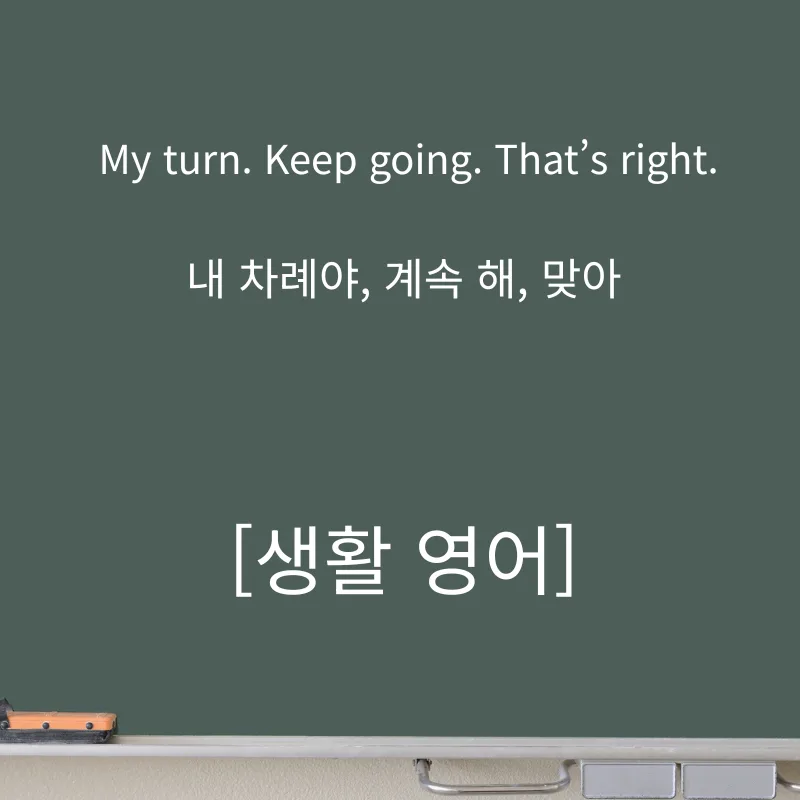
In everyday English conversations, mastering phrases like 'It's my turn,' 'Keep going,' and 'That's right' is key to sounding natural and engaging. These expressions help you manage turns, encourage others, and show agreement, making your communication more effective and fluent. Learning these common interjections can significantly boost your confidence in speaking English.
When to Use 'It's My Turn' and 'It's Your Turn' in English
These phrases are essential for managing turns, whether in games, presentations, or simply passing the conversation. Saying 'It's my turn' signals that you're ready to speak or act, while 'It's your turn' passes the opportunity to someone else. For instance, during a board game night with friends, enthusiastically calling out 'It's my turn!' adds to the fun. In British English, you might hear 'It's my go' used interchangeably. If you want to let someone else go first, a polite 'Go ahead' is the standard phrase.
How to Use 'Keep Going' and 'Carry On' for Encouragement
When someone is speaking, working on a task, or facing a challenge, 'Keep going' and 'Carry on' serve as powerful encouragements. These phrases signal support and urge them to continue. For example, if a friend stumbles during a presentation, telling them 'Keep going. You're doing great!' can help them regain their composure and confidence. 'Carry on' can sometimes feel slightly more formal than 'Keep going,' making it suitable for more official settings or when a touch more politeness is desired.
Effective Ways to Use 'That's Right' and Similar Agreement Phrases
Showing agreement is crucial for building rapport in conversations. Phrases like 'That's right' and 'Exactly' confirm that you understand and concur with what the other person has said. For example, if a colleague proposes a solid idea, responding with 'That's right. That makes sense' validates their contribution. However, it's important to use these judiciously to avoid sounding overly agreeable. Sometimes, a softer 'You're right' might be more appropriate. While agreement is good, expressing differing opinions respectfully is also vital for healthy long-term relationships.
Tips for Using These Key English Phrases Naturally in Conversation
To integrate these essential phrases into your daily English conversations, practice is key. Try consciously using 'It's my turn,' 'Keep going,' and 'That's right' with friends or language partners. Expanding your vocabulary by learning similar expressions, like 'It's my go' or 'Continue,' will also enhance your fluency. Understanding the context is crucial; knowing when each phrase is most appropriate will make your communication more effective. Utilizing AI chatbots or language learning apps for conversational practice can also be highly beneficial. For instance, you can prompt an AI with 'Give me English phrases for taking turns or continuing a conversation' to simulate real-life scenarios.
For more details, check the original source below.





