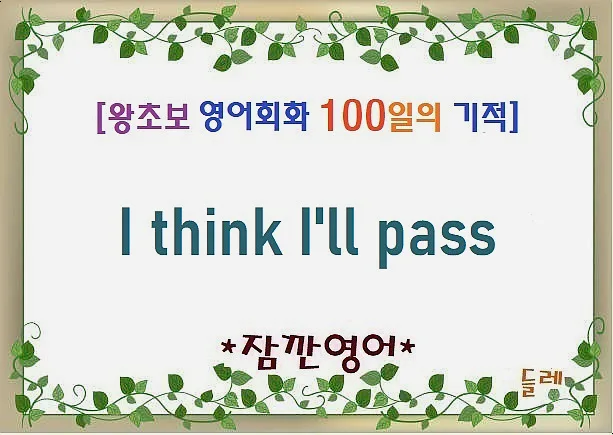
The English phrase 'I think I'll pass' is your go-to for politely declining invitations or offers, meaning 'No, thank you, I'll skip this one.' It's a versatile expression that helps you turn down suggestions without offending the other person, making it perfect for social and even professional settings in 2026.
When Should You Use 'I Think I'll Pass'?
This phrase is ideal when you need to gracefully decline an offer or invitation. Imagine being invited to a party but already having plans, or being offered food when you're not hungry. 'I think I'll pass' translates to 'No, thank you, I'll skip it' or 'I'll decline this time.' It allows you to clearly state your refusal while respecting the other person's gesture. I've personally found it incredibly useful in various social situations, helping me navigate polite refusals without causing awkwardness. It's a staple for anyone looking to improve their conversational English, especially for interactions with native speakers who value direct yet courteous communication.
What Are Similar English Phrases for Declining?
'I think I'll pass' shares its polite refusal function with phrases like 'No, thanks' and 'No, thank you.' These are slightly more direct but still convey gratitude. Another option is 'No, that's OK,' which signals that while the offer is appreciated, you won't be accepting it. The choice often depends on the context and your relationship with the person offering. For casual settings with friends, 'No, thanks' might be perfectly fine. However, in a more formal business lunch or when declining a senior colleague's offer, 'I think I'll pass' or 'No, thank you' can sound more appropriate and respectful. Understanding these nuances is key to mastering English social etiquette.
How Do You Pronounce 'I Think I'll Pass' and What Are Examples?
The pronunciation emphasizes the words 'think' and 'pass,' sounding something like 'ah-TINK-kahl-PASS.' Practicing this rhythm will make it sound natural. Here are some real-world examples: 1. Declining a social gathering due to workload: 'That sounds like fun, but I think I'll pass. I've got a huge project deadline.' 2. Turning down dessert: 'Would you like some cake? / I think I’ll pass, thanks. I’m already full.' 3. Refusing a drink invitation because of an early start: 'Want to grab a beer after work? / I think I’ll pass tonight. I need to be up early tomorrow.' These examples show how the phrase can be integrated smoothly into everyday conversations, making your English sound more authentic.
What Potential Misunderstandings Can Arise with 'I Think I'll Pass'?
The primary concern when using 'I think I'll pass' is ensuring your refusal doesn't come across as rude or dismissive. A blunt 'I think I'll pass' can sometimes feel abrupt, especially if the offer was made with genuine enthusiasm. To avoid this, it's often best to add a brief reason. For instance, instead of just saying 'I think I'll pass,' you could say, 'I think I'll pass, but thank you for the offer!' or 'I think I'll pass this time, maybe next time!' Adding context, like 'I have too much on my plate right now,' helps the other person understand it's not a rejection of them personally. Starting with a positive acknowledgment, like 'That sounds great, but...' can also soften the refusal and maintain a positive social dynamic.
For more English phrases, check the original source below.