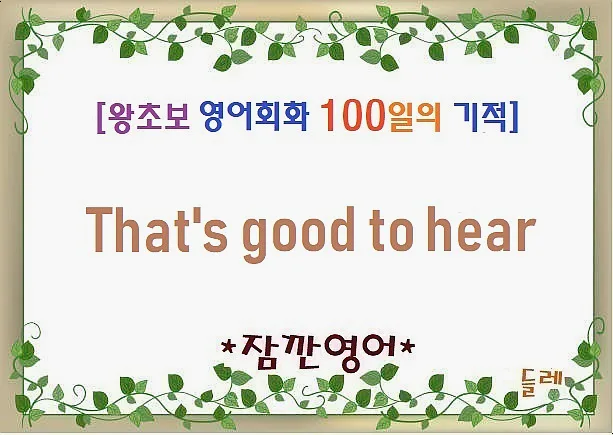
The English phrase 'That's good to hear' is a versatile expression used to convey positive reactions and relief upon hearing good news. It literally means 'I'm glad to hear that,' and it's a fantastic way to show empathy and encouragement. In 2026, this phrase remains a staple in everyday English conversations, and understanding its nuances will help you sound more natural and connect better with native speakers.
When Should You Use 'That's Good to Hear'?
This expression is perfect for situations where you receive positive or reassuring information. For example, if your friend tells you they passed a challenging exam they'd been preparing for, or a colleague shares that a project was successfully completed, responding with 'That's good to hear!' shows genuine happiness and relief. I've personally found that using this phrase when someone shares they've overcome a difficult situation often provides them with significant comfort and validation. When pronouncing it, emphasize 'good' and 'hear' to create a natural rhythm, sounding something like 'dat's gud-tuh-heer'.
What Are Similar English Expressions?
There are several other English phrases that convey a similar sentiment. 'I'm glad to hear that' emphasizes sharing in the other person's joy and is often used when you're happy for their success. 'Happy to hear that' is another common alternative, expressing your own happiness about the news. For a more objective tone, 'That's good news!' is suitable when commenting on a positive outcome. While all these phrases express positivity, they carry slightly different nuances. For instance, when congratulating a friend on landing a new job, 'I'm glad to hear that!' might feel more personal and fitting than a simple 'That's good news!'
What Should You Watch Out For When Using 'That's Good to Hear'?
While 'That's good to hear' is a positive and empathetic phrase, it's important to use it thoughtfully. First, avoid using it mechanically without truly understanding the context; this can make your response seem insincere. It's crucial to listen attentively and show genuine empathy. Second, when someone shares unfortunate news, opt for phrases like 'That's too bad' or 'I'm sorry to hear that.' Using 'That's good to hear' in response to bad news, like a friend failing an exam, would be highly inappropriate and could cause hurt. Therefore, selecting the right expression based on the situation and context is key to effective communication.
In What Situations Is 'That's Good to Hear' Most Effective?
This phrase is particularly impactful when someone has overcome challenges to achieve a positive outcome. For example, hearing that someone has recovered from a health issue or navigated a business crisis can be met with a heartfelt 'That's good to hear!' This acknowledges their struggle and celebrates their success. It's also effective for personal achievements, like reaching a fitness goal or completing a creative project. I recall a friend expressing deep gratitude after hearing this phrase upon achieving a long-held personal ambition; it made them feel truly seen and encouraged. Using this expression sincerely can significantly strengthen relationships.
For more details, check the original source below.