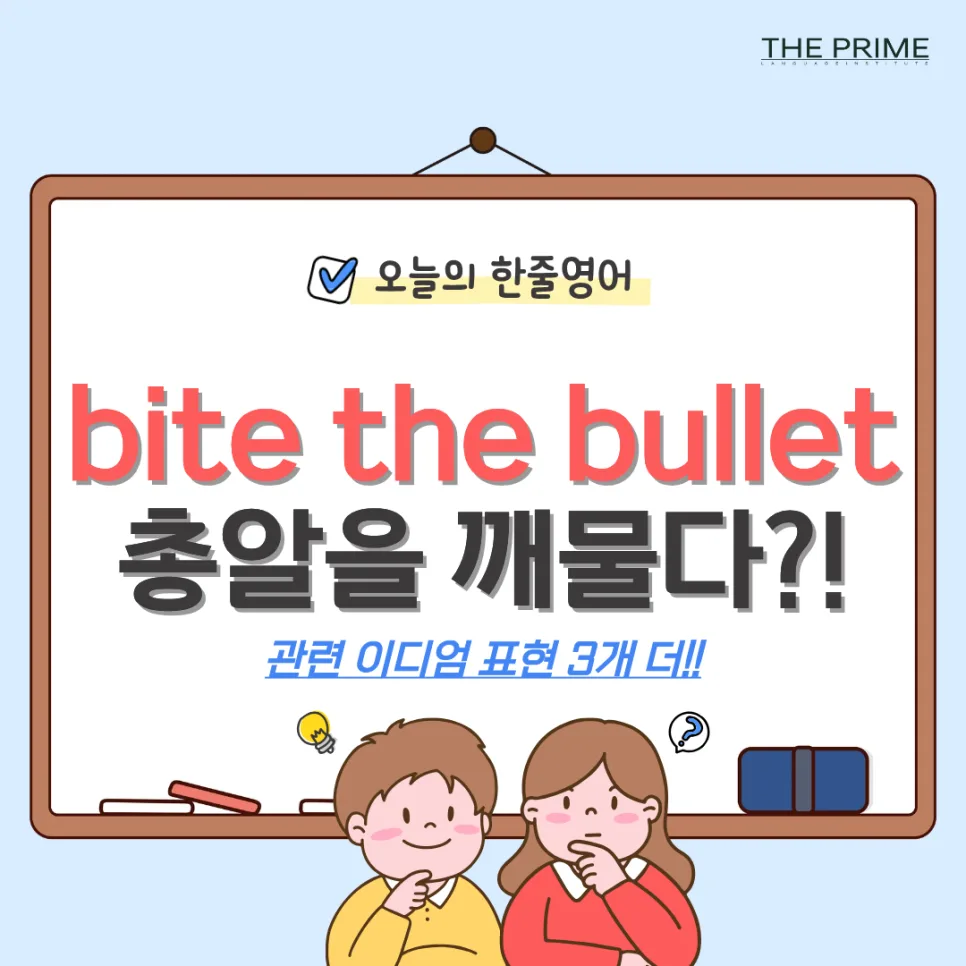
Many learners translate the English idiom 'bite the bullet' literally as 'to bite a bullet,' but it carries a deeper meaning: accepting or enduring an undesirable situation. This expression remains highly relevant in 2026 for mustering courage and resolve when facing tough decisions. Understanding these nuanced phrases can significantly boost your English fluency, especially for those learning Korean culture through dramas and K-pop.
What Exactly Does 'Bite the Bullet' Mean?
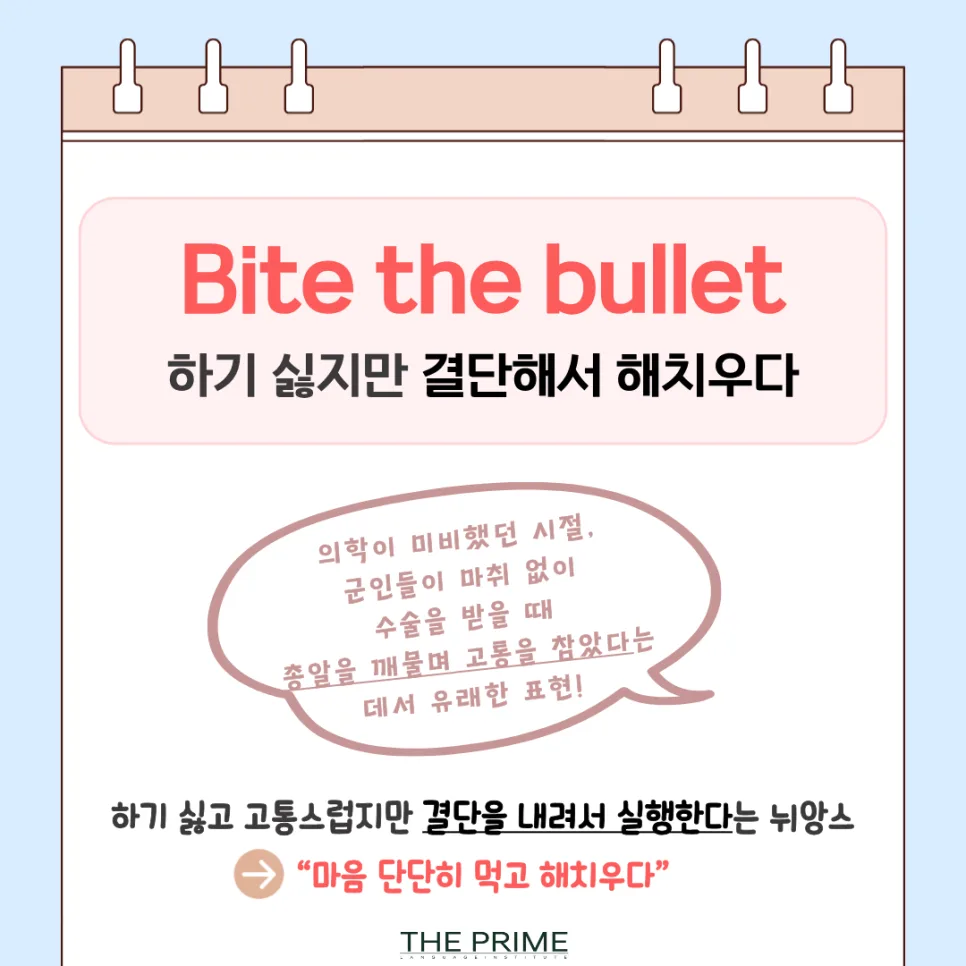
'Bite the bullet' means to harden your resolve and push through a situation that is unpleasant or difficult but unavoidable. The phrase is thought to originate from a time before modern anesthetics, when patients undergoing surgery would literally bite down on a bullet to cope with the pain. This idiom effectively conveys the need to face an inevitable reality with courage and determination. For example, you might say, 'Let's bite the bullet and finish the report tonight,' to show resolve in completing a task. It's also used when accepting difficult decisions, such as, 'They bit the bullet and accepted the budget cuts.'
This idiom goes beyond simply doing something difficult; it implies emotional and psychological endurance. As in, 'Sometimes you just have to bite the bullet and move on,' to signify accepting hardship and moving forward.
When Do You Use 'Face the Music'?
'Face the music' is an English idiom used when you must confront the consequences or responsibilities of your actions, rather than avoid them. It's like a performer stepping onto a stage to face their audience (the music) – you must accept the reality you're in. This phrase is typically used when you have to take responsibility for a mistake or a poor decision. For instance, 'It’s time to face the music and accept the consequences' emphasizes the need to acknowledge reality. Similarly, 'We made a bad decision and now we must face the music' highlights taking responsibility for a past error.
What's the Difference Between 'Take It on the Chin' and 'Grin and Bear It'?
'Take it on the chin' is like a boxer absorbing a punch to the chin without falling, meaning to endure hardship, criticism, or failure stoically. It implies accepting something unpleasant with composure, even if it's unfair. For example, 'He took it on the chin when his idea was rejected' means he accepted the rejection calmly. On the other hand, 'Grin and bear it' means to endure a situation that is unpleasant or difficult by forcing a smile. It suggests putting on a brave face while suffering internally, often out of resignation. 'When the service was slow, we had to grin and bear it,' illustrates enduring a frustrating situation with a forced smile.
While both phrases involve enduring difficult situations, 'take it on the chin' suggests a more stoic acceptance, whereas 'grin and bear it' implies a forced, outward show of positivity. Choosing the right phrase depends on the specific context and your emotional state.
What Should You Be Aware of When Using These English Idioms?
Idioms like 'bite the bullet,' 'face the music,' 'take it on the chin,' and 'grin and bear it' are common in everyday English. However, using them incorrectly or translating them literally can lead to misunderstandings. It's crucial to grasp the precise meaning and nuance of each phrase, and learning from example sentences is key. Understanding the origin of 'bite the bullet,' for instance, helps clarify that it involves making a resolute decision in a tough spot, not just doing hard work. These expressions are typically used to describe negative or challenging circumstances, so they might sound out of place in casual, positive conversations. Practicing with various examples and understanding the context is essential before using them in real conversations. Tailoring your idiom usage to your personal English level and the situation will lead to more natural communication.
Discover more English expressions and how to use them.