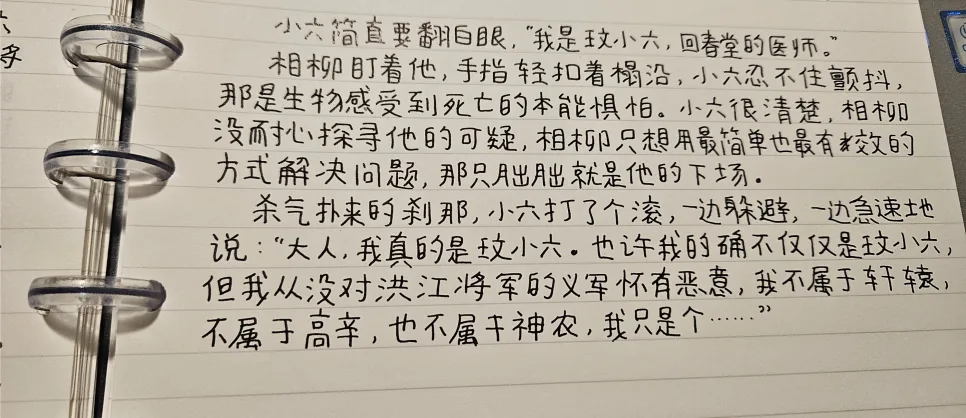
Unlock the multifaceted meanings of the Chinese character '扣' in 2026. Based on firsthand experience with the novel 'The Long Ballad' (长相思), this guide reveals how '扣' can translate to 'tap,' 'fasten,' 'deduct,' and over 16 other interpretations depending on context, offering a richer understanding for learners.
What Are the Basic Meanings of '扣' and How Is It Used in 'The Long Ballad'?
In everyday Chinese, the character '扣' (kòu) most commonly refers to the action of fastening something, like buttoning up a shirt or closing a latch. However, this is just the tip of the iceberg. In classical literature and specific contexts, '扣' takes on a much broader and more complex range of meanings. My recent deep dive into the novel 'The Long Ballad' (长相思), a popular K-drama source material, provided a firsthand encounter with these diverse uses. In one scene, the character Xiang Liu (相柳) is described as lightly tapping the edge of a bed with his fingers, using '扣'. This wasn't just a physical action; it served as a crucial narrative device to hint at the character's inner state or the surrounding atmosphere. This illustrates how, depending on the context, '扣' can transcend a simple physical act to signify emotional expression, the assertion of will, or even a sense of urgency.
What Nuances Does '扣' Convey in 'The Long Ballad'?
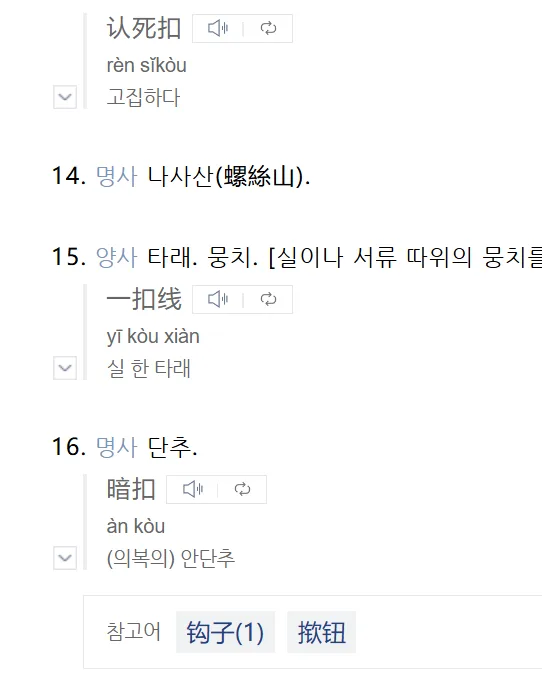
The scene in 'The Long Ballad' where Xiang Liu 'taps' the edge of the bed carries more weight than a simple description of movement. While a Korean translation might render it as 'lightly tapped the edge of the bed with his fingers,' the original Chinese '扣' implies a deeper layer of meaning. It could suggest an unspoken pressure being applied to another character (in this case, Xiao Liu) or a subtle signal of suppressed emotions. My research during the transcription process revealed that reputable dictionaries like the Naver-Koryo University Chinese-Korean Dictionary list over 16 distinct meanings for '扣'. This wide array of interpretations, including 'to tap,' 'to suppress,' 'to fasten,' 'to control,' and 'to deduct,' makes '扣' a fascinating, albeit challenging, character for Chinese language learners. The specific usage in 'The Long Ballad' leans towards 'applying pressure while waiting' or 'managing internal feelings,' adding a layer of psychological depth to the narrative. This polysemy is a challenge but also a source of joy in understanding the richness of the Chinese language.
Key Polysemous Meanings of '扣' and Usage Examples
'扣' itself is a character rich with meaning, often combining with other characters to create new terms. For instance, '扣子' (kòuzi) directly translates to 'button,' representing one of the most common uses of '扣' encountered daily. In a more formal context, '扣留' (kòuliú) means 'to detain' or 'to hold in custody,' typically used in legal or administrative settings. '扣除' (kòuchú) signifies 'to deduct' or 'to subtract,' frequently appearing in payroll or tax calculations. Other examples include '扣押' (kòuyā), meaning 'to confiscate' or 'to seize,' and '扣分' (kòufēn), which means 'to deduct points.' A common thread across these uses is the nuance of 'blocking,' 'restraining,' or 'taking away.' Understanding the precise meaning of '扣' within its context is crucial for improving Chinese reading comprehension. Engaging with diverse example sentences and practicing transcription is an effective way to master this.
Strategies for Learning Polysemous Characters Like '扣' Through Chinese Transcription
To effectively learn polysemous characters like '扣' through Chinese transcription, several strategies are essential. Firstly, meticulously transcribe the original text, paying close attention to the context in which '扣' appears. Determine whether it signifies a literal 'tap' or a more abstract meaning like 'to pressure' or 'to suppress.' Secondly, after transcription, actively consult dictionaries to explore all possible meanings of the character. Utilizing reliable resources like the Naver-Koryo University Chinese-Korean Dictionary will provide comprehensive definitions and example sentences. Thirdly, create your own vocabulary lists or construct new sentences using the learned meanings to reinforce memory. For example, you could rephrase the sentence 'Xiang Liu tapped the bed' to 'Xiang Liu waited, applying pressure (扣) to Xiao Liu.' This active engagement with '扣' and similar polysemous characters not only deepens understanding but also enhances practical Chinese language skills. My personal experience confirms that consistent transcription and review are the surest path to improving Chinese proficiency.
Discover more Chinese learning tips in the original article.





