Creating an outdoor unit room for your air conditioner in an older apartment building in 2026 is more than just gaining space; it's about comprehensively addressing ventilation, noise, and insulation issues. For apartments over 20 years old, a dedicated space for system air conditioners is often essential. This guide details the key checklists and real-world examples for successfully building an outdoor unit room on your balcony in an older apartment.
What to Consider When Installing an Outdoor Unit Room on an Old Apartment Balcony?
Creating a new outdoor unit room on an older apartment's balcony goes beyond simple equipment placement. The most critical aspect is effectively venting the hot air generated by the outdoor unit to maintain air conditioner performance and prevent overheating, which can pose a fire risk. Simultaneously, it's crucial to minimize noise and vibration to avoid disturbing neighbors. Additionally, protecting the interior of the unit room from external environmental factors and enhancing the insulation of the interior space are important considerations. This necessitates installing louvered windows for ventilation, using anti-vibration pads to reduce noise and vibration, and constructing a turning door for improved insulation and airtightness.
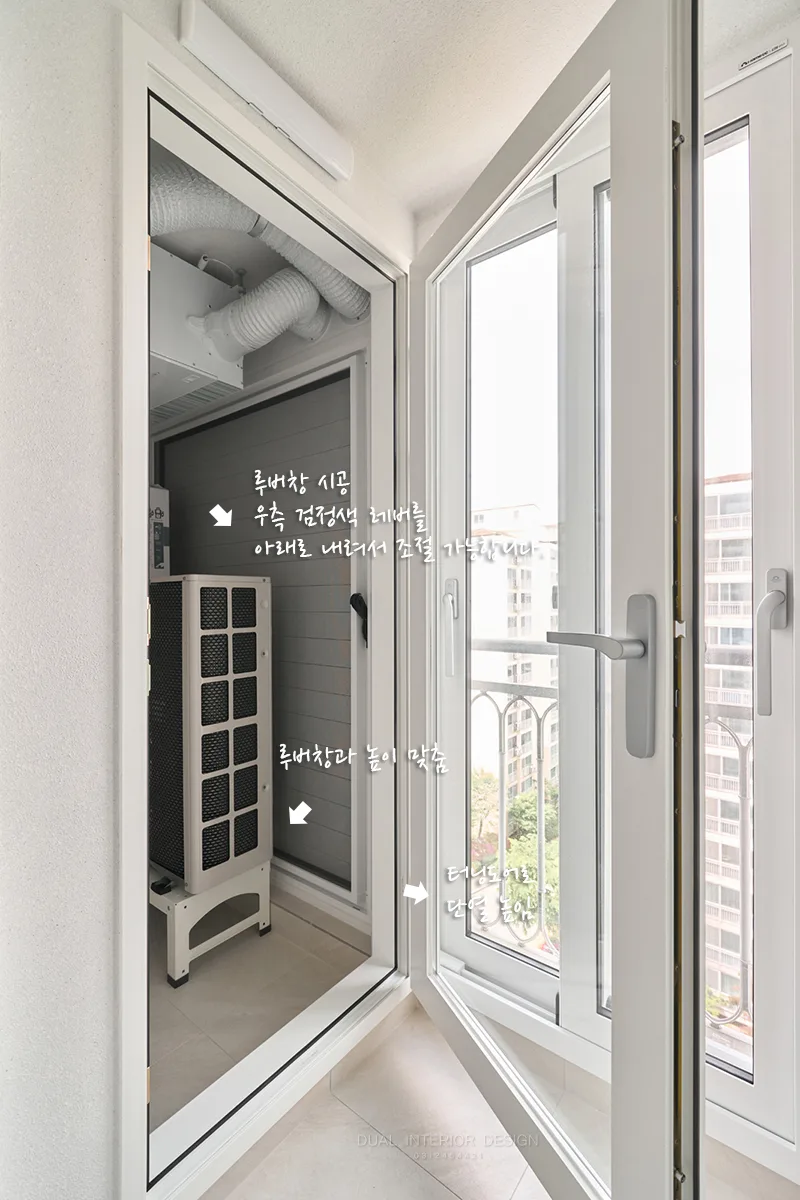
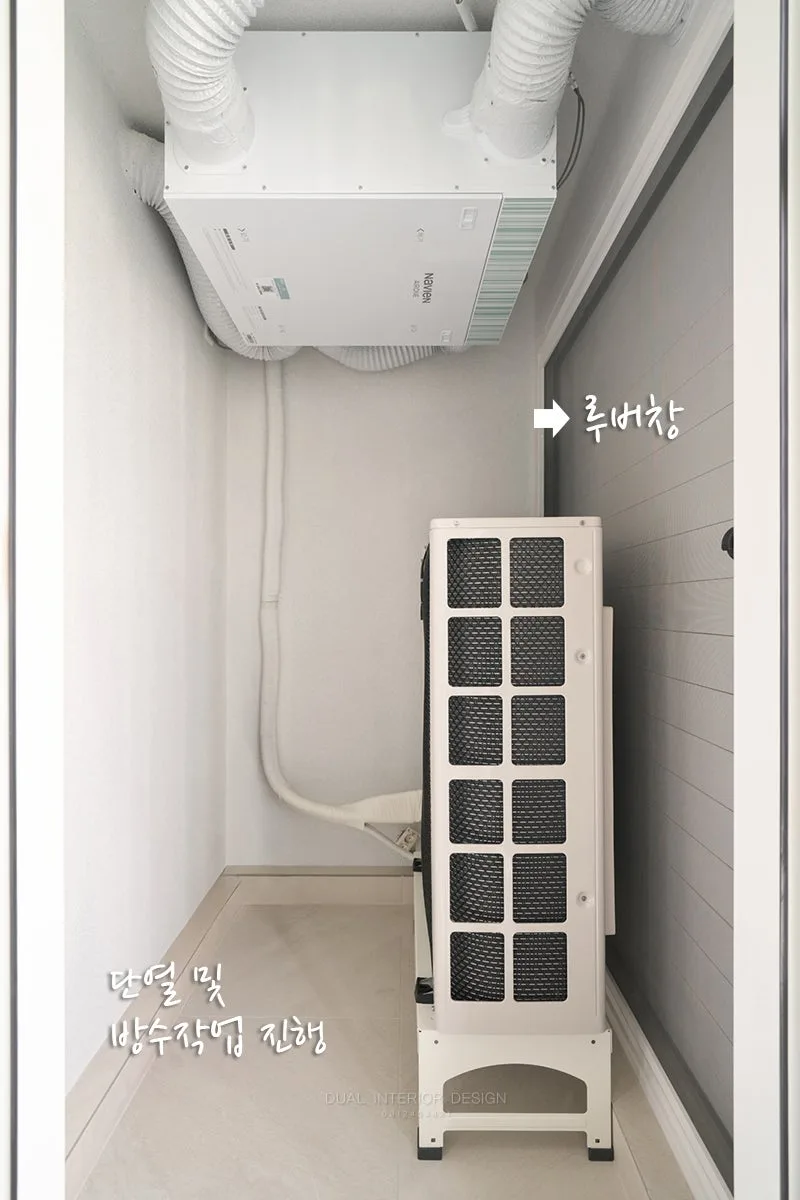
A case study of an outdoor unit room constructed on a small balcony in an older apartment shows the installation of a large louvered window for ventilation and a highly insulated and soundproof turning door between the balcony and the room. A separate base was created below the outdoor unit to adjust its height and reduce noise, maximizing ventilation efficiency by aligning the outdoor unit fan height with the louvered window height. Such meticulous design plays a crucial role in preventing air conditioner performance degradation and maintaining a comfortable indoor environment.
How to Solve Ventilation and Noise Issues for Balcony Outdoor Unit Rooms?
Related Articles
The biggest challenge in installing an air conditioner outdoor unit room is ventilation. The outdoor unit expels a large amount of hot air during operation. If this air is not properly vented, the air conditioner's efficiency will drop significantly, and there's even a risk of fire due to overheating. Therefore, it's crucial to align the outdoor unit's fan position with the height of the louvered window to ensure hot air can escape smoothly without hitting walls. This may require using outdoor unit stands or brackets to adjust the fan's height. Additionally, to address potential noise and vibration issues from older apartments' thin floor slabs, it's essential to install thick anti-vibration rubber pads under the outdoor unit's legs and ensure the floor is perfectly level to prevent vibration amplification.
How to Ensure Insulation and Airtightness for Balcony Outdoor Unit Rooms?
When a separate outdoor unit room is created, that space becomes directly exposed to external temperature fluctuations. Therefore, effective insulation and, if necessary, waterproofing are recommended. Specifically, using a turning door (system door) that offers superior sealing compared to a standard interior door is much more effective for improving insulation performance and blocking noise. A turning door prevents cold or hot air from entering the interior space and helps minimize the transmission of noise generated by the outdoor unit's operation. Furthermore, keeping the internal space of the outdoor unit room minimal and leaving about 20-30 cm for service access before constructing partition walls is advisable for future maintenance.