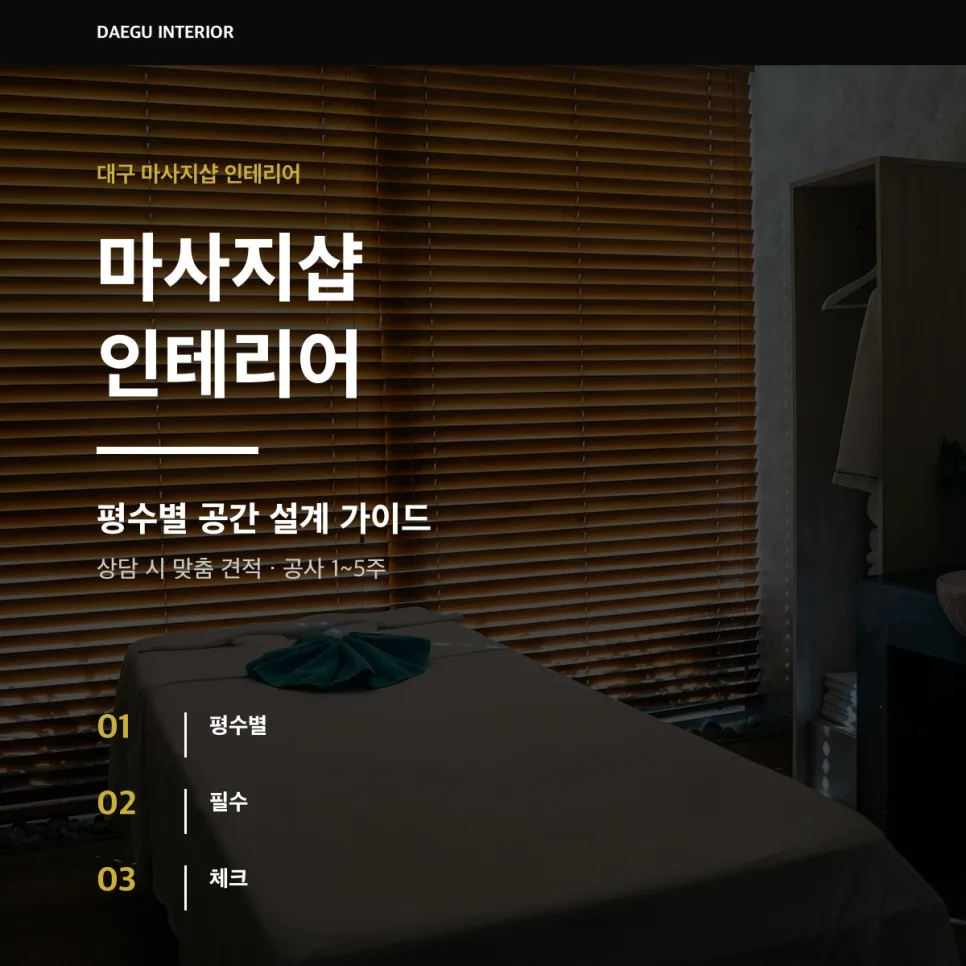
Korean interior design principles, often emphasizing minimalism and functionality, can be applied to create a serene and professional spa space. For a typical 8-pyeong (approx. 280 sq ft) spa, expect a construction timeline of 2-3 weeks, while a larger 12-pyeong (approx. 420 sq ft) space might take 3-4 weeks. Key elements include soundproof treatment rooms, adjustable lighting, essential plumbing, and a welcoming reception area, all designed to enhance client experience and operational efficiency.
Korean Spa Design: Optimizing Space by Size (2026)
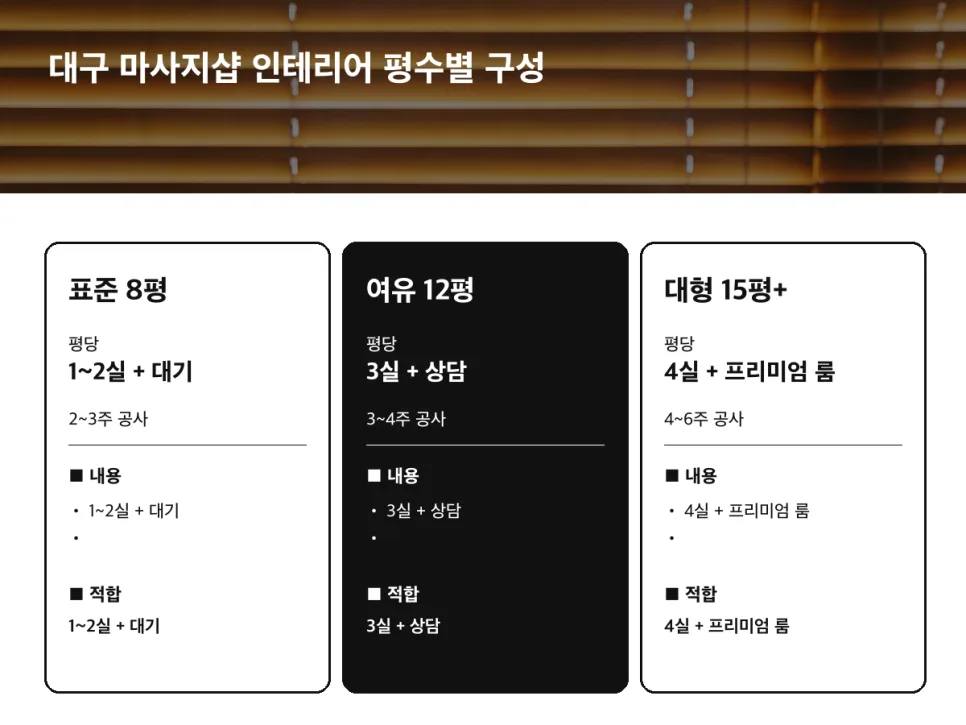
When designing a Korean-style spa, the square footage directly impacts the operational scale and client capacity. For a compact 8-pyeong (around 280 sq ft) space, the layout typically accommodates one to two treatment rooms and a modest waiting area, with construction taking approximately 2-3 weeks. A more spacious 12-pyeong (around 420 sq ft) layout allows for three treatment rooms and a dedicated consultation area, making it ideal for small teams and offering a more comfortable client flow; this usually requires 3-4 weeks for construction. Larger spaces exceeding 15 pyeong (over 525 sq ft) can accommodate four or more treatment rooms, potentially including premium suites, and may require 4-6 weeks for completion. The final cost is heavily influenced by material choices, the complexity of the chosen fixtures, and any structural modifications needed. For an accurate budget, always consult with an interior design professional after a site assessment.
Spa Interior Design: Key Processes and Essential Facilities (2026)
Understanding the breakdown of costs in spa interior design helps prioritize your budget effectively. Flooring, wall finishes, and painting establish the overall ambiance, while lighting and electrical work are crucial for both client comfort and therapist functionality. For specialized spaces like spas, the investment in dedicated equipment and custom furnishings is higher than in standard commercial interiors, making it essential to budget accordingly. Thoughtful design of storage and display areas enhances operational efficiency, and the exterior signage plays a vital role in brand recognition. Additionally, robust ventilation, heating, and cooling systems, along with meticulous finishing touches, contribute to the overall quality. Essential facilities include soundproofed treatment rooms with adjustable lighting (ideally 2700-3000K warm white), hot water and plumbing systems, private changing areas, storage for supplies, a client waiting lounge, and a reception counter. Incorporating air purification systems and subtle aromatherapy diffusers can significantly elevate the client experience and encourage repeat visits, contributing to long-term revenue growth.
Spa Business Startup: Essential Pre-Opening Checklist
Launching a successful spa in the US market, inspired by Korean design principles, requires careful attention to several key areas. First, thoroughly research local business regulations and zoning laws to ensure your chosen location permits spa operations. Second, confirm that the lease agreement clearly allows for your intended business use. Third, assess the capacity of existing electrical and plumbing systems and determine if upgrades are needed for specialized equipment like hot water heaters or additional sinks. Fourth, evaluate the feasibility of implementing effective soundproofing and ventilation in treatment rooms. Fifth, understand any building codes or management restrictions regarding exterior signage and facade design. Sixth, plan your booking and scheduling system well in advance. Finally, secure a comprehensive warranty agreement for all interior work and installations. Addressing zoning compliance and necessary permits before signing any contracts is crucial to prevent delays in your grand opening.
Korean Spa Design: Key Do's and Don'ts for Success
Navigating the specifics of Korean-inspired spa interior design involves understanding critical do's and don'ts. Essential actions include verifying zoning and permit requirements before signing a lease, accurately calculating the necessary electrical, plumbing, and ventilation capacities, maintaining a consistent theme for lighting and display elements, and pre-registering on platforms like Google Business Profile at least 2-3 weeks before opening to boost early visibility. Conversely, avoid common pitfalls such as signing a lease based solely on square footage without verifying zoning, compromising on essential equipment quality to cut costs which can lead to future maintenance issues, delaying signage and exterior branding decisions, or neglecting to confirm building and fire safety regulations. Adhering to these guidelines will minimize administrative and facility-related issues, paving the way for a smooth and successful business launch.