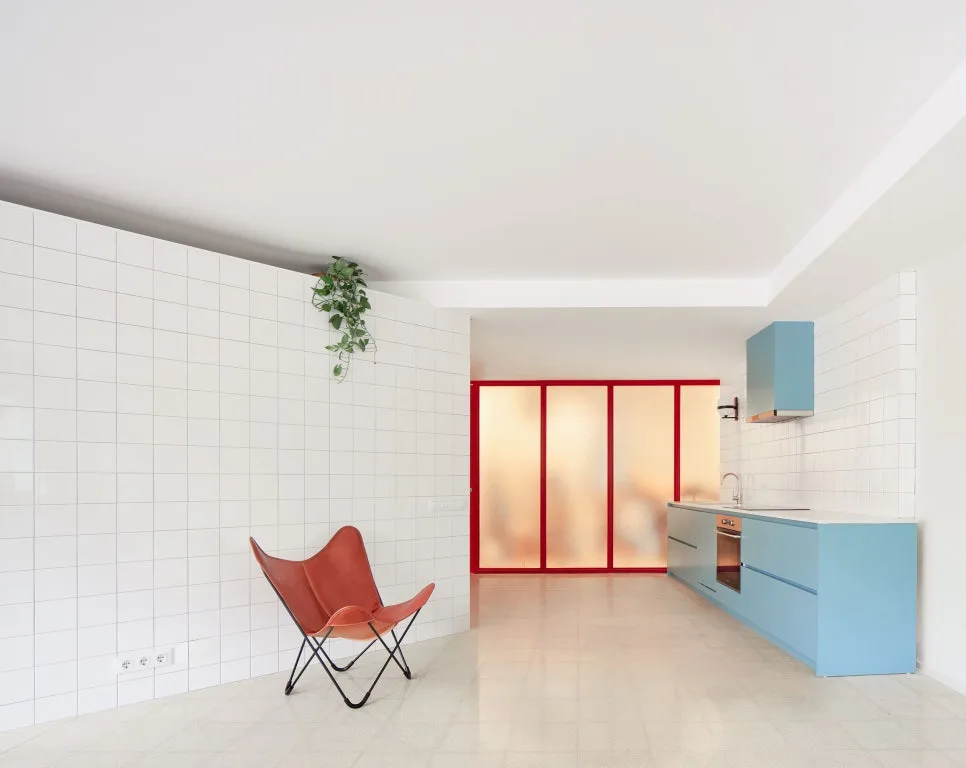
Korean minimalist apartment design in 2026 embraces white tile for a bright, spacious feel, enhanced by strategic pops of color like red frames and blue kitchens to create a unique, modern aesthetic. The key lies in balancing clean lines with vibrant accents to define spaces and add visual depth.
What role does white tile play in Korean interior design, adding order and rhythm?
In Korean interiors, white tiles offer more than just a clean surface; they bring an inherent sense of order and rhythm. The consistent grid of square tiles creates a subtle, engaging pattern on walls, preventing monotony while the thin grout lines provide delicate separation without being visually intrusive. From a distance, they create a bright, expansive backdrop, but up close, they reveal an intricate order and a tactile texture. This repeating pattern adds a sensory dimension to minimalist spaces, and the way light interacts with the tiles creates subtle reflections, making the area feel more dynamic and three-dimensional. This is crucial for injecting life into what might otherwise feel stark white spaces, offering a sophisticated visual texture.
How do red frames function in interior design, and what's the best way to use them?
In this apartment's design, red frames serve as more than just a color accent; they act as structural elements that guide the eye and define spatial boundaries. Applied sparingly along door frames, partitions, or cabinet edges, these linear red accents create visual depth and clear zone demarcations without resorting to solid panels. The red lines effectively separate the hallway from the kitchen and other areas while maintaining an open feel, as they don't obstruct sightlines. When viewed from the kitchen, the red frame emphasizes the length of the hallway, and from the living area, it acts as a subtle backdrop that allows light to filter through. This strategic, linear application of a bold color is a key technique for adding definition without overwhelming the space, making it feel both structured and airy.
What atmosphere does a blue kitchen create in interior design?
A kitchen finished in a clear, sky-like blue tone injects a light, refreshing ambiance into the space. Applying a consistent blue hue across the lower cabinets, upper hood, and cabinetry lines creates visual harmony and a sense of clean, airy spaciousness. This particular shade of blue acts as a gentle buffer between the crispness of the white tiles and the boldness of the red frames, adding vibrancy without being jarring. Unlike darker blues that can make a kitchen feel smaller, this lighter tone visually expands the area and promotes a positive, energetic atmosphere conducive to cooking and gathering. It stands out subtly within the overall color scheme, contributing a delicate balance to the design.
What are the key considerations when using multiple colors in minimalist apartment design?
Successfully integrating multiple colors in a minimalist Korean apartment requires careful planning and restraint. Firstly, limit the total number of colors and clearly define the role of each; in this case, white serves as the background, red provides structural definition, and blue acts as a vibrant accent, creating a cohesive palette. Secondly, prioritize linear or targeted applications over broad swathes of color. Using red for frames or blue for a specific zone, like the kitchen, is more effective and less overwhelming than painting entire walls. Lastly, meticulously select the tone and saturation of each color. Clashing or overly intense colors can disrupt the minimalist aesthetic, so choosing shades that harmonize with the overall concept is crucial. Consulting with an interior designer can help navigate these choices to achieve a personalized yet balanced look.
For more detailed interior design tips, check the original source below.