In 2026, Korean interior design for daycares and nursing homes goes beyond aesthetics, focusing on creating comfortable and secure environments for both users and their families. Utilizing 3D visualization (투시도, tusido) is crucial for confirming design outcomes before construction, saving time and money, and improving client communication. For these specialized spaces, prioritizing a warm and inviting atmosphere in common areas is key to enhancing user satisfaction and well-being.
Why is 3D Visualization Essential for Korean Daycare & Nursing Home Interiors?
Outsourcing 3D visualization services for daycares and nursing homes offers significant advantages. Firstly, it allows stakeholders to preview the finished space before construction begins, enabling the early detection and correction of potential issues. This proactive approach significantly cuts down on time and costs associated with rework. Secondly, 3D visualizations act as powerful communication tools. They translate abstract design concepts into tangible visuals, fostering better understanding and alignment between designers, clients, and builders, which ultimately boosts client satisfaction and increases the likelihood of securing contracts. Furthermore, these detailed visualizations serve as objective evidence in case of disputes, establishing a clear benchmark for the agreed-upon design and construction quality. For common areas, careful planning of program tables, comfortable seating arrangements, and relaxing zones is vital to cultivate a warm and inviting atmosphere.
Key Elements for Korean Nursing Home Interior 3D Visualization
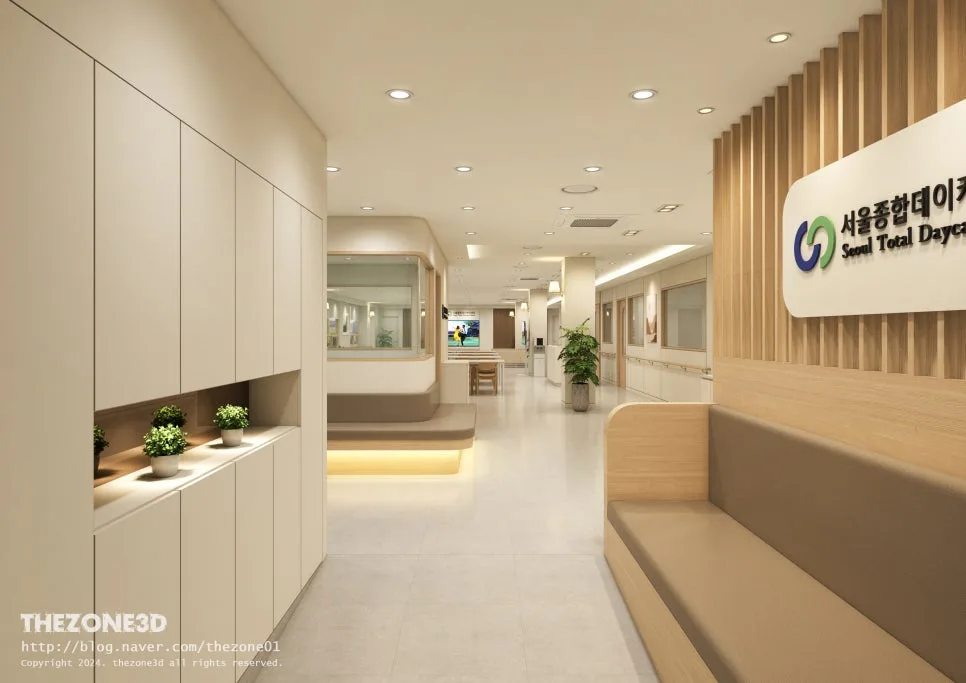
When designing interiors for facilities like daycares or nursing homes, especially with a focus on the Korean aesthetic, several key elements must be prioritized in 3D visualizations. The overarching goal is to create an atmosphere of 'comfort and warmth.' This is achieved through thoughtful color palettes—think soft pastels or nature-inspired hues—and warm, ambient lighting that promotes psychological well-being. Efficient space utilization is also critical; common areas should accommodate various activities, such as programs and dining, with well-placed tables and comfortable seating areas like sofas and entertainment zones. Crucially, safety must be paramount. Visualizations should reflect the use of non-slip flooring, furniture with rounded edges, and the installation of safety grab bars to minimize accident risks. Incorporating these elements into the 3D design ensures that potential safety hazards and functional inefficiencies are identified and rectified before construction commences, leading to significant savings in both time and budget.
Outsourcing 3D Visualization for Korean Daycare Interiors: What to Watch For
When outsourcing 3D interior visualization services for daycares or nursing homes, particularly those aiming for a Korean aesthetic, careful vendor selection is essential. Prioritize agencies with a proven track record and extensive experience in healthcare or institutional interior design. Review their portfolios thoroughly to assess their design sensibility, quality of output, and ability to interpret and execute client requirements accurately. Clearly communicate your vision, including desired ambiance, color schemes, furniture layouts, and functional needs. Ensure all project scope, revision policies, delivery timelines, and costs are explicitly detailed in a written contract to prevent future misunderstandings. Selecting a vendor that offers a balance of competitive pricing and high-quality results is crucial, and always confirm that the contract includes clauses protecting against design plagiarism and unauthorized use.
Benefits of 3D Visualization Before Korean Interior Construction
Undertaking 3D visualization before commencing interior construction for Korean healthcare facilities offers substantial practical benefits. The most significant advantage is the potential for considerable time and cost savings. By identifying design flaws or inefficient space planning early on, costly rework and unexpected expenses during the construction phase can be avoided. Furthermore, 3D visualizations serve as powerful communication and persuasion tools during client meetings. Presenting concrete visual representations of the design concept facilitates clearer understanding and builds trust, significantly improving the chances of securing client approval and contracts. These detailed visualizations also act as objective evidence, establishing a clear standard for the project. A well-agreed-upon 3D model and accompanying blueprints provide a definitive reference point, mitigating potential disputes over design changes or construction quality post-completion. Therefore, investing in high-quality 3D visualization is a foundational step towards a successful and satisfactory interior project.
For detailed 3D visualization design inquiries, please contact TheZone3D.